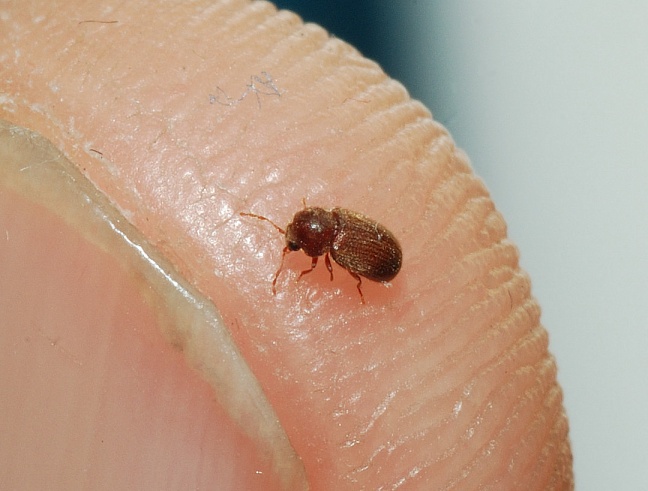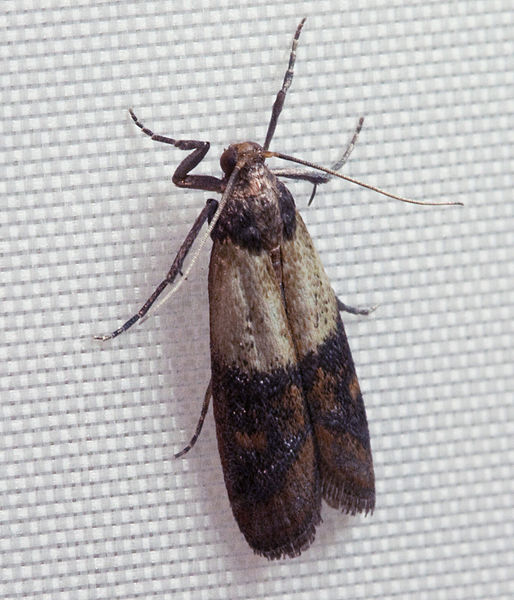
Collectively, we call them pantry pests or stored product pests. Finding them does not mean a house is dirty. Most infestations begin when someone unknowingly brings home an infested product. The insects may have entered it during processing, storage, shipping or its time on a store shelf.
The frustrating part is that the room where people see the insects may be nowhere near the source.
How Pantry Pests Get Started
Pantry pests can live in flour, rice, cereal, pasta, nuts, spices, dried fruit, chocolate and many other dry foods. Pet food and birdseed cause a surprising number of infestations because people often buy them in large bags and store them for a long time.
Bulk purchases create the same opportunity. An insect population has more time to develop when a bag of grain, flour or seed sits undisturbed for months. Products with slow turnover at a store may already contain eggs or larvae when they reach the house.
The source does not even have to be something anyone considers food. Stored product insects can develop in decorative corn, dried flowers, garden seed and other plant material. The University of Minnesota Extension pantry pest guide provides a good overview of the remarkably broad range of materials they can infest.
Several Species Share the Same Pantry
Different pantry pests favor different foods, but the damage often looks similar until someone examines the insect closely. The most common species we encounter include Indianmeal moths, sawtoothed grain beetles, red and confused flour beetles, drugstore beetles and granary, rice and maize weevils.
Correct identification narrows the search. Adult Indianmeal moths often rest on walls or ceilings, while their larvae may leave silken webbing in an infested product. Small beetles frequently gather at windows because the adults move toward light. That does not mean the infestation began near the window.
The Cornhole Bags Across the House
One customer kept finding sawtoothed grain beetles in a kitchen window. The obvious response was to search the pantry, but we could not find the source there.
We eventually found it about 20 yards away in a hall closet. The customer had stored a cornhole set there, and the cloth game bags contained real corn. The beetles had developed inside the bags, emerged and traveled through the house before collecting at the kitchen window.
Not long after we found the source, a small parasitoid began emerging too. Parasitoids are natural enemies that develop in or on another insect and eventually kill it. The parasitoid had followed its host into the same unlikely little ecosystem inside those game bags.
I have only seen parasitoids with pantry beetles twice. The cornhole case with sawtoothed grain beetles was the first. The second involved a drugstore beetle infestation we investigated in 2026.
That customer was certain the beetles were coming indoors through an electrical outlet. Her conclusion made sense because that was where she kept seeing them. She continued to insist they were entering from outside until we removed an old bag of cat food from beneath the bathroom sink beside the outlet. The beetles had not entered through the wall. They had developed in the cat food and then gathered near the outlet after emerging.
Parasitoids were present with the drugstore beetles too. From an entomologist’s perspective, finding them in both infestations was genuinely cool. For the homeowner, their presence means a natural enemy either found the beetle population or arrived with it. The parasitoid is not another pantry pest, but it does confirm that something more interesting than a few stray beetles has been happening nearby.
That experience remains one of my favorite examples of why the insects you see are evidence, not necessarily the source. Treating the kitchen window would never have solved it.
The Rose Petals Nobody Suspected
The strangest Indianmeal moth source I have found was a container of dried rose petals. They had sentimental value, so no one thought of them as something that might support an insect infestation. The moths did not care why the petals had been saved.
Indianmeal moth larvae can develop in dried plant material, including flowers. Once the adults began appearing elsewhere in the house, the problem looked like a typical pantry infestation even though the source was not food and was not stored in the pantry.
This is why a thorough search has to include more than flour and cereal. Birdseed, dog treats, spices, tea, dried decorations and forgotten craft materials may deserve just as much attention.
A Termite Call with a Pantry Moth Answer
A hair salon once called to report swarming termites in its break room. The business occupied a strip center with a nice garden outside. We had previously trapped a squirrel there, and I knew the staff fed birds.
The reported swarm had continued for several days in late summer. That timing did not fit the usual subterranean termite swarming season in the Brazos Valley. The break room location and bird feeding history suggested a different answer.
Before visiting, I guessed that they had an old bag of birdseed under the break room sink and that the insects were Indianmeal moths. That turned out to be exactly what they had.
The calendar did not identify the insect by itself. It helped eliminate an unlikely explanation, while the location and stored birdseed pointed toward the right one.
Why Spraying the Pantry Misses the Point
The insects live and reproduce inside the infested product. A treatment applied around shelves cannot remove that population, and routine pesticide application around stored food does not address the real problem.
Control begins by locating the source and removing it. Nearby packages also need inspection because insects can spread from one product to another. Cleaning spilled flour, grain, seed and pet food removes material that can support continuing activity.
Once the source is gone, the remaining adults may continue appearing for a short period. That does not automatically mean the search failed. Their life cycle may have already progressed far enough for adults to emerge from pupae hidden away from the original product.
When Mating Disruption Has a Place
Indianmeal moths present one unusual option when a thorough search cannot locate the source. On a few difficult accounts, we have used professional mating disruption to suppress this species.
Mating disruption fills an area with a synthetic version of the moth’s sex pheromone. Male moths can no longer locate females efficiently, which reduces successful mating and reproduction. This approach targets Indianmeal moths and closely related moth species. It does not control the beetles and weevils that cause many other pantry infestations.
My uncle, Bill Lingren, founded Trécé, Inc., where I also worked during my career. When the original version of this article appeared in 2011, Trécé was developing Indianmeal moth mating disruption for stored product environments. That work became a practical professional tool now used in food storage, processing and other commercial settings. Trécé’s current Indianmeal moth guidance explains how the technology works.
Mating disruption does not make source removal unimportant. A continuously infested product can keep producing moths. We consider it only for Indianmeal moth situations where careful inspection has failed to uncover the source or where the structure makes complete source removal unusually difficult.
How Venus Helps Existing Customers
Venus Pest Company does not offer a standalone pantry pest treatment because removing the infested material provides the actual control. Spraying a pantry and leaving the source behind would charge a customer for something that cannot solve the problem.
We do help existing residential and commercial customers identify pantry pests and search for difficult sources. Sometimes that means examining specimens under magnification. Sometimes it means following where adults collect and then searching far beyond the kitchen.
If the insect turns out to be an Indianmeal moth and the source remains hidden after a serious search, we can determine whether mating disruption makes sense. For the other common species, identification still matters, but the answer almost always waits somewhere inside a forgotten package, bag or container.
The cornhole bags, rose petals and salon birdseed all looked unrelated at first. Each case came down to the same lesson: follow the insect’s biology, not the room where someone happened to notice it.