

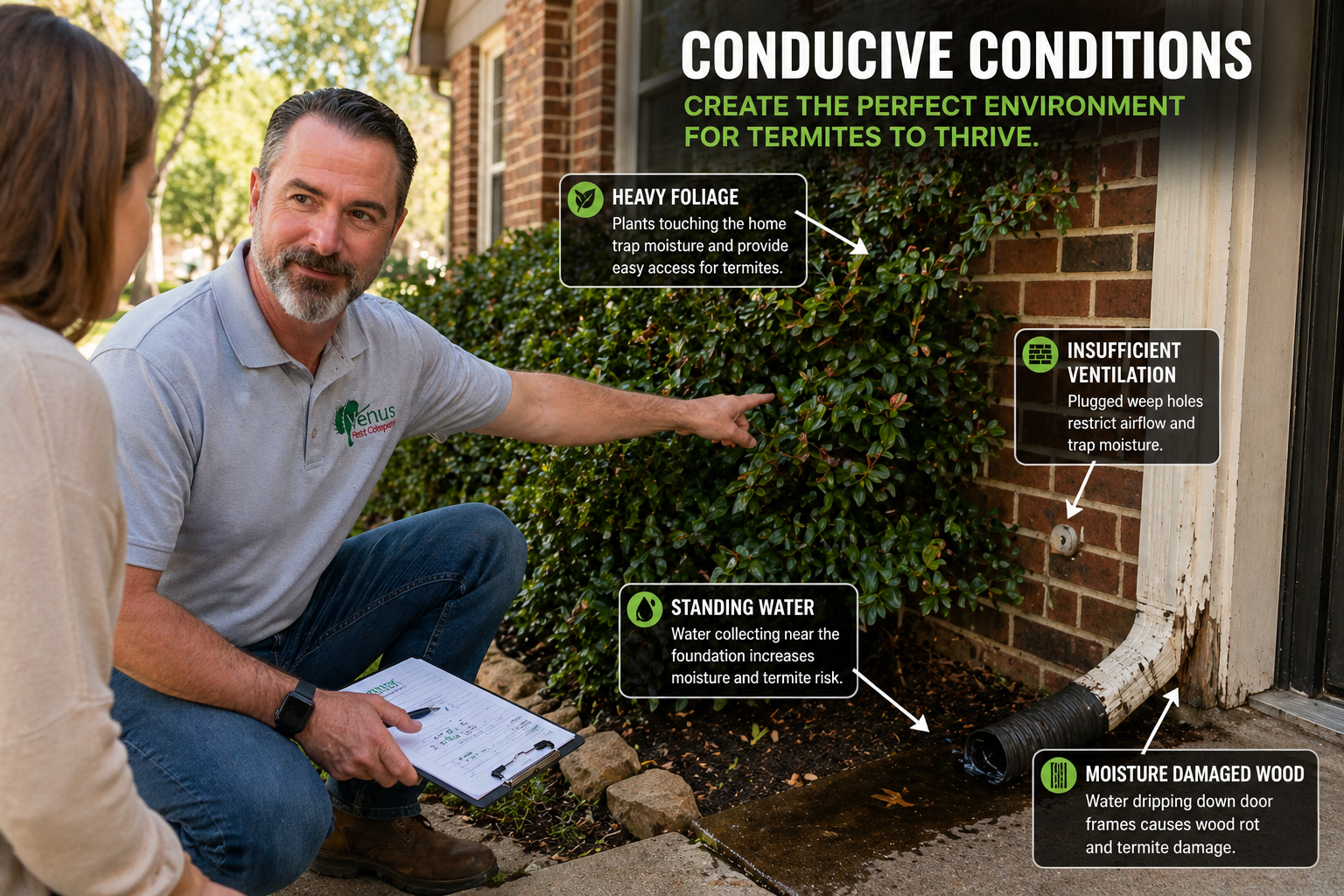
Conducive Conditions
Pests need food, water, shelter, and a way inside. A leaking faucet may provide water. Thick shrubs can provide shelter. A tree limb touching the roof can become a bridge. Soil or mulch piled over the foundation can hide a termite entry point. None of these conditions proves that a property has pests, but each one changes the odds in the pest’s favor.
I originally wrote about the major conducive conditions as separate topics. In the field, they rarely stay separate. A planter box against the house may also create excessive moisture, hide the foundation, hold wood mulch, obstruct an inspection, and support ants or termites. One condition stacks on top of another.
This guide brings those pieces together for homeowners and property managers in Bryan, College Station, and the rest of Brazos County.
What Is a Pest Conducive Condition?
A pest conducive condition is any structural, environmental, sanitation, or maintenance issue that helps pests survive or makes a building easier to enter. The term often appears on termite and Wood Destroying Insect reports, but it applies to far more than termites.
Standing water can produce mosquitoes. Damp wood can support carpenter ants, subterranean termites, and wood decay. Food residue and grease can sustain cockroaches and small flies. Gaps around doors or utility lines give rodents and insects direct access. Dense foliage can shelter mosquitoes while hiding the foundation from view.
The U.S. Environmental Protection Agency describes prevention as removing the food, water, and shelter that attract pests. That principle sits at the center of Integrated Pest Management, or IPM.
A Conducive Condition Is Not an Infestation
Finding a conducive condition doesn’t mean pests are present. Correcting it also doesn’t guarantee that a pest will never show up. Subterranean termites already live throughout our area, mosquitoes can fly in from neighboring properties, and rodents constantly explore new territory.
Conducive conditions affect probability, visibility, and control. They can increase the number of pests around a structure, give them hidden access, or make an inspection less reliable. They may also work against a pest management program by shielding the exact areas that need inspection or service.
This distinction matters. A high soil line deserves correction even when an inspector finds no termites. Active termites require a separate response even after the homeowner corrects the soil line. Prevention and control support each other, but they don’t mean the same thing.
Why Texas Inspectors Record Conducive Conditions
Texas treats conducive conditions as more than a casual observation. The state’s official Wood Destroying Insect Report includes a section for conditions that favor infestation.
The current Texas Department of Agriculture SPCS/T-5 form lists wood-to-ground contact, form boards left in place, excessive moisture, debris around or beneath the structure, a low footing or high soil line, wood rot, heavy foliage, planter boxes against the structure, wood piles touching the building, wooden fences touching the structure, and insufficient ventilation.
That list gives us a solid foundation, but a complete pest inspection goes farther. We also look at standing water, irrigation, roof and plumbing leaks, gutters, drainage, food and waste, stored cardboard, pet food, entry gaps, damaged screens, door sweeps, tree limbs, crawlspace conditions, and changes made during construction or remodeling.
Conducive Conditions Built Around Water
Water drives more pest problems than most homeowners realize. Many insects lose moisture quickly and survive better in damp shelter. Termites need moisture. Mosquito larvae develop in water. Carpenter ants often choose moisture damaged wood for nesting. Springtails, silverfish, earwigs, and millipedes all benefit from wet conditions in different ways.
A water problem doesn’t need to look dramatic. A slow plumbing leak inside a wall may matter more than a visible puddle in the yard. An irrigation head that wets brick every morning can keep one section of the house damp. A gutter that empties beside the slab may saturate the soil without creating standing water.
Common sources include roof and flashing leaks, plumbing leaks, dripping exterior faucets, air conditioning condensate, clogged gutters, short downspouts, negative grading, overwatering, sprinkler heads aimed at the structure, and water trapped beneath decks or dense vegetation.
The first correction should address the source. Replacing damaged wood without stopping the leak simply starts the same problem over again.
Standing Water and Mosquito Development
Warm Brazos Valley weather can turn a small amount of water into a mosquito source quickly. Buckets, toys, tarps, plant saucers, clogged gutters, wheelbarrows, trash cans, corrugated drainpipe, discarded containers, and low spots in the yard can all hold enough water for mosquito larvae.
Water doesn’t need to remain for weeks. During warm weather, several days may give mosquitoes enough time to develop. A weekly walk around the property catches many of these sources before they produce adults.
Bird baths and pet water bowls need regular cleaning and fresh water. Gutters need enough slope and clear outlets to drain. Irrigation should match what the landscape can absorb. Low areas that remain wet after the rest of the yard dries may need drainage work rather than repeated pumping or filling.
Maintained ponds and moving water features often create fewer mosquitoes than neglected containers because circulation, depth, predators, and clean edges interrupt development. They aren’t automatically safe, though. Shallow margins, clogged pumps, floating debris, and nearby containers can still produce mosquitoes.
Damp Wood, Wood Rot, and Hidden Leaks
Moisture damaged wood offers shelter that sound, dry wood doesn’t. Carpenter ants don’t eat wood, but they excavate it for nesting and often choose material softened by moisture or decay. Subterranean termites can feed on sound wood, yet damp conditions make access and survival easier. Wood destroying fungi also need moisture and can weaken the structure independently of insects.
Look closely at fascia, soffits, window and door trim, siding, deck connections, porch posts, roof penetrations, bathroom walls, plumbing chases, and wood beneath exterior faucets. Peeling paint, swelling, discoloration, softness, or repeated staining may reveal the water problem before insects appear.
The correction usually requires two different trades. A roofer, plumber, HVAC technician, contractor, or drainage professional stops the water. A carpenter replaces wood that has lost strength. A pest professional determines whether insects also occupy the damaged area.
Paint can hide deterioration for a while, but it can’t restore decayed wood or solve the leak behind it.
Crawlspaces, Attics, and Wall Ventilation
The old rule said damp crawlspaces simply needed more outside ventilation. Building science has become more precise, especially in hot, humid climates like ours.
A traditional vented crawlspace needs open, properly screened vents and good drainage. Blocking those vents can trap moisture. However, warm humid outdoor air can also add moisture when it enters a cool crawlspace. A properly designed sealed or conditioned crawlspace may control humidity better than a vented one. The U.S. Department of Energy reports that closed, conditioned crawlspaces can reduce humidity in humid regions.
That means the solution depends on the design. Randomly opening vents, sealing them, or adding a fan can make conditions worse. A home inspector, building science professional, or qualified contractor should evaluate drainage, ground moisture, vapor barriers, ductwork, air movement, and humidity as a system.
Attics also need the ventilation or conditioning that their design requires. Damaged soffit screens, blocked vents, roof leaks, bath fans dumping moisture into the attic, and air conditioning problems can raise wood moisture.
Brick weep holes serve a drainage and ventilation purpose. Don’t fill them with mortar or caulk. If a large opening creates a rodent concern, use a purpose made exclusion material that preserves drainage and airflow. Filling weep holes rarely solves insect problems and can conceal termite activity.
Soil and Foundation Conducive Conditions
Subterranean termites normally travel from soil to a structure through protected routes. On a slab home with visible foundation, they often build mud tubes across the concrete. Those tubes give an inspector a chance to find the activity before hidden damage becomes extensive.
Soil, mulch, leaf litter, siding, foam insulation, or another material that covers the slab edge can remove that inspection zone. Termites may enter through a crack or construction joint without exposing a visible tube.
A high soil line can develop gradually. Landscapers add soil or mulch, leaves decay into organic matter, or runoff deposits sediment against the building. Sometimes the footing or slab started too low during construction, which makes correction more complicated.
Maintain a clearly visible foundation edge wherever the construction allows it. Don’t lower soil blindly if doing so will send water toward the building or expose part of the structure that needs protection. A landscaper, drainage contractor, builder, or engineer may need to design the correction.
Wood-to-Soil Contact
Wood-to-soil contact gives subterranean termites a direct, protected route into cellulose. Common examples include siding touching the ground, porch or deck posts set directly in soil, wooden steps, landscape timbers, form boards, fence components, and wood scraps left after construction.
The same concern applies when loose wood touches both the soil and the structure. Firewood, lumber, old pallets, and scrap boards can create a continuous bridge. Even treated wood doesn’t make the connection ideal because it can still hide termite movement and obstruct inspection.
Separate stored wood from the building and raise it off the soil. Correct structural contact with a durable detail that suits the load and design. A carpenter or contractor should handle support posts, stairs, decks, or siding rather than creating an improvised gap.
Planter Boxes Against the Structure
A planter box built against the house combines several risk factors in one place. It holds moist soil and organic material, may cover the slab edge, blocks inspection, and keeps irrigation close to the wall. Roots and mulch also provide food and shelter for many insects.
Subterranean termites can move through the soil in the planter and enter the structure without showing a mud tube on the visible foundation. Ants, earwigs, millipedes, springtails, and cockroaches may use the same cool, damp space.
A freestanding planter should leave enough room for inspection, drainage, airflow, and service. An attached masonry planter may require a contractor or landscaper to redesign it. In some cases, removing the soil and using removable pots preserves the look while restoring access to the wall.
Landscaping Conducive Conditions
Plants belong around a house, but they need room to mature without becoming part of the structure. Shrubs pressed against siding restrict airflow, hold moisture, hide termite tubes, and obstruct service. Dense groundcover and overgrown turf create shaded shelter for mosquitoes, rodents, snakes, cockroaches, millipedes, and other animals.
Tree limbs and vines can bridge the gap between the landscape and the roof. Ants, rodents, and other pests already living in a tree may use that route. Honeydew producing insects such as aphids can also support large ant populations. Crape myrtles commonly host aphids in our area, so a tree touching or overhanging the house deserves attention when ants appear indoors nearby.
Trim plants so you can see and reach the foundation. Account for mature size when installing new landscaping. Keep limbs off the roof and away from exterior walls, and thin dense growth enough to allow airflow and inspection.
Mulch deserves moderation. A reasonable layer helps plants and reduces water loss, but deep mulch against the structure hides the slab edge and retains moisture. Keep it below siding and away from weep holes. Don’t continue adding fresh layers until mulch becomes a raised soil line.
Debris, Form Boards, Wood Piles, and Fences
Some of the most important conditions stay hidden after construction. Builders may leave wooden form boards, grade stakes, stumps, roots, scraps, or cardboard beneath porches, inside crawlspaces, or under fill. Termites don’t know the difference between construction waste and a food source.
Remove accessible wood debris from under and around the structure. Store firewood and lumber away from exterior walls rather than creating a stack that bridges soil and siding. Avoid leaving cardboard boxes directly on a garage or crawlspace floor where moisture can reach them.
A wooden fence that touches the house can conceal termite travel and give rodents or ants another route. The practical correction depends on the fence design, but the goal remains the same: preserve separation and keep the connection visible enough to inspect.
Dead stumps and buried roots don’t automatically send termites into a home. Termites already belong in the soil and help recycle wood. Still, large cellulose sources close to a foundation can support activity and make inspection harder, especially when combined with moisture and hidden access.
Structural Gaps and Easy Entry
Food, water, and shelter can attract pests to a property, but an opening turns outside pressure into an indoor problem. Common entry routes include worn door sweeps, damaged weatherstripping, torn screens, gaps around pipes and cables, loose siding, roofline gaps, uncapped vents, poorly fitted garage doors, and openings where additions meet the original structure.
Rodents can exploit surprisingly small gaps. Cockroaches, ants, scorpions, and other arthropods need even less room. Sealing an opening won’t reduce the outdoor population, but it can keep that population from becoming an indoor infestation.
Use materials that match the opening and building function. Don’t block drainage, combustion air, or required ventilation. Weep holes, dryer vents, attic vents, and HVAC components need solutions that exclude pests without creating moisture or safety problems.
Roof rats make the upper part of the home just as important as the foundation. Trim access limbs, inspect soffits and roof returns, repair damaged vent screens, and evaluate utility lines or attached structures that provide elevated routes.
Indoor Conducive Conditions
Indoor pest pressure often comes down to food, water, sanitation, and hiding space. German cockroaches can survive on grease beneath equipment, crumbs inside cabinet joints, pet food, cardboard glue, and tiny spills. Fruit flies can breed in forgotten produce or sugary residue. Drain flies develop in organic buildup where water remains. Pantry pests arrive inside food and spread through poorly sealed packages.
Cleanliness helps, but a spotless looking room can still hide a source. The important areas often sit beneath appliances, behind equipment, inside floor drains, under shelving, around recycling, or in a forgotten bag at the back of a pantry.
Store food in sound containers when practical, rotate older products forward, clean spills promptly, manage trash and recycling, and avoid leaving pet food out continuously. Correct leaking sink plumbing and appliances. In commercial kitchens, sanitation schedules need to reach beneath and behind equipment rather than stopping at visible surfaces.
Clutter creates shelter and blocks inspection. Cardboard boxes offer both hiding places and food for some pests. Organized storage with space around walls makes early detection easier and gives cleaning and service a chance to work.
Construction, Remodeling, and Soil Disturbance
New construction doesn’t remain new forever. Room additions, patios, decks, utility trenches, landscaping, foundation repairs, and plumbing work can change drainage, cover inspection zones, create wood contact, or disturb previously protected soil.
A new slab poured beside the original foundation creates a joint that termites may follow. A deck can hide the wall and trap leaves. A contractor may leave form boards or wood scraps beneath an addition. New grading may direct rain toward the house. Foam insulation or exterior cladding that extends below grade can hide termite access.
Include pest and moisture considerations before work begins. It costs far less to preserve inspection access and proper drainage during construction than to correct a concealed condition later.
After major work, update the termite protection and inspection plan for the changed structure. An old diagram or agreement may no longer describe the property accurately.
Conditions That Obstruct an Inspection
Some features don’t feed pests directly, but they keep an inspector from finding them. Heavy foliage, stored belongings, built in cabinets, low decks, insulation, finished walls, inaccessible crawlspaces, planter boxes, high soil, and floor coverings can all hide evidence.
The Texas WDI form separates inaccessible areas from conducive conditions because they describe different limitations. In practice, the two often overlap. A planter box can create moisture and also block the slab edge. Dense storage may not cause termites, but it can prevent anyone from seeing a mud tube.
Access matters because early termite activity can be subtle. Preserve a visible path along the foundation, keep crawlspace entries usable, avoid packing garages wall to wall, and move stored items periodically so concealed surfaces receive attention.
Correcting Conducive Conditions in the Right Order
Not every property needs a complete landscape renovation. Start with conditions that actively damage the building or provide hidden access.
Stop roof, plumbing, irrigation, and HVAC leaks first. Correct drainage that sends water toward the foundation. Address unsafe structural wood and active rot. Restore a visible slab edge and remove direct wood-to-soil connections. Then work outward through foliage, stored materials, standing water, food sources, clutter, and entry gaps.
Some corrections require professional help. Lowering grade can cause water intrusion. Removing a planter may affect waterproofing. Sealing a crawlspace without controlling ground moisture can trap humidity. Cutting a structural post to create clearance can weaken the building. A good recommendation respects the construction as well as the pest risk.
Photograph conditions before and after correction. The record helps homeowners, service technicians, contractors, and future inspectors understand what changed.
Why Correction Helps Pest Control Work Better
Pest control works best when the property doesn’t continually replace the pests we remove. A dripping pipe can sustain cockroaches after other food disappears. A yard full of water holding containers can keep producing mosquitoes. Dense shrubs can shelter pests beside the wall and prevent a complete inspection.
Correcting conducive conditions can reduce pest abundance, improve access, reveal activity sooner, and make professional service more focused. It may also solve a minor problem without treatment.
That doesn’t mean every customer must create a sterile yard. The goal is to remove avoidable advantages while keeping the property attractive and functional. A healthy landscape, usable bird bath, or well managed water feature can coexist with good pest prevention.
Professional Inspection and Integrated Pest Management
A useful inspection doesn’t stop at naming the insect. It asks why the pest succeeds at that property and what might keep replacing it.
At Venus Pest Company, we look for moisture, shelter, food, entry routes, construction details, landscape bridges, and areas we can’t inspect. We separate urgent structural concerns from ordinary maintenance and explain which corrections will materially change the problem.
Our Basic Pest Control service addresses many common household pests. Termites and other wood destroying insects require a specialized Termite Control. You can review our broader pest control services to see how the programs fit together.
We don’t expect a homeowner to correct every imperfectcondition before receiving service. We identify the issues that matter, prioritize them, and build the pest management plan around the property as it actually exists.
Local Help Across Brazos County
The Brazos Valley gives pests a long warm season, periodic heavy rain, humid crawlspaces, irrigated landscapes, and plenty of slab homes where a few inches of hidden foundation can matter. Local experience helps separate a theoretical concern from a condition that regularly causes problems here.
Venus Pest Company has served Bryan, College Station, and Brazos County since 2001. Dr. Scott Lingren brings a Ph.D. in entomology and decades of field experience to residential and commercial pest problems.
Call or text 979-774-0486, or email [email protected] to schedule an inspection or service.
Conducive Condition Questions
Does a conducive condition mean I have termites?
No. It means the property has a condition that may favor termites or make their activity harder to detect. Only evidence of termites confirms an infestation. The condition still deserves attention because correcting it can reduce risk and improve future inspections.
What conducive conditions matter most for termites?
Hidden access and moisture usually deserve the highest priority. Wood touching soil, soil or mulch covering the foundation, planter boxes against the wall, wet or rotted wood, poor drainage, construction debris, and inaccessible slab edges all increase concern.
How much foundation should remain visible?
The exact clearance depends on the building, siding, drainage, and applicable code. The practical goal is a continuous, visible inspection zone between soil or mulch and exterior wall coverings. Don’t lower grade in a way that directs water into the house. Ask a qualified contractor or landscaper when the correction isn’t straightforward.
Does mulch cause termites?
Mulch doesn’t create termites. Subterranean termites already live in local soil and feed on cellulose wherever they find it. Deep mulch against a house can retain moisture, cover the foundation, conceal mud tubes, and create better shelter. Keep mulch moderate and below the inspection line.
Is standing water always a mosquito source?
Any water that remains long enough can support mosquitoes, especially when it sits shallow and undisturbed. Maintained ponds or moving water often create less risk than buckets, clogged gutters, plant saucers, and debris filled containers, but their edges and equipment still need attention.
Should I open or close my crawlspace vents?
Don’t change them without considering the crawlspace design and our humid climate. Traditional vented and sealed conditioned crawlspaces manage moisture differently. A qualified inspector or building professional should evaluate ground moisture, drainage, ductwork, humidity, and ventilation together.
Will correcting conducive conditions replace pest control?
Sometimes correction solves a minor problem, but not always. Existing termites, German cockroaches, rodents, or another established infestation may still require professional control. Correction reduces the resources and access that helped the problem develop.
How often should I check my property?
A quick seasonal inspection and a walk after heavy rain can catch many problems. Look again after landscaping, remodeling, roof work, plumbing repairs, or irrigation changes. Annual professional termite inspections make sense in our high pressure area even when no one has noticed activity.