
Pest Expert Overview: Springtails in Bryan & College Station
That jumping causes a lot of flea panic. Homeowners around Bryan, College Station, and the rest of Brazos County see tiny moving dots and reasonably assume that anything so small and spring loaded must bite.
Springtails don’t bite. They don’t sting, infest people or pets, damage a house, or feed on blood. They live around moisture and consume fungi, algae, microbes, pollen, and decaying organic material.
Large numbers still create a frustrating nuisance. They can cover a windowsill, collect in a sink, float on a pool, or keep returning around one damp doorway. Their presence usually tells us more about moisture and habitat than about a failure to apply enough pesticide.
Tiny Springtails That Aren’t Fleas
Springtails and fleas both jump, but the resemblance ends quickly under magnification.
A flea has a narrow body compressed from side to side, powerful hind legs, and mouthparts adapted to feed on blood. Fleas live on or near animal hosts and may leave itchy bites.
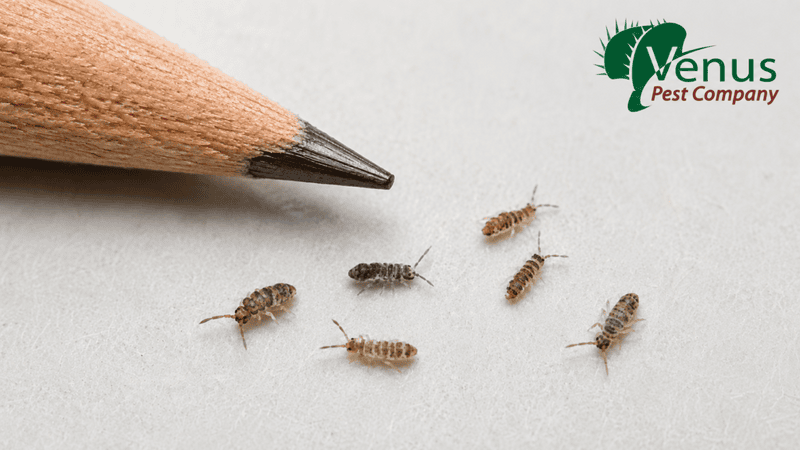
A springtail has a softer body and a more delicate appearance. Many local specimens look elongated, while other species have a rounder globular body. They lack wings and remain much smaller than the insects most people notice around a home.
Springtails jump with a forked structure called a furcula. It folds beneath the abdomen and snaps against the surface when released. The action launches the animal away from danger. It doesn’t aim the jump with the precision of a flea, so a group may seem to pop in every direction when disturbed.
Are Springtails Actually Insects?
Older references often call springtails primitive insects. Modern classifications usually place them among the entognathous hexapods, close relatives of insects with mouthparts tucked inside the head rather than exposed.
For a homeowner, the distinction doesn’t change the response. Springtails still have six legs, develop without a pupal stage, and live in many of the same environments as tiny insects. The correction matters because a pest library should stay true to current entomology.
Springtails belong to the group Collembola. Scientists have described thousands of species, and many more likely remain unknown. They occur across the world in soil, leaf litter, compost, moss, rotting wood, shorelines, and other damp habitats.
Their abundance often goes unnoticed because they work at a scale below ordinary attention. A handful of healthy soil can contain many without anyone seeing one.
How Springtails Use Their Jumping Fork
The furcula acts like a loaded spring. A small latch holds it beneath the body. When the springtail senses danger, the latch releases and the fork strikes the surface.
That mechanism produces the sudden hop that gives the group its common name. It works best as an escape response rather than controlled flight. Springtails have no wings, and they don’t travel through a house by flying.
Some species jump readily, while others rely more on crawling. A wet surface can limit the visible movement, and tiny specimens may appear motionless until someone breathes on them or touches the area.
Another structure called the collophore projects beneath the abdomen. It helps with water balance and contact with moist surfaces. The furcula gets the attention, but moisture management helps explain the animal’s entire way of life.
Why Moisture Supports So Many Springtails
Springtails lose water easily and need humid surroundings. Damp soil and decomposing material support the fungi, bacteria, algae, and other food they consume. When moisture and food remain abundant, populations can reach extraordinary densities.
Texas A&M AgriLife Extension describes springtails as outdoor organisms of moist environments that feed on decaying plants, fungi, and bacteria. They may also consume algae, pollen, and other tiny organic material.
In Brazos County, irrigation and shade can maintain that habitat during hot weather. Deep mulch, leaf litter, wet groundcover, clogged drainage, leaking faucets, air conditioner condensate, and overwatered pots can support activity near a structure.
Heavy rain may push an outdoor population across patios and foundations or concentrate it around doors. A dry spell can also send springtails searching for the remaining damp pockets. The pattern depends on where usable moisture remains.
Common Indoor Springtail Sources
Many indoor sightings come from outside. Springtails crawl through door gaps, window tracks, weep holes, and small openings near damp exterior soil. A windowsill may collect them because light attracts their movement after they enter.
Potted plants create the main exception. Moist potting soil, decaying roots, algae, and fungi can support a local population for long periods. Springtails may jump across the soil surface after watering and wander onto nearby counters or floors.
Bathrooms and kitchens provide temporary humidity, but a few insects near a sink don’t prove a hidden plumbing leak. Repeated activity in one wet area deserves closer inspection, especially when surfaces stay damp, grout never dries, or a cabinet shows water damage.
Crawl spaces, basements, and utility rooms can also maintain enough humidity for survival. The springtails may not cause the moisture problem, but they make it harder to ignore.
Why They Collect in Pools and Tubs
Springtails can remain on the surface of water because their bodies resist wetting. A large outdoor population may wash into a pool after rain and gather along the edge, skimmer, or waterline.
They didn’t breed in the treated pool water. Runoff, nearby soil, mulch, decking gaps, and vegetation usually provide the source. New springtails may keep arriving until the surrounding habitat dries or the population declines.
Bathtubs and sinks act differently. Springtails enter the room or emerge near a damp opening, then become trapped by smooth sides. The fixture concentrates them where the homeowner can finally see them.
Finding them in a drain doesn’t automatically mean they live in the drain. The surrounding moisture, a leaking seal, nearby plant, window, or exterior entry route may tell the better story.
Are They Harmful?
Springtails don’t bite, sting, or transmit disease to people. They don’t infest hair, skin, pets, clothing, furniture, or stored food. University of Minnesota Extension describes them as harmless to people and animals.
Most feed on fungi and decaying material without damaging healthy plants. Very large populations may graze tender roots or seedlings under unusual conditions, but ordinary household activity rarely creates meaningful plant damage.
Their greatest effect is psychological and practical. Hundreds of jumping specks can make a clean bathroom or kitchen feel unsanitary even though the animals carry no blood feeding or structural threat.
A Moisture Clue, Not a Diagnosis
Springtails often point toward damp conditions, but they don’t identify the exact cause. Outdoor irrigation may explain activity near one door. A wet flowerpot may explain a kitchen counter. A plumbing leak, drainage problem, or humid crawl space may explain a persistent indoor population.
Inspection should follow the concentration. Look where the greatest number appears, when activity peaks, and what changed before the problem began. Rain, a new plant, increased irrigation, a condensate issue, or recent construction can narrow the possibilities.
Our guide to conducive conditions explains how water, food, shelter, and access combine around structures. Springtails provide one of the clearest examples because long term control depends so heavily on that environment.
Practical Ways to Reduce Activity
Allow potting soil to dry as much as the plant safely tolerates between waterings. Empty saucers, remove decaying plant material, and check whether one pot supports most of the activity.
Correct leaks and investigate areas that remain damp. Improve ventilation where practical, and use a dehumidifier when an enclosed space stays humid. Drainage or plumbing problems may require the appropriate contractor.
Outside, review irrigation near the foundation. Reduce unnecessary leaf buildup and excessive mulch where it holds constant moisture against the structure. Repair worn door seals and gaps around windows or utility lines.
Vacuum or wipe up indoor springtails. They crush easily and leave little mess, but new arrivals may continue until the moisture or outdoor pressure changes.
Professional Springtail Control
Venus Pest Company includes indoor springtails in our Basic Pest Control, Commercial Pest Control and the HomeGard Plans. Our inspection focuses on where activity concentrates, how the animals enter, and which moisture conditions may keep replacing them.
Professional service can reduce active invaders and help protect entry areas, but it can’t repair a leak or dry saturated soil. The strongest result comes from combining service with practical moisture correction.
We don’t publish pesticide products, active ingredients, application rates, or homeowner pesticide recommendations. Springtails punish a product only approach because a damp source can keep producing new animals after the visible group disappears.
Local Help Across Brazos County
Venus Pest Company has served local homes and businesses since 2001. Our founder, Dr. Scott Lingren, holds a PhD in entomology and built the company’s programs around correct identification and Integrated Pest Management.
If tiny jumping specks keep appearing around your home or business, call or text 979-774-0486, or email service@venuspest.com. We’ll determine whether you’re seeing springtails, fleas, or another small arthropod and look for the conditions driving the problem.
Common Questions
Do they bite people or pets?
No. Springtails don’t bite, sting, or feed on blood. They don’t live on people or pets and don’t create a flea style infestation.
Why do they jump?
Most use a forked structure called a furcula. It snaps against the surface and launches the springtail away from danger.
Are they coming from the drain?
Not necessarily. Sinks and tubs trap springtails and make them easy to see. The source may involve a damp opening, nearby plant, leak, window, or outdoor population.
Can they live in potted plants?
Yes. Moist potting soil can support fungi, algae, microbes, and decaying material that springtails eat. Overwatering often makes the population more noticeable.
Why are they floating in my pool?
Rain, runoff, wind, or movement from nearby damp soil can carry them onto the water. They usually come from surrounding habitat rather than breeding in the pool.
Do they mean my house has mold?
They feed on fungi, but their presence doesn’t prove a serious mold problem. They indicate moisture and microbial food somewhere nearby, so repeated indoor activity deserves inspection.
Will they damage the structure?
No. Springtails don’t eat structural wood, drywall, furniture, clothing, or stored food. They create a nuisance rather than structural damage.
Does Venus service cover them?
Yes. Indoor springtails appear in Basic Pest Control coverage. Lasting improvement may also require the customer to correct irrigation, drainage, plumbing, or humidity problems that support the population.