
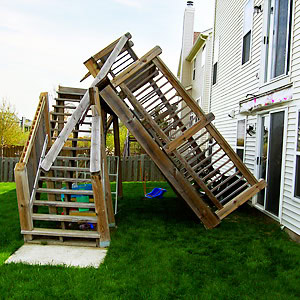
The goal is not to make a deck pest proof. No outdoor structure can promise that. A better goal is to avoid creating shelter, access and inspection problems that make future pest activity harder to find and correct.
This matters in Bryan, College Station and the rest of Brazos County, where termites, mosquitoes and wildlife can remain active through much of the year.
Keep Structural Wood Away From Soil
Wood that touches soil gives subterranean termites a concealed route into a structure. It also exposes the wood to moisture that can encourage decay.
Deck posts and supports should follow current construction requirements for the material and design. A qualified contractor can determine the correct footings, connectors and clearances. From a pest inspection standpoint, we want structural wood separated from soil and visible enough to evaluate.
Mulch and new landscaping can change that relationship after construction. A deck may begin with reasonable clearance, then lose it as someone raises the soil line or piles mulch around supports. Regular maintenance should include checking those areas rather than looking only at the walking surface.
Our guide to conducive conditions explains why wood contact with soil, excessive moisture and high soil lines increase concern for termites and other wood damaging organisms.
Preserve a View of the Foundation
The original version of this article said not to attach a deck directly to the house. That advice was too broad. Many decks use an attached ledger as part of a proper design. The attachment itself is a construction question for the builder and local code requirements.
The pest concern is visibility. Deck framing, trim, lattice or stored materials should not make the foundation impossible to inspect. A termite mud tube can remain hidden behind a board for a long time if no one can see or reach the area.
An attached deck also needs proper moisture management. Water trapped where the deck meets the building can contribute to damaged wood and create conditions that favor subterranean termites or carpenter ants.
Pest evidence does not always appear in an easy location. Preserving sight lines around the foundation gives the homeowner, contractor and pest professional a better chance of finding a developing problem.
Drainage Matters Under the Deck
The ground beneath a deck receives less sun and air movement than the open yard. Water may dry slowly, especially when the deck sits low or the surrounding grade directs runoff underneath it.
Standing water can support mosquito development. Persistently damp soil can support other arthropods and contribute to moisture problems around wood and foundations. Gutters, downspouts, irrigation and nearby air conditioning drainage can all add water to the same shaded space.
A deck does not automatically create a drainage problem. It can make one harder to notice. Homeowners may not see a leaking hose connection or a low spot that stays wet because the deck boards hide it.
Before construction, consider where water will travel and how someone will inspect the area later. After construction, look beneath the deck following heavy rain rather than assuming the surface tells the whole story.
What the Ozona Deck Taught Me About Mosquitoes
The former Ozona Grill & Bar in College Station had a large outdoor deck that many local residents will remember. Before Venus began managing the mosquito pressure there, I could sit outside and feel my legs getting absolutely mauled by mosquitoes coming through the cracks between the boards.
The deck cracks did not create the mosquitoes. Mosquito larvae require water. The structure did, however, provide a route from the protected space beneath the deck to the people sitting above it. Shade, humidity and shelter can make the area below a large deck useful to adult mosquitoes during the day.
Once we included that space in the professional program, the customer experience improved dramatically. The lesson stuck with me because the source of the bites was not obvious from the top of the deck. You could enjoy the patio, look around for mosquitoes and miss the shaded space directly beneath your chair.
This is one reason commercial mosquito work requires a property inspection. A restaurant patio, apartment courtyard and residential deck may look similar from above while creating very different resting areas and access problems below.
Our mosquito guide explains their biology, while the Mosquito Control Program describes the professional service available for homes. Businesses receive a program based on the property, operating hours and pest pressure through our commercial pest control service.
Balance Wildlife Exclusion With Service Access
Open space beneath a deck can attract cats, opossums, skunks, rodents and other animals. Closing that space may reduce access, but decorative lattice alone rarely provides durable wildlife exclusion.
Materials need to match the animal and the opening. They also need to allow for drainage and ventilation. Closing a deck without checking underneath can trap an animal inside or separate a mother from young.
At the same time, a completely inaccessible deck creates its own problems. Plumbing, electrical connections, structural supports and pest evidence may all require inspection. A planned access panel gives technicians and repair professionals a way to reach the space without dismantling part of the deck.
Access should close securely when no one is using it. The design needs to keep animals out while still allowing deliberate entry for inspection and maintenance.
If scratching, odor or movement suggests an animal already occupies the space, identify and remove it before closing openings. Roof rats and house mice require different work from squirrels, opossums or other wildlife.
Avoid Turning the Space Into Storage
The shaded area beneath a deck often becomes a convenient place for lumber, cardboard, unused planters, pet supplies and other materials. That storage reduces inspection access and creates more shelter.
Firewood deserves particular attention. Wood stacked against the house or directly on soil can conceal termite activity and hold moisture. Cardboard and loose debris can provide nesting material for rodents.
Outdoor cooking also changes pest pressure. Grease, crumbs, spilled drinks and pet food can support ants, cockroaches, flies and rodents. The deck may look clean while food collects between boards or beneath equipment.
Good sanitation cannot solve every pest problem, but it removes rewards and makes new activity easier to notice.
Watch for Changes After Construction
A well designed deck can develop problems years later. Soil settles. Boards decay. Wildlife enlarges openings. New landscaping blocks airflow, and irrigation patterns change.
Look for mud tubes, damaged wood, unexplained sawdust or frass, gnawing, droppings, standing water and persistent odors. Also notice whether vegetation or stored materials now block the foundation.
One sign does not identify the pest by itself. Carpenter ants, termites, beetles and moisture damage leave different evidence. Save a specimen or take clear photographs before cleaning when possible.
Professional Help for Deck Related Pest Problems
Venus Pest Company has served homes and businesses in Brazos County since 2001. Founder Dr. Scott Lingren holds a PhD in entomology, and our work begins with identification and inspection rather than assuming every deck needs the same treatment.
Basic Pest Control covers many common insects around homes. Active termite, rodent, mosquito and wildlife problems require the service designed for that pest. The HomeGard, HomeGard Plus and TotalGard plans combine several forms of protection, with exact coverage described on the plan page and service agreement.
If you find activity beneath a deck or want the area evaluated, call or text 979.774.0486, or email service@venuspest.com.
Common Questions About Pests Under Decks
Do decks cause termite infestations?
No. A deck does not create termites. Wood contact with soil, trapped moisture and blocked inspection access can make termite activity easier to establish or harder to detect.
Should a deck be attached to the house?
That is a construction decision for a qualified contractor and current building requirements. From a pest standpoint, the design should manage moisture and preserve reasonable access to inspect the foundation and attachment area.
Can mosquitoes breed beneath a deck?
They can breed anywhere suitable standing water remains long enough for the immature stages to develop. The shaded space beneath a deck can also provide shelter for adult mosquitoes even when breeding occurs elsewhere.
Should I completely seal the area under my deck?
Wildlife exclusion can help, but the design should preserve drainage, ventilation and controlled access. Never close an occupied space until the animal and any dependent young have been addressed.
What pests commonly use the space beneath decks?
The answer depends on moisture, food and access. Ants, cockroaches, spiders, mosquitoes, rodents and larger wildlife may all use the area for different reasons.
Is deck pest service included with regular pest control?
Basic Pest Control covers many common household insects. Termites, active rodents, mosquitoes and wildlife have separate coverage or programs. The inspection determines which service applies.