

Pest Expert Overview: House Mice in Bryan & College Station
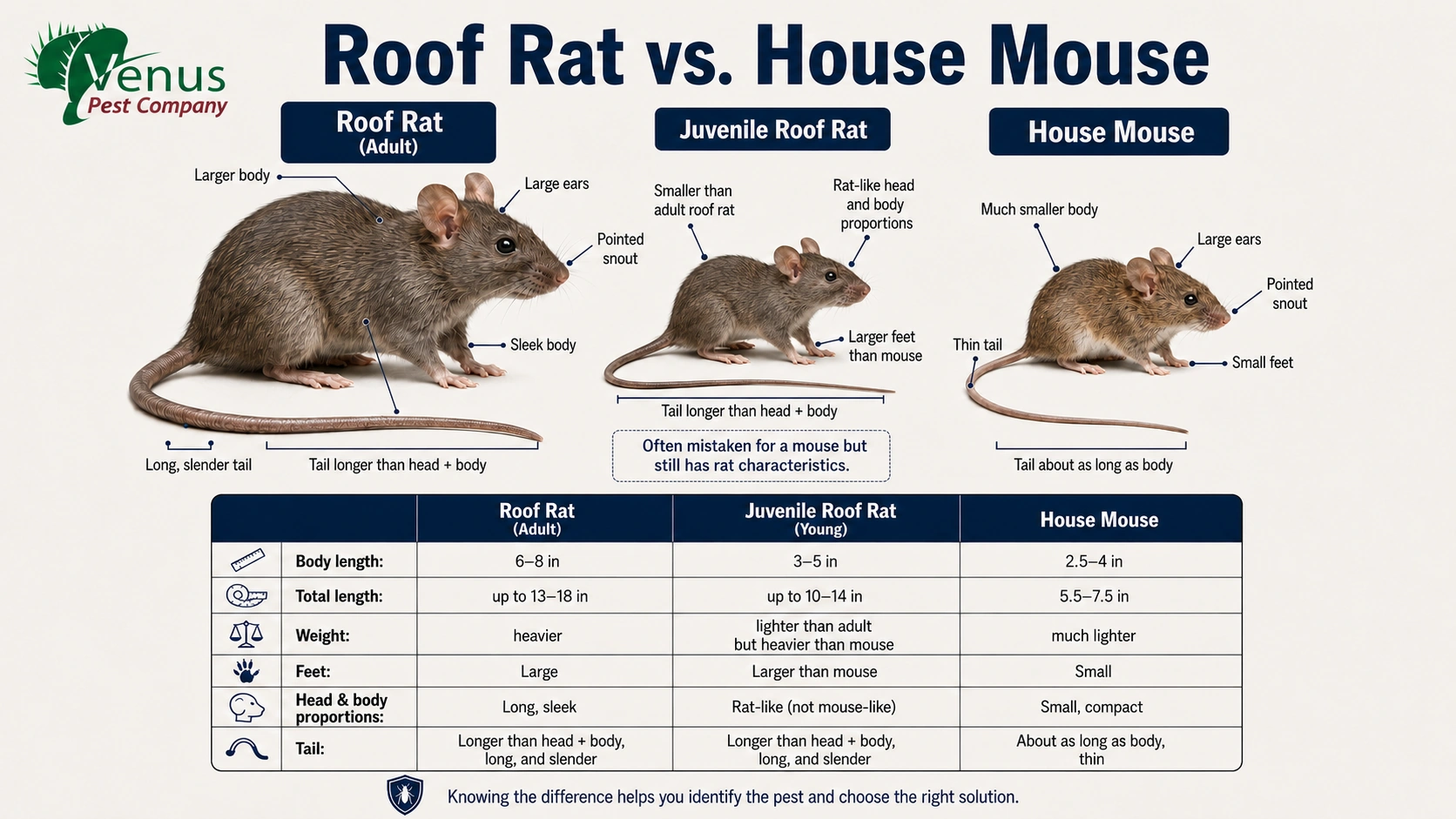
House mice aren’t simply smaller roof rats. They differ in appearance, behavior, food needs, and the way they respond to new objects. Those differences matter when we inspect a building and decide where to look for entry points and activity.
Around Bryan, College Station, and the rest of Brazos County, mice can enter homes, restaurants, offices, warehouses, apartments, and storage buildings through openings that barely look large enough. Lasting control requires more than catching the animal someone happened to see.
A Small Rodent With Few Needs
The house mouse, Mus musculus, is one of the most successful mammals living alongside people. Adults usually have a body about 3 to 4 inches long with a thin tail of similar length. Their fur ranges from dusty gray to light brown, with a somewhat lighter underside.
Large ears, small black eyes, a pointed muzzle, and a slender build help distinguish a house mouse from heavier outdoor rodents. An adult may weigh only about half an ounce.
That small body lets a mouse use tiny openings. Texas A&M AgriLife’s rodent IPM guide notes that mice can enter through a hole about the size of a dime or a gap roughly one quarter inch wide. A worn door seal or an unfinished opening around a pipe can provide enough room.
Mice also need very little food and can often get enough water from what they eat. A few crumbs, spilled pet food, seeds, or poorly protected pantry items can sustain activity that remains unnoticed for weeks.
Identifying a House Mouse
An actual specimen makes identification easier, but signs often tell the story first. Mouse droppings look small, dark, and tapered. Fresh droppings may appear shiny and soft, while older ones become dull and hard. Size alone isn’t perfect because age and diet create variation.
Mice leave narrow gnaw marks on food packages, wood, plastic, and other materials. They may shred paper, fabric, insulation, or plant fibers to create a nest. A persistent musky odor can develop in enclosed spaces with repeated activity.
Tracks and rub marks tend to follow edges. House mice usually travel beside walls, cabinets, stored materials, and other cover instead of crossing a large open room without reason.
House Mouse or Roof Rat?
Customers often use “mouse” and “rat” interchangeably, especially when they only hear movement in a wall or attic. A few clues help separate our two common indoor rodents.
| Feature | House mouse | Roof rat |
|---|---|---|
| Adult size | Small, about 5 to 7 inches including the tail | Much larger, often 12 inches or more including the tail |
| Tail | Thin and about as long as the body | Usually longer than the head and body combined |
| Droppings | Small and similar to dark grains of rice | Larger and more noticeable |
| Behavior | Curious and often investigates new objects | Cautious about changes in familiar territory |
| Typical range | Often stays close to food and nesting sites | Commonly travels through attics, trees, roofs, and fence lines |
A photo of droppings rarely proves the species by itself. Location, track size, gnawing, sounds, entry points, and trapping evidence provide a stronger identification.
Signs That Deserve Attention
One mouse sighting shouldn’t be dismissed. House mice reproduce quickly, and a building can provide stable food, shelter, and temperature throughout the year. Daytime activity may suggest crowding or disturbance, but a mouse seen at night can still represent more than one animal.
Droppings in cabinets, drawers, pantries, garages, utility rooms, and beneath appliances provide the most common evidence. New droppings appearing after a proper cleanup indicate current activity.
Other signs include chewed packages, missing pet food, nesting material, small tracks in dust, and scratching within walls or cabinets. Dogs and cats may stare at one appliance or cabinet long before a person detects movement.
How They Get Inside
Garage doors create frequent entry routes because the bottom seal, side seals, and corners rarely remain perfect forever. Mice can also enter around plumbing, air conditioning lines, cables, vents, crawl space openings, and gaps where different building materials meet.
They climb textured walls, pipes, stored materials, and vegetation. A hole doesn’t have to sit at ground level. Attached garages, roof transitions, utility chases, and attic vents all deserve inspection when the evidence points upward.
Open doors allow direct entry, but most infestations exploit a structural gap. Closing that route matters because removing the current mouse leaves the same invitation for the next one.
Why Food Cleanup Doesn’t Solve Everything
Sanitation makes control easier, but a spotless home can still have mice. They need so little food that overlooked crumbs, insects, grease, seeds, or pet food can support them. A nesting site inside a warm wall may remain valuable even when food requires a short nightly trip.
Store food in containers that resist gnawing. Clean beneath appliances, protect pet food, and avoid leaving animal bowls out overnight when practical. Reduce cardboard and loose material in quiet storage areas.
These steps remove rewards and make activity easier to detect. They don’t replace exclusion or direct control once mice already occupy the structure.
Damage and Health Concerns
Mice contaminate food and surfaces with urine, droppings, and hair. They can carry microorganisms and allergens, although finding a mouse doesn’t mean someone will become ill.
Gnawing can damage packaging, insulation, hoses, and electrical wiring. Mice gnaw partly because their front teeth continue growing. The location of the damage determines whether it creates a minor nuisance or a serious repair concern.
People should treat droppings and nesting material as contaminated. CDC cleanup guidance advises against sweeping or vacuuming dry droppings because that can send contaminated dust into the air. Wet the material with an appropriate disinfectant, allow the required contact time, wear gloves, and wipe it up according to current public health instructions.
Large accumulations, inaccessible contamination, or material inside ventilation systems may require professional remediation beyond ordinary pest control.
Lasting Control Starts With the Building
Trapping can remove mice already inside. Exclusion blocks the routes that allowed them in. A durable program needs both when structural openings remain.
We inspect the exterior shell, garage, roof transitions, doors, utility penetrations, and other likely access points. Indoors, we follow droppings, gnawing, travel edges, and customer observations to locate concentrated activity.
Materials used for closure need to resist weather and gnawing. Expanding foam alone may fill visible space without stopping a determined rodent. The repair has to fit the opening and the surrounding construction.
After closure, continued monitoring confirms whether every active animal has been removed and whether another route remains. That verification keeps a quick repair from becoming false confidence.
Professional House Mouse Control
Venus Pest Company’s Rodent Control Program handles active mouse infestations. We inspect, remove indoor rodents, close accessible entry points within the service scope, and provide scheduled maintenance to watch for new pressure.
Basic Pest Control includes exterior rodent prevention rather than elimination of an existing infestation. The HomeGard, HomeGard Plus, and TotalGard plans build on that prevention. For businesses, mouse service can be added to a customized commercial pest control program, and rodent coverage commonly appears in restaurant proposals.
We don’t publish rodenticide products, ingredients, bait quantities, trap placement patterns, or homeowner pesticide recommendations. Rodent work affects children, pets, wildlife, food areas, and inaccessible building spaces. Inspection and controlled placement matter.
Local Help Across Brazos County
Venus Pest Company has served local homes and businesses since 2001. Founder Dr. Scott Lingren holds a PhD in entomology, and our rodent program combines identification, removal, exclusion, and continued monitoring instead of relying on one temporary tactic.
If you find droppings, hear scratching, or see a mouse, call or text 979-774-0486, or email service@venuspest.com. Photos of the droppings, damage, and surrounding area can help us prepare for the inspection.
Common Questions
Does seeing one mean there are more?
Not always, but it deserves action. House mice reproduce quickly, and their secretive habits allow several animals to remain unnoticed. An inspection looks for additional evidence rather than guessing from one sighting.
How small an opening can they use?
A mouse can use a hole about the size of a dime or a gap near one quarter inch. Worn door corners and utility openings often look insignificant to a person but remain usable to a mouse.
Are the droppings dangerous to clean?
Treat them as contaminated. Don’t sweep or vacuum them dry. Follow current CDC instructions for wetting, disinfecting, wiping, disposal, gloves, and handwashing.
Why do I hear movement mostly at night?
House mice tend to become active after dark when the building grows quieter. They may leave a nest to forage while staying close to walls and other cover.
Can a clean house develop an infestation?
Yes. Cleanliness helps but doesn’t close entry points. Mice can survive on very small amounts of food and may nest in a clean building that offers warmth and shelter.
Will a cat solve the problem?
Some cats catch mice, while others ignore them. A cat also can’t close the opening or reliably reach animals inside walls, cabinets, and attics. Predation isn’t a complete control program.
Is mouse service included with regular pest control?
Basic Pest Control and the Gard plans provide exterior rodent prevention. An active indoor infestation requires the Rodent Control Program. Commercial coverage depends on the facility’s proposal.
How are house mice different from roof rats?
House mice are much smaller and usually stay close to food and nesting areas. Roof rats are larger, strong climbers that commonly travel through trees, attics, rooflines, and fences.