

The situation looks very different now. Zika virus in Texas is not causing the emergency that people feared during the 2016 outbreak. The risk has not disappeared, though. Transmission continues at low levels in parts of the world, and travel remains the main concern for Texans.
The right response sits between panic and indifference. Most infections cause no symptoms or only a mild illness. Infection during pregnancy can have serious consequences, so travelers should use current guidance rather than relying on a news story from ten years ago.
What Has Changed Since the 2016 Outbreak?
The original version of this article appeared in July 2016, before the continental United States had reported local mosquito transmission. That changed later the same year. Florida and Texas eventually reported limited local cases during 2016 and 2017.
According to the CDC’s current United States case summary, the continental United States has no current local mosquito transmission. Mosquitoes have not transmitted Zika locally here since 2018. Recent cases have primarily involved travel.
That history matters. It would now be wrong to say that Texas has never experienced local transmission. It would also be wrong to suggest that Zika currently circulates widely in Texas. The Texas Department of State Health Services explains that Texas has recorded some local transmission, but travel accounts for most cases. Current Zika virus in Texas data do not justify panic, but they do justify paying attention before a trip.
Why Zika Still Deserves Attention
Many infected people never feel sick. Those who develop symptoms usually experience a mild illness lasting several days to a week. Common symptoms include fever, rash, headache, joint pain, muscle pain, and conjunctivitis, which most people call red eyes. The CDC’s symptom guide provides the current medical overview.
That mild pattern can make the virus easy to miss. A person may return from a trip without realizing they became infected.
Pregnancy changes the risk calculation. The virus can pass from a pregnant person to the developing fetus. Infection during pregnancy can cause microcephaly and other brain or eye defects. It may also lead to pregnancy loss, stillbirth, or premature birth.
The CDC reports that birth defects associated with Zika occurred in about 5 percent of babies born to people with confirmed or possible infection during pregnancy in U.S. states and territories. These problems occurred after infections with and without symptoms. The agency explains the range of effects in its guide to congenital Zika syndrome.
Rarely, infection may trigger Guillain-Barré syndrome or another serious neurological problem. For most people, however, the illness remains mild or produces no noticeable symptoms.
How the Virus Moves Between People and Mosquitoes
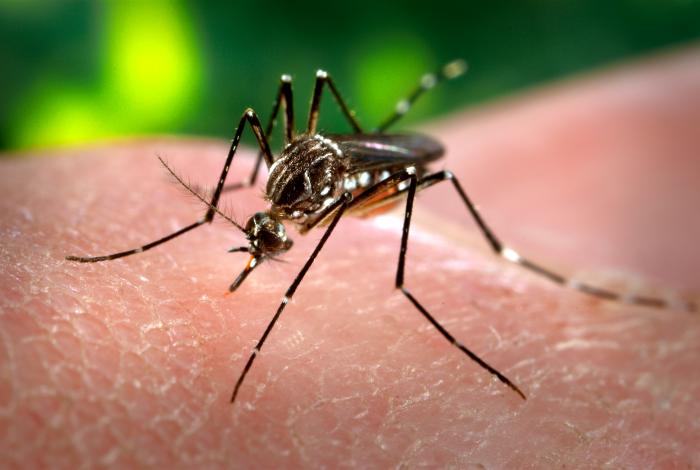
Zika primarily spreads through the bite of an infected Aedes mosquito. The yellow fever mosquito, Aedes aegypti, serves as the main vector. The Asian tiger mosquito, Aedes albopictus, can also transmit it.
Both species live in Texas. They commonly develop in small containers around homes and businesses. A bucket, plant saucer, discarded cup, clogged gutter, or children’s toy may hold enough water for immature stages.
The presence of these mosquitoes does not mean Zika circulates locally. A local transmission cycle begins when a mosquito bites an infected person while the virus remains in that person’s blood. After the virus develops inside the mosquito, that insect may infect another person through a later bite.
The virus can also spread through sex, even when the infected person never develops symptoms. A pregnant person can pass it to a fetus. Transmission through blood, tissue, or laboratory exposure occurs much less often. The CDC explanation of Zika transmission covers each route and the evidence behind it.
Travel Creates the Main Risk for Texans
Zika continues to occur in tropical and subtropical parts of the Americas, Africa, Asia, and the Pacific. Risk does not remain constant, and surveillance varies from one country to another. A destination without a newly reported outbreak may still have current or past transmission.
The CDC now groups destinations into four risk categories. Those categories distinguish active travel notices, places with current or past transmission, places that have a capable mosquito vector but no reported cases, and places without a known vector.
Check the CDC Zika travel page shortly before booking and again before departure. Do not rely on a static country list copied into an article. An online list can become outdated while this page remains published.
Pregnant travelers, people planning pregnancy, and anyone with a pregnant partner should discuss travel plans with a healthcare professional. The recommendation depends on the destination’s current category and the traveler’s circumstances.
Protection Does Not End When the Trip Ends
A traveler can return home feeling well and still carry the virus. The CDC advises people returning from a location with an active notice or current or past transmission to prevent mosquito bites for three weeks. That reduces the chance that a local mosquito will bite the traveler, become infected, and carry the virus to someone else.
Sexual transmission requires a longer period of caution because the virus can remain in semen longer than in other body fluids. Current CDC guidance says males should use condoms or avoid sex for at least three months after travel, symptom onset, or diagnosis. Females should follow those precautions for at least two months. The timing begins even when the traveler never develops symptoms.
Those recommendations can change as researchers learn more or outbreaks change. Anyone who is pregnant, planning pregnancy, experiencing symptoms after travel, or concerned about sexual exposure should use the current CDC prevention guidance and speak with a healthcare professional.
Start With the Water Around Your Property
Mosquito prevention around a home starts with the aquatic stages. Eggs, larvae, and pupae depend on water, even when the amount looks insignificant to us.
Walk around the property after rain and irrigation. Empty unnecessary containers, clean birdbaths and pet bowls, clear clogged gutters, and correct equipment or toys that trap water. Scrub containers before refilling them because Aedes eggs can remain attached just above the old waterline.
Dense, shaded foliage does not produce mosquitoes, but adults often rest there. The combination of standing water and protected resting sites can create steady pressure close to patios and doors. Our guide to pest conducive conditions explains how water, drainage, and vegetation work together around a building.
Source reduction helps with far more than Zika. It also reduces nuisance biting and supports broader prevention for other mosquito borne diseases. Our mosquito pest guide explains the local species, life cycle, and breeding sites in more detail.
What Professional Service Can and Cannot Do
Professional mosquito management can reduce adult biting pressure around a property. It cannot guarantee that nobody will receive a bite, prevent sexual transmission, or replace travel and medical guidance.
Venus Pest Company was the first company to introduce foliar mosquito treatment in the Brazos Valley. Adam Collette of Adam’s Bugs in The Woodlands first showed Dr. Scott Lingren the power sprayer approach. Scott’s earlier work with mist blowers in tree and vine research for Zeneca Ag Products helped him adapt the technique for local yards.
Today, our mosquito control program runs from April through October and is available on its own or through YardGard and TotalGard. We focus on the places adult mosquitoes rest and combine service with practical observations about water, shade, and property conditions.
Businesses may face additional pressure from patios, drains, irrigation, landscaping, waste areas, and neighboring properties. We evaluate those sites through our commercial pest control service rather than assuming one schedule fits every property.
Venus has served Bryan, College Station, and the rest of Brazos County since 2001. If biting pressure keeps people from using an outdoor area, call or text 979-774-0486, or email [email protected].
For now, Zika virus in Texas remains primarily a travel concern. Reducing local biting pressure still improves outdoor comfort and supports general mosquito prevention, but it does not replace the CDC steps for travelers.
A Different Risk From West Nile Virus
People often group all mosquito borne diseases together. The transmission patterns differ.
Zika risk for Texans currently centers on travel, pregnancy, and sexual transmission after exposure. West Nile virus already maintains a bird and mosquito cycle in Texas. It does not require an infected traveler to begin the local cycle.
Our article about why West Nile virus peaks in August explains that local pattern. The fall article on why mosquito activity can increase in October explains why comfortable weather does not always end the biting season.
Common Questions About Summer Travel and Exposure
Is Zika virus currently spreading through mosquitoes in Texas?
Health agencies report no current local mosquito transmission in the continental United States. Texas experienced limited local transmission in 2016 and 2017, but travel accounts for most Texas cases.
Can a person have Zika without knowing it?
Yes. Many infected people develop no symptoms. Others experience a mild fever, rash, headache, joint or muscle pain, or red eyes for several days to a week.
Why is infection during pregnancy more serious?
The virus can pass to a fetus and cause congenital Zika syndrome, including brain and eye defects. Infection during pregnancy may also contribute to pregnancy loss, stillbirth, or premature birth.
Which mosquitoes can transmit the virus?
The yellow fever mosquito, Aedes aegypti, acts as the primary vector. The Asian tiger mosquito, Aedes albopictus, can also transmit it. Both occur in Texas and commonly use small water filled containers.
Can Zika spread through sex?
Yes. Sexual transmission can occur before symptoms, during illness, after symptoms disappear, or when the infected person never feels sick. Follow current CDC timelines after possible travel exposure.
Where should I check my destination’s current risk?
Use the CDC Zika travel page shortly before booking and again before departure. Travel notices and geographic risk categories can change.
Should I seek testing after every trip?
Routine testing is not recommended for every traveler. Testing decisions depend on symptoms, pregnancy, destination, and possible exposure. Discuss your situation with a healthcare professional rather than using a general article to decide.
Can mosquito service guarantee protection from Zika?
No. Professional service can reduce biting pressure around a property, but it cannot eliminate every mosquito or replace travel precautions, sexual transmission guidance, and medical care.