
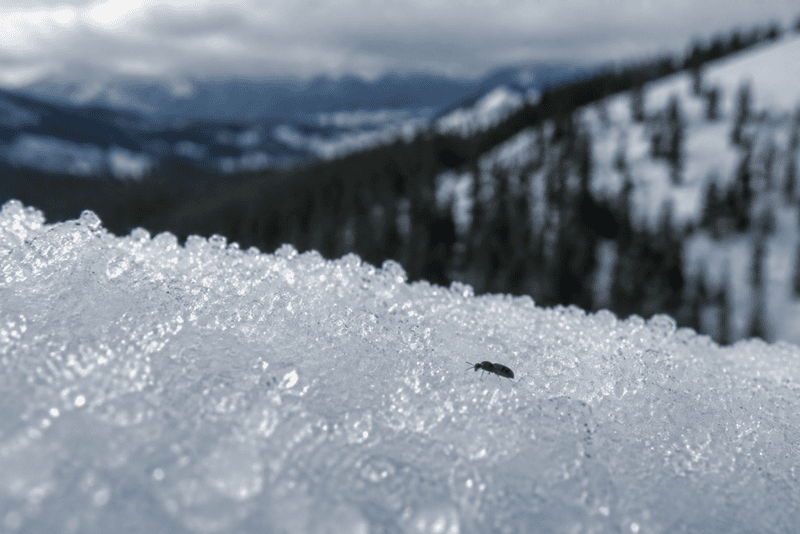
It was a snow flea, which isn’t actually a flea. It’s a type of springtail, and modern classifications don’t consider springtails true insects. That small correction makes the story even more interesting. This tiny arthropod was active on snow at a temperature that would stop most insects almost instantly.
Cold weather does kill some insects. It can also slow feeding, reproduction and movement. What it does not do is erase every insect from the landscape. The ones that live through winter have several ways to avoid or tolerate dangerous temperatures.
A Freeze Changes Activity Before It Changes Populations
Insects and other arthropods depend heavily on environmental temperature. When the air gets cold, their muscles and nervous systems work more slowly. That is why a freeze can make the outdoors seem suddenly free of insects.
Reduced activity does not mean everything died. An insect beneath bark experiences a different temperature from one sitting on a fence. Soil, leaf litter, tree cavities and buildings create protected pockets that may remain warmer than the exposed air.
The duration of a cold period matters too. A short Texas freeze followed by a warm afternoon creates a different biological challenge from weeks of frozen soil. Species, life stage, shelter and recent weather all affect survival.
Some Insects Leave Before Winter Arrives
Migration provides the most obvious escape. Monarch butterflies travel toward central Mexico, where winter conditions allow them to survive until they begin the journey north again.
Several agricultural moths also move with the seasons. Some species cannot survive prolonged freezing in northern states, so new generations migrate north from warmer regions each year. The true armyworm is one example. Its seasonal movement helped it become a familiar insect during my agricultural research work, although not always a welcome one.
Migration works for insects capable of covering long distances. Most species need another solution.
Shelter Creates a Different Climate
A layer of leaves may not feel impressive to us, but it can protect a small animal from frost and rapid temperature changes. Insects spend winter beneath leaf litter, inside dead stems, under bark, within wood, below the soil surface and in other sheltered spaces.
Some find similar protection in buildings. Wall spaces, attics, garages and gaps around windows can resemble the tree cavities or rock crevices they use outdoors. Asian lady beetles, certain wasps and other seasonal invaders may enter during fall, remain quiet for weeks and reappear during a warm spell.
This behavior does not necessarily mean they reproduced indoors. Many simply selected the building as a place to wait for spring.
Development Can Pause
Many insects enter diapause, a programmed period in which development and metabolism slow dramatically. Shorter days, changing temperatures or other seasonal signals can help trigger it.
The protected stage varies by species. One may pass winter as an egg while another survives as a larva, pupa or adult. The insect does not need to remain visibly active during that time. It only needs to protect the life stage that will restart the population when conditions improve.
That is one reason winter weather does not give us a simple forecast for spring pests. A freeze may remove exposed adults while leaving protected eggs or pupae unharmed.
Their Body Chemistry Helps
Insect body fluid is not plain water. Dissolved sugars, salts and other compounds can lower its freezing point. Some species produce additional compounds that protect cells and reduce the chance that destructive ice crystals will form.
Others use supercooling. Their body fluids remain liquid below the temperature at which water normally freezes. This strategy has limits, but it can carry a small arthropod through conditions that look impossible from our perspective.
University of Illinois Extension describes how insects combine shelter, dormancy and protective body chemistry to survive cold weather. Different species use different combinations, which is why one cold night can affect two insects very differently.
Snow Fleas Take Cold Adaptation Further
Snow fleas live in moist organic material and feed on fungi and decaying matter. During winter thaws, they may gather in large numbers on snow, where their dark bodies become easy to see.
They do not bite, sting or behave like true fleas. They jump with a forked structure beneath the abdomen, the same basic mechanism used by other springtails. The University of Minnesota Extension explains that snow fleas become active as the ground begins to thaw in late winter or early spring.
The one I saw in Idaho provided a memorable reminder that human comfort tells us very little about arthropod survival. I was bundled up and ready to leave. The springtail seemed perfectly content.
Texas Winter Is Full of Warm Interruptions
Winter in Bryan and College Station rarely follows a straight line. A freeze may give way to a warm afternoon within a few days. Those changes can bring sheltered insects back into view.
People sometimes assume that a cold front solved an outdoor pest problem, then feel surprised when activity returns. The insects may have moved deeper into shelter, paused briefly or survived in a protected life stage.
Warm indoor conditions create another situation entirely. German cockroaches, fleas, silverfish and some house spiders can remain active inside regardless of the forecast. A heated building provides temperatures, moisture and food that outdoor insects do not receive.
Cold Weather Still Has an Effect
None of this means winter weather is irrelevant. Extended cold can reduce populations, delay development and kill exposed individuals. Some insects cannot survive outside their normal climate at all.
The mistake comes from treating every species and every hiding place as if they experience the same temperature. A frost on the lawn does not tell us what happened beneath mulch, under a slab or inside an attic.
When spring arrives, weather becomes only one part of the explanation. Food, moisture, shelter, reproduction and natural enemies also shape the population that appears.
Common Questions About Bugs in Winter
Does freezing weather kill mosquitoes?
It kills some exposed mosquitoes, but species survive winter in different stages. Depending on the species, eggs, larvae or adult females may make it through protected conditions. New mosquitoes can also arrive or emerge when temperatures rise.
Why do bugs appear inside on warm winter days?
Warmth can wake insects that spent the colder period inside walls, attics or other sheltered spaces. They may move toward windows and light as they become active.
Do cockroaches die during winter?
Outdoor species may slow down or suffer losses during severe cold. Cockroaches living inside a heated structure can remain active throughout the year. German cockroaches rarely depend on outdoor weather once they establish indoors.
Can insect eggs survive a freeze?
Many can. Some species use the egg stage specifically to survive unfavorable seasons. The answer depends on the species, exposure and duration of the cold.
Are snow fleas harmful?
No. Snow fleas are springtails that feed mostly on fungi and decaying organic material. They do not bite or sting people and do not behave like parasitic fleas.
Does a hard freeze mean fewer bugs next spring?
Possibly, but not always. A freeze can reduce some populations while protected insects survive. Spring moisture, temperatures, food and reproduction may have a greater effect on what people eventually notice.
Local Help Across Brazos County
Venus Pest Company has served Brazos County since 2001. Dr. Scott Lingren holds a PhD in entomology and has worked with insects since childhood. Our Basic Pest Control program changes with the season because the important pests and their behavior change too.
If insects appear indoors during winter, identification comes first. Call or text 979.774.0486, or email [email protected]. A clear photograph and the location where you found the insect can help us narrow the possibilities.