 Pest myths are remarkably durable. Someone hears a convincing explanation from a neighbor, repeats it at work, and twenty years later people still believe a mouse will politely leave the house before dying because a bait made it thirsty.
I wrote about several of these myths years ago. Some of my original conclusions still hold up. A few of the explanations needed their own fact check. Let’s take another look with better sources, more field experience and considerably more internet nonsense to sort through.
Myth 1: Rodent Bait Makes Rats and Mice Go Outside for Water
I have heard this claim more times than I can count. The story says that a special bait makes a rat or mouse desperately thirsty. The animal then leaves the building to find water and conveniently dies outdoors.
No bait can promise that behavior. A rodent may die inside its nest, in a wall, above a ceiling or anywhere else it travels. House mice often obtain much of their water from food, which makes the thirst story even less convincing. Utah State University Extension notes that mice tend to nest near food and can meet much of their water requirement through what they eat.
This is one reason professional rat and mouse control should account for the building, likely nesting areas, entry points and the possibility of an inaccessible carcass. A catchy promise about thirsty rodents cannot replace inspection and exclusion.
Our roof rat and house mouse guides explain why these animals can live surprisingly close to people without making themselves obvious.
Myth 2: Hanging Bags of Water Keeps Flies Away
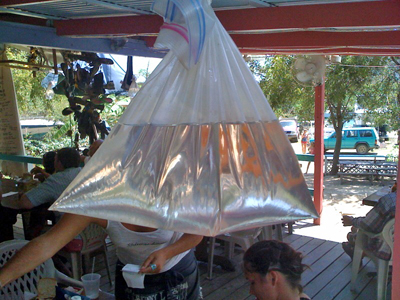
You have probably seen clear bags of water hanging near doors, patios or outdoor dining areas. Some contain pennies or pieces of foil. The usual explanation says reflected light overwhelms a fly’s compound eyes and sends it somewhere else.
It sounds plausible because flies really do process light differently than we do. That does not mean a sandwich bag turns into a force field. The University of Minnesota Extension reports that no evidence shows hanging water bags repel house flies.
If a baggie and a few pennies solved flies, I would happily admit that the pest control industry had overcomplicated the problem. Unfortunately, fly activity usually points back to food, moisture, waste or another breeding source. Our house fly guide explains why finding that source matters more than decorating the doorway with spare change.
Myth 3: Everyone Swallows Spiders While Sleeping
The number changes depending on who tells the story. Some people say eight spiders per year. Others say eight in a lifetime. Nobody provides the spiders, witnesses or sleep study.
The Burke Museum’s arachnology collection points out the central problem: no evidence supports the claim. A sleeping person breathes, moves, snores and creates vibrations. None of that makes an open mouth look like a protected place for a spider to explore.
Another story claims that someone deliberately invented the statistic to prove people will believe anything online. That origin story also lacks solid documentation. Apparently, even the explanation for the myth became a myth.
Could a spider accidentally crawl across someone’s face? Of course. Animals occasionally end up in strange places. That is very different from claiming nearly everyone consumes spiders on a predictable schedule.
Myth 4: Brown Recluse Bites Are Usually Deadly
Brown recluse spiders deserve respect, but they do not deserve every infected sore, unexplained lesion and frightening internet photograph attributed to them.
Most credible brown recluse bites heal without severe scarring. Serious systemic reactions can occur, particularly in children, but the old article made the risk sound far more predictable than it is. It also claimed that someone would definitely feel the bite and see the spider. We should never make that promise.
University of California, Riverside spider researcher Rick Vetter has documented how often infections and other medical conditions get mistaken for recluse bites. Without a captured and properly identified spider, a skin lesion alone may not reveal what caused it.
My mother once woke with a painful facial lesion that we believed came from a brown recluse. Her face swelled and looked bruised for about a week, but she recovered. We did not preserve and identify the spider. My mother is no longer with us, so I cannot ask for details that I have forgotten. The honest description is a suspected brown recluse bite, not a confirmed one.
That uncertainty does not make her experience imaginary. It shows why we should separate a real injury from an identification we cannot prove. Anyone with a worsening wound or concerning symptoms needs medical care, not an online spider diagnosis.
Brown recluse spiders are not especially common in Bryan and College Station. Our brown recluse guide covers identification, local occurrence and the genuine indoor infestation I encountered after stored boxes entered a home.
Myth 5: Daddy Longlegs Have the World’s Most Powerful Venom
The full story says daddy longlegs possess incredibly dangerous venom but cannot bite people because their fangs are too short. This myth combines unrelated animals and gets the biology wrong for all of them.
Harvestmen are arachnids, but they are not spiders and have no venom glands. Cellar spiders are true spiders and do have venom, but nothing supports the claim that their venom poses an extraordinary danger to people.
The confusion gets worse because people in some regions also call crane flies daddy longlegs. Crane flies are insects. The Burke Museum gives a useful comparison of all three animals.
MythBusters famously persuaded a cellar spider to bite one of the hosts. He described little more than a pinprick. That television experiment was more entertaining than a formal toxicology study, but it did illustrate that the mythical outcome did not occur.
Myth 6: Mosquito Hawks Eat Mosquitoes
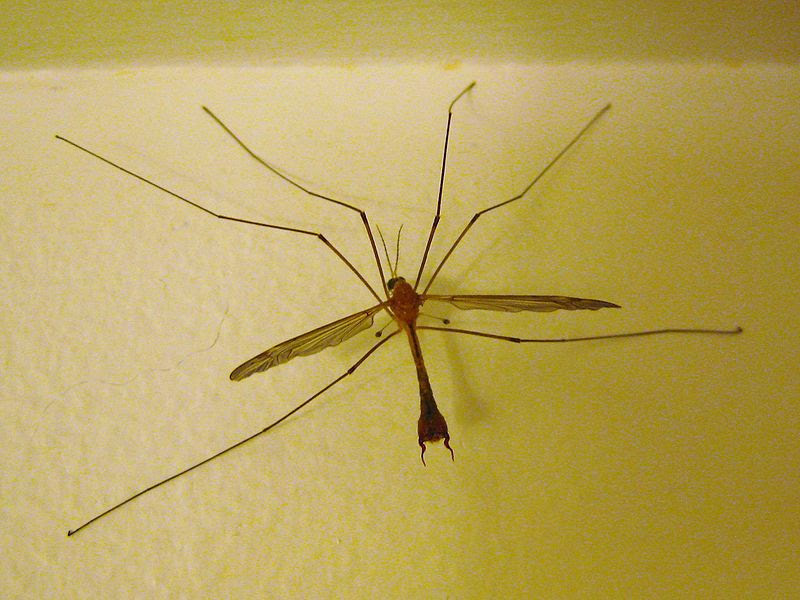
The nickname mosquito hawk gives crane flies a job they never applied for.
Adult crane flies resemble oversized mosquitoes, but they cannot bite people and do not hunt mosquitoes. Many adults eat little or nothing during their brief lives. Their larvae usually consume decaying plant material, although feeding habits vary among species.
The Texas A&M Field Guide to Common Texas Insects states plainly that crane fly adults and larvae do not feed on mosquitoes. Seeing many crane flies around the house does not mean they are reducing the local mosquito population. It usually means weather and moisture favored crane fly development.
They remain harmless visitors, even if their flight control makes them look like they learned to fly five minutes ago. Actual mosquitoes require their own identification and management plan.
Myth 7: Spiders Bite People to Feed Themselves or Their Young
Humans are not spider food. Spiders use venom to subdue prey they can capture and consume, usually insects and other small arthropods. They do not bite people to create a food source, and they do not place egg sacs on people so the young can feed later.
Most verified bites happen when a spider becomes pressed against skin, trapped in clothing or bedding, or handled. A spider has more to lose from confronting a person than the person does from encountering the spider.
This does not mean every spider is harmless or that nobody gets bitten. It means intent matters. A defensive bite is not a hunting strategy. The distinction also explains why a home can contain many spiders without anyone receiving a bite.
Why Pest Myths Matter
Some myths are harmless. A bag of water near the door may look odd, but it probably will not create a crisis. Other myths delay the correct response. Someone who assumes every wound is a brown recluse bite may overlook another medical cause. Someone who expects a poisoned rodent to leave the building may create an odor problem inside a wall.
The best pest decisions start with identification. Determine what animal is present, understand why it is there and then choose a response that fits the actual problem. That approach is less exciting than a secret trick, but it works more often.
Venus Pest Company’s Basic Pest Control covers many common spiders and household insects in Brazos County. Rodents, mosquitoes and other specialty problems require the service designed for them. Call or text 979.774.0486, or email [email protected] if you need help separating pest fact from a very confident story.
Common Questions About Pest Myths
Does rodent bait make rats and mice search for water outdoors?
No product can guarantee that behavior. Rodents may die wherever they nest or travel, including inaccessible areas inside a building.
Do bags of water and pennies repel flies?
No reliable evidence shows that hanging bags of water repels house flies. Fly control works better when it addresses the breeding source, food, moisture and waste attracting them.
How many spiders does a person swallow while sleeping?
No credible study has established a number. There is no evidence that swallowing spiders during sleep occurs regularly.
Are brown recluse bites usually fatal?
No. Most credible bites heal without severe injury, although serious reactions can occur. A worsening wound or systemic symptoms require medical evaluation.
Can a doctor identify a brown recluse bite from the wound alone?
Many medical conditions resemble alleged spider bites. Capturing and identifying the spider provides much stronger evidence than the appearance of a lesion alone.
Are daddy longlegs dangerous to people?
No. Harvestmen have no venom. Cellar spiders have venom but are not considered medically dangerous, and crane flies are harmless insects.
Do crane flies reduce mosquito populations?
No. Despite the nickname mosquito hawk, crane flies do not hunt or consume mosquitoes.
Do spiders deliberately attack sleeping people?
No. Spiders do not hunt people. Most verified bites occur when someone presses a spider against the skin or handles it.