
Pest Expert Overview: Millipedes in Bryan & College Station
Not long after I started Venus Pest Company, a customer called to say millipedes were everywhere inside her house and crawling up the walls. I thought she had to be exaggerating. People often use “everywhere” when they have seen six bugs.
She was not exaggerating.
When I arrived, millipedes truly were crawling up the walls. Heavy rainfall had saturated the surrounding ground, and their numbers had exploded. I gained control, but it took about a week and some cooperation from the weather. That experience taught me never to dismiss a report simply because it sounds extreme. Under unusual conditions, a harmless outdoor arthropod can create an indoor invasion that looks almost unbelievable.
For homeowners in Bryan, College Station, and the rest of Brazos County, the most important facts are simple. Millipedes do not infest people, damage a house, or establish a lasting colony in a normal dry home. Large invasions start outdoors. Moisture, organic matter, population pressure, and weather usually explain why they suddenly move toward a structure.
When the Walls Really Were Moving
The customer who called me had encountered a mass migration, not a few insects wandering through an open door. Millipedes had developed in the damp soil and organic material around the property. Prolonged rain changed that habitat and drove large numbers to move at once.
People sometimes assume a dramatic indoor sighting must mean the pest has been breeding inside for months. Millipedes usually tell a different story. Their numbers may build outside with almost no warning. Then saturated ground, drought, temperature changes, or another environmental shift can send them across patios, foundations, porches, and thresholds.
The house becomes part of their route rather than their destination. They do not understand that a wall leads into a dry building where they cannot thrive. They simply keep crawling, and rough exterior surfaces give them enough grip to climb.
That distinction matters during service. We can reduce the active invasion and address the places where they approach or enter, but rain may continue pushing new individuals toward the home. During a major weather driven event, control may improve over several days instead of ending the moment a technician leaves. In the case I remember, we needed roughly a week, plus a change in the weather, before the movement finally stopped.
What Is a Millipede?
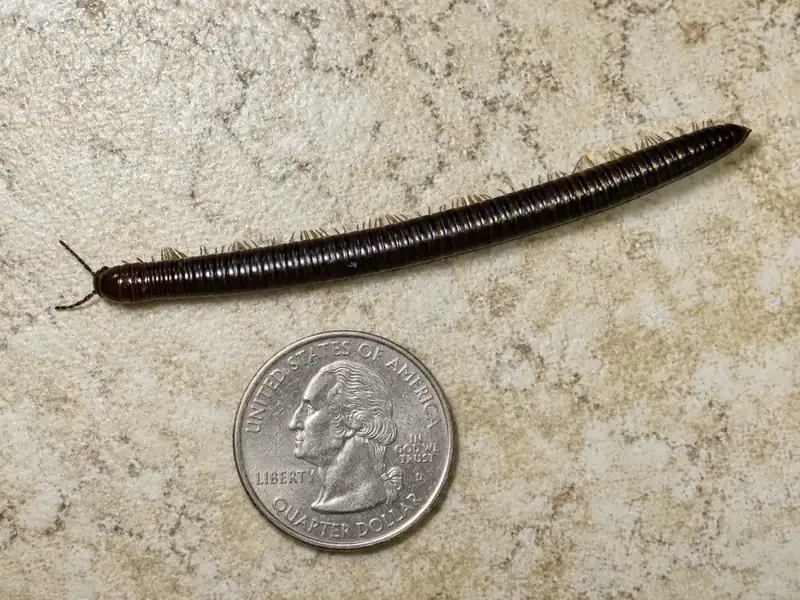
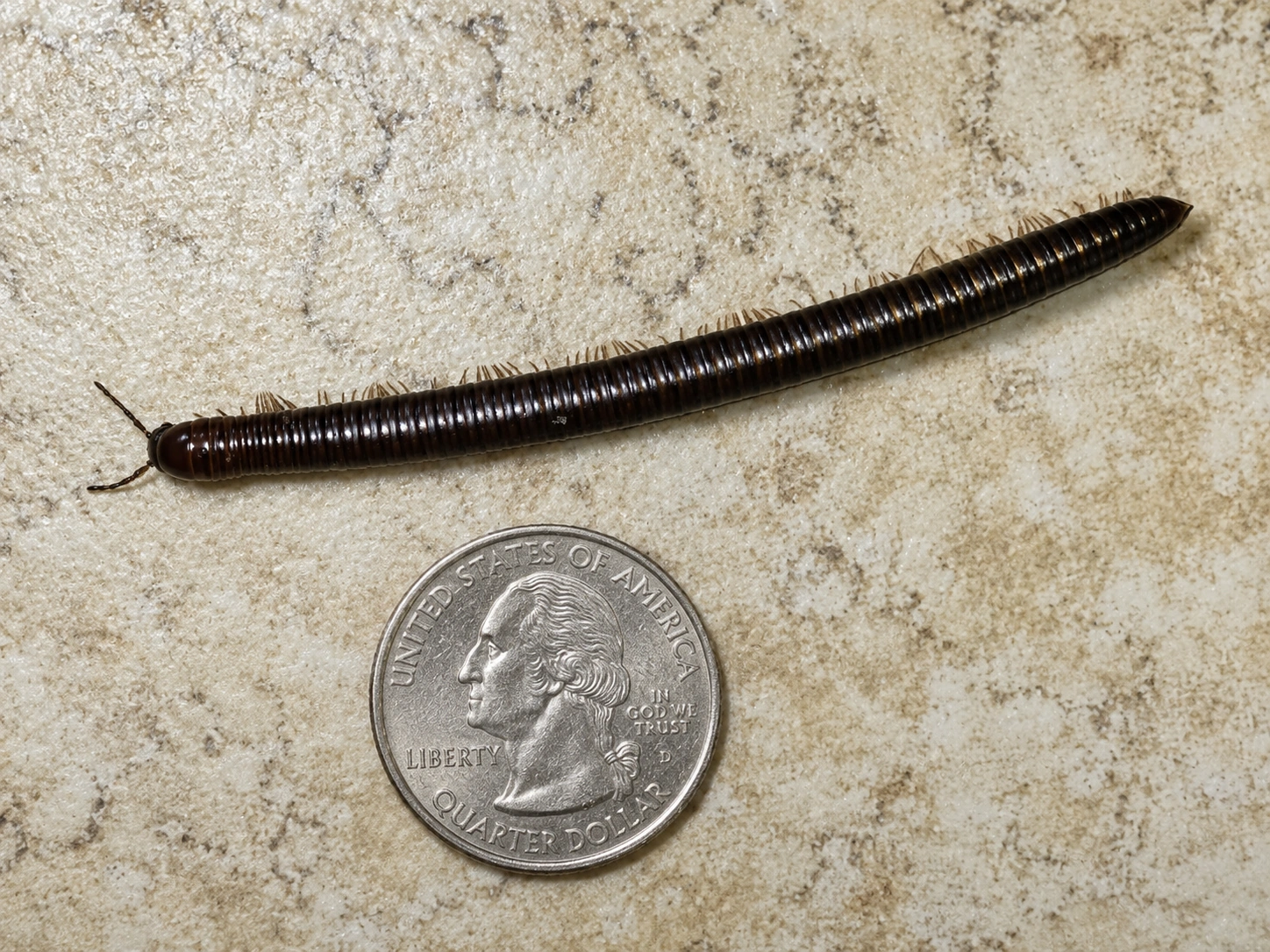
Millipedes belong to the class Diplopoda. They are arthropods, but they are not insects. An insect has six legs and three main body regions. A millipede has a long body made of many rings and far more than six legs.
Most of the body rings appear to carry two pairs of short legs. That feature explains the scientific name. “Diplopoda” refers to double feet. The name “millipede” suggests a thousand legs, but the common species around homes usually have far fewer.
Local species generally look brown, reddish brown, gray, or nearly black. Their rounded bodies often measure about one inch long, although size varies by species and age. They move slowly and curl into a tight coil when disturbed or dead.
Millipedes prefer dark, moist places. During the day, they hide beneath leaf litter, mulch, logs, stones, landscape timbers, flowerpots, and other objects that protect them from drying. At night or after rain, they may travel across open surfaces.
How to Tell Them From Centipedes
Homeowners often confuse millipedes with centipedes, but the two groups differ in body shape, movement, diet, and risk.
A millipede has a rounded body, short legs, and slow movement. Most visible body rings carry two pairs of legs. It curls when threatened and mainly eats decaying plant material.
A centipede has a flatter body and one pair of legs per body segment. Its legs project farther from the sides, and it can move much faster. Centipedes hunt insects and other small animals. They have venom claws near the head, although encounters with people remain uncommon.
If the animal looks like a slow, armored tube and coils when touched, it is probably a millipede. If it looks flat, fast, and built for pursuit, it is probably a centipede.
Why Millipedes Come Inside After Rain
Millipedes need moisture because their bodies lose water easily. Damp soil, shaded mulch, and decomposing leaves give them both shelter and food. A rainy period can improve those conditions and allow more young millipedes to survive.
Too much water creates a different problem. Saturated soil reduces usable air spaces and floods the cracks where they shelter. The animals then leave those sites and move across the surface. The University of Minnesota Extension notes that excessive rainfall or ground moisture can cause millipedes to seek less saturated areas. Extended dry conditions can also trigger movement as they search for moisture.
In Brazos County, a strong storm pattern may create both population growth and sudden displacement. The soil remains damp enough to support many individuals, then another period of heavy rain pushes them out. A house beside the habitat becomes a prominent dry object in their path.
This explains why infestations often seem to appear overnight. The building did not produce thousands of millipedes overnight. Weather caused an existing outdoor population to move at the same time.
Where Millipede Populations Build
The heaviest activity usually begins in places that retain moisture and contain decomposing organic matter. Thick leaf litter, deep mulch, dense groundcover, grass clippings, compost, decaying wood, and objects resting directly on soil can create excellent habitat.
Irrigation can maintain those conditions even when the weather turns dry. A sprinkler that repeatedly wets the foundation, a leaking faucet, poor drainage, or a low area beside the house may support more activity than the rest of the yard. Dense plants against the wall can shade the soil and slow evaporation.
None of these features automatically creates a pest problem. Mulch protects plant roots, leaves return nutrients to the soil, and healthy landscaping needs water. The concern comes from excess moisture and shelter concentrated against the structure. Our broader guide to conducive conditions explains how food, water, shelter, and access can combine around a building.
The foundation itself also matters. Gaps beneath doors, worn sweeps, garage door corners, utility openings, cracks, and low weep holes give migrating animals easy routes inside. Millipedes do not need to chew their way into a house. They use openings that already exist.
Can They Live or Breed Indoors?
Millipedes rarely survive long inside an ordinary home. Indoor air usually lacks the humidity they need, and the building does not provide the damp, decaying plant material that supports an outdoor population. Penn State Extension describes them as nuisance invaders that cannot survive for long in the dry atmosphere of most buildings.
A steady stream of living individuals indoors usually points to continuing entry from outside. It does not normally indicate a hidden colony in the walls. Many die near baseboards, doors, windows, garages, or other places along their route.
Persistent activity in a very damp crawl space, basement, utility area, or greenhouse deserves a moisture inspection. Even then, the conditions matter more than the room itself. Correcting a leak or drying a chronically wet area may remove the reason they can remain alive there.
Are Millipedes Dangerous?
Millipedes do not bite or sting. They do not feed on blood, infest pets, spread through stored food, or damage structural wood. Their presence can feel alarming, especially when hundreds enter at once, but they mainly create a nuisance.
When threatened, many species release a defensive fluid with a strong or unpleasant odor. That material can irritate sensitive skin or eyes, and some species can leave a temporary stain. Avoid rubbing your eyes after handling one and wash exposed skin with soap and water.
Most pets will ignore them after one unpleasant encounter. A curious dog or cat may mouth one and react to the defensive secretion with drooling or discomfort. Moving the animal away and rinsing its mouth gently with water may help, but a pet owner should contact a veterinarian if symptoms concern them or persist.
Their greatest effect inside a home comes from sheer numbers. Dead individuals can collect along walls and floors, create odor, and require repeated cleanup while migration continues.
Their Useful Work Outdoors
Outside, millipedes belong in the landscape. They chew dead leaves and other plant debris into smaller pieces, helping microbes continue the decomposition process. That work returns nutrients to the soil and supports the larger food web.
Texas A&M AgriLife Extension groups millipedes with common nuisance arthropods, but “nuisance” describes what happens when they enter buildings. It does not mean they lack ecological value.
This is why the goal should not involve eliminating every millipede from a yard. That would make little ecological or practical sense. The useful goal involves keeping outdoor populations outside and reducing the conditions that concentrate them against the house.
What Homeowners Can Change
Start with water. Watch how irrigation reaches the foundation and how quickly the soil dries. Correct leaks, redirect unnecessary spray, and investigate areas that remain soggy long after the rest of the yard dries. Drainage work may require a qualified landscape or drainage professional when water flows toward the structure.
Next, look at organic material and shelter. Rake heavy leaf accumulations away from the foundation, avoid piling grass clippings against the house, and keep mulch at a reasonable depth. Move stored boards, pots, and other objects away from the wall when they keep the soil beneath them wet.
Trim dense vegetation enough to improve light and air movement near the structure. The goal does not require removing healthy landscaping. It requires enough separation for inspection and drying.
Check door sweeps, weather seals, screens, utility penetrations, and visible cracks. A good seal can stop many occasional invaders without affecting the useful population outdoors. Indoors, a vacuum provides quick removal. Empty the canister or bag promptly when large numbers have collected.
These steps do not always end a regional migration immediately. They reduce habitat and entry over time, which makes the property less likely to receive the full force of the next outbreak.
Professional Millipede Control
A useful inspection starts outside. We look for the moist habitat supporting activity, the sides of the structure receiving the greatest pressure, and the openings that allow entry. We also consider recent rain, irrigation, drainage, mulch, shade, and the stage of the migration.
Venus Pest Company includes millipedes in our Basic Pest Control coverage and in standard commercial pest control programs. Our service focuses on the structure, likely entry areas, and the outdoor conditions that help explain the invasion.
We do not publish pesticide products, active ingredients, rates, placement instructions, or homeowner pesticide recommendations. Professional decisions depend on the property, weather, population pressure, and service plan. A tactic that fits a few millipedes beside one garage door may not fit thousands moving across every side of a building.
The realistic goal is to stop indoor activity and reduce pressure around the structure. We do not try to erase a beneficial decomposer from the entire landscape.
Why Weather Still Controls the Timeline
During a normal invasion, service and exclusion may produce a quick change. During a mass migration, new animals can keep arriving from soil, mulch, and neighboring areas. They may cross a treated or corrected area after the technician leaves because the weather continues to drive movement.
That does not mean the service failed. It means the source extends beyond a single crack or nesting site. Results should improve as the active population declines, entry routes close, surfaces dry, and the weather changes.
My early customer saw that process firsthand. I knocked the millipedes down, but we needed about a week and some help from the weather to finish the job. I would rather set that honest expectation than pretend one visit can command the rain to stop.
Local Help Across Brazos County
Venus Pest Company has served local homes and businesses since 2001. Dr. Scott Lingren founded the company after building his career in entomology, and our programs combine correct identification, inspection, environmental conditions, and targeted professional service.
If millipedes are crawling through your home or gathering around your business, call or text 979-774-0486, or email service@venuspest.com. We will help determine whether you have a few occasional invaders, a moisture problem near the structure, or one of those rare migrations that really can cover the walls.
Common Questions
Why did so many appear after heavy rain?
Rain can support a large outdoor population, but saturated soil can force those animals out of their normal shelter. Many may move across the surface at the same time and enter a nearby building through existing gaps.
Are they a sign that my house is dirty?
No. A clean home can receive hundreds during a major outdoor migration. Weather, moisture, habitat near the foundation, and available entry points explain the problem better than indoor housekeeping.
Will they reproduce inside the house?
Usually not. Millipedes need moist habitat and decaying organic material. A normal dry home does not give them what they need to maintain a population, so indoor sightings usually result from continued entry outside.
Can millipedes bite, sting, or damage the structure?
They do not bite or sting, and they do not eat structural wood. Some release an irritating defensive fluid, so avoid handling large numbers with bare hands and wash after contact.
Why are they climbing the walls?
They climb rough surfaces while searching for shelter or moving away from unsuitable soil. A wall may simply stand in the path of a broad outdoor migration. The climbing does not mean they nest inside that wall.
What is the easiest way to remove them indoors?
A vacuum usually provides the fastest practical cleanup. Empty it promptly, especially after collecting many individuals, because defensive secretions and dead bodies may create odor.
How long can a severe invasion last?
The answer depends on weather and the size of the surrounding population. Activity may fall quickly in a minor event, while a mass migration can continue for several days. The extreme case I encountered took about a week and needed improving weather before it ended.
Does regular Venus service cover them?
Yes. Millipedes appear in Venus Basic Pest Control coverage and standard commercial coverage. Exact terms depend on the customer’s agreement, so current customers should contact our office when they need confirmation or additional service.