
Pest Expert Overview: Centipedes in Bryan & College Station
These animals don’t damage wood, clothing, furniture, or stored food. They hunt insects, spiders, and other small arthropods. An occasional centipede indoors usually wandered in or followed prey and moisture to a suitable hiding place.
Around Bryan, College Station, and the rest of Brazos County, the practical concern depends heavily on the species. A small house centipede in a tub presents a very different risk from a large outdoor centipede handled with bare hands.
What Kind of Animal Has All Those Legs?
Centipedes aren’t insects. They belong to the class Chilopoda within a larger arthropod group called myriapods. Insects have three main body regions and six legs. A centipede has a head followed by a chain of leg bearing segments.
Each body segment carries one pair of walking legs. The first pair behind the head has evolved into venom delivering claws called forcipules. They aren’t ordinary legs with poison glands. They are specialized appendages that seize and subdue prey.
The number of legs varies by species and age. Despite the name, most centipedes don’t have exactly 100 legs. They also have an odd number of leg pairs, which makes a total of exactly 100 impossible.
How to Tell Centipedes From Millipedes
People often group centipedes and millipedes together because both have many body segments and legs. Their shape, speed, feeding, and defenses differ sharply.
| Feature | Centipede | Millipede |
|---|---|---|
| Body | Flattened from top to bottom | Usually rounded or cylindrical |
| Legs | One pair per body segment | Two pairs on most body segments |
| Movement | Often fast and predatory | Usually slow and deliberate |
| Food | Insects and other small animals | Decaying plant material |
| Defense | Forcipules can deliver venom | Often curls and releases defensive chemicals |
Our millipede guide covers the slower animals that often invade in large numbers after wet weather. Centipedes rarely create that same wall crawling mass migration.
The Front Legs Work Like Venom Claws
A centipede captures prey with its forcipules. Venom enters through openings near the tips and helps immobilize the animal. The centipede then feeds with its mouthparts.
People commonly call an injury a centipede bite, although the forcipules deliver the venom rather than the mouth. It isn’t a sting either. That distinction may sound technical, but it corrects the widespread idea that centipedes carry a venom gland in every walking leg.
Most small household species can’t easily pierce human skin and have little reason to try. Larger species can produce a painful envenomation when someone handles, traps, or steps on them.
House Centipedes Indoors
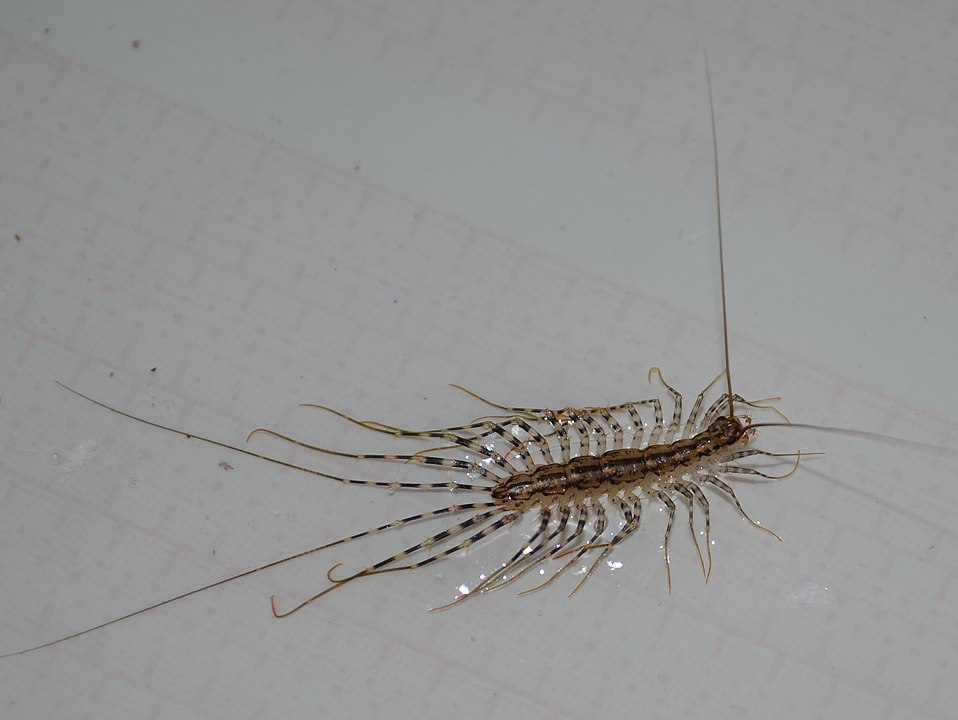
The house centipede, Scutigera coleoptrata, has a relatively short body and exceptionally long, slender legs. Dark stripes run along its pale gray or tan body. Its rear legs and antennae extend so far that telling the front from the back can take a moment.
House centipedes run rapidly across floors and walls. Colorado State University Extension notes that they may appear to run toward a person when they actually seek a dark crack or sheltered space.
Bathrooms, utility rooms, garages, and other humid spaces provide common sightings. Smooth tubs and sinks can trap wandering centipedes, which makes it look as if they came from the drain. They may have entered from another opening and fallen into the fixture.
House centipedes hunt silverfish, small cockroaches, flies, spiders, and other arthropods. One individual can serve as a beneficial predator. Repeated sightings may point toward moisture, available prey, or entry gaps that deserve attention.
Larger Outdoor Species in Texas
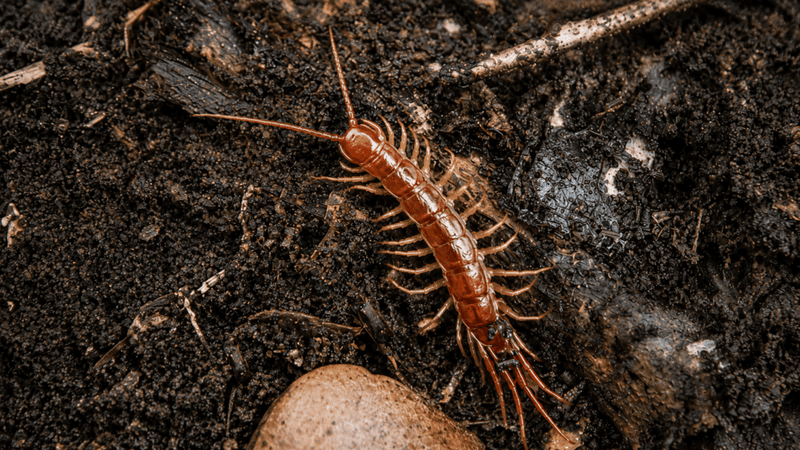
Texas supports larger centipedes that live beneath stones, logs, landscape timbers, leaf litter, and other ground level shelter. The Texas redheaded centipede, Scolopendra heros, ranks among the most dramatic. Adults can become much larger and more robust than a house centipede.
These predators belong outdoors. They usually remain hidden during the day and emerge under suitable conditions to hunt. Moving firewood, rocks, pots, or landscape debris can expose one unexpectedly.
Never pick up a large centipede with bare hands. Give it space and keep children and pets from investigating. Its role as a predator doesn’t require anyone to tolerate it inside a home or in a frequently handled item.
Why They Enter Buildings
Moisture, shelter, prey, and access usually explain indoor activity. A centipede may enter beneath a worn door seal, through a plumbing opening, around a utility line, or through another small gap. Heavy rain and changing soil moisture can also push outdoor animals toward structures.
Indoor humidity can help a centipede survive after entry. Leaks, condensation, damp crawl spaces, and poorly ventilated rooms may create favorable pockets. Those same conditions can support the small insects and spiders that centipedes eat.
Outdoor harborage increases the chance of an encounter near the foundation. Leaf litter, stacked materials, stones, dense groundcover, and objects resting on damp soil provide cool protected spaces.
Finding one centipede doesn’t prove a hidden infestation. Finding them repeatedly in the same area gives the inspection a useful starting point.
How Much Risk Do They Pose?
House centipedes pose little risk to people. They avoid contact, and injuries occur rarely. Their speed and appearance create far more concern than their behavior justifies.
Large centipedes deserve caution. An envenomation can cause intense local pain, redness, and swelling. Severity varies with the centipede, the person, and the circumstances. Anyone with severe or spreading symptoms, breathing trouble, or another concerning reaction should seek medical attention.
Pets may paw at or mouth a centipede. Keep them away from large specimens and contact a veterinarian if an encounter causes pain, swelling, drooling, or unusual behavior.
Reducing Activity Around the Structure
Correct plumbing leaks, condensation, and drainage problems where practical. Improve ventilation in areas that remain damp. Moisture correction can make the space less suitable for both centipedes and their prey.
Replace worn door sweeps and repair damaged screens. Seal practical gaps around pipes, cables, windows, and doors. These steps won’t close every possible opening, but they reduce common routes.
Move leaf litter, stored items, loose boards, and similar shelter away from the foundation. Avoid keeping firewood against the house. Trim dense foliage when it holds shade and humidity directly beside entry points.
Reduce unnecessary exterior lighting near doors when it attracts insect prey. Vacuum a small indoor centipede rather than handling it. Large specimens require more caution because of their ability to envenomate.
Professional Centipede Control
Venus Pest Company includes centipedes in our Basic Pest Control coverage. Our HomeGard, HomeGard Plus, and TotalGard plans build on that protection, and our commercial pest control programs cover centipedes for businesses.
We look beyond the animal on the floor. An inspection considers moisture, prey, access, outdoor shelter, and whether the customer has a small house centipede or a larger species that requires more caution.
We don’t publish pesticide products, active ingredients, application rates, or homeowner pesticide recommendations. Identification and conducive conditions determine the useful response, and chemical treatment can’t repair a leak or remove the prey supporting activity.
Local Help Across Brazos County
Venus Pest Company has served local homes and businesses since 2001. Founder Dr. Scott Lingren holds a PhD in entomology, and our technicians approach centipedes as predators with specific habitat needs rather than as generic “bugs.”
If centipedes keep appearing indoors or you find a large specimen near an occupied area, call or text 979-774-0486, or email service@venuspest.com. A clear photo can help us judge the species and the appropriate level of concern.
Common Questions
Are they insects?
No. Centipedes are myriapods in the class Chilopoda. They have one pair of legs on each leg bearing body segment, while insects have six legs total.
Do they have exactly 100 legs?
Usually not. The number varies by species and age. Centipedes have an odd number of leg pairs, so they can’t have exactly 100 legs.
Do they bite or sting?
Neither word describes the anatomy perfectly. Modified front legs called forcipules grip the target and deliver venom. People commonly call the resulting injury a bite.
Is the house species dangerous?
House centipedes pose little risk. They avoid people, and their ability to capture small arthropods far exceeds their interest in confronting us.
Why did I find one in my bathtub?
The smooth sides may have trapped a wandering centipede. It didn’t necessarily come from the drain. Nearby moisture, prey, and entry gaps deserve inspection.
Can repeated sightings indicate another pest?
Not always, but repeated activity may indicate enough insects or spiders to support predators. Moisture that supports both predator and prey may also contribute.
What separates them from millipedes?
Centipedes have flattened bodies, one pair of legs per segment, and predatory habits. Millipedes usually have rounded bodies, two pairs of legs on most segments, and feed mainly on decaying plant material.
Does Venus service cover centipedes?
Yes. Basic Pest Control, every HomeGard family plan, and standard commercial coverage include centipedes. We also point out moisture, shelter, or access conditions that may keep replacing them.