

Pest Expert Overview: Black Widow Spiders in Bryan & College Station
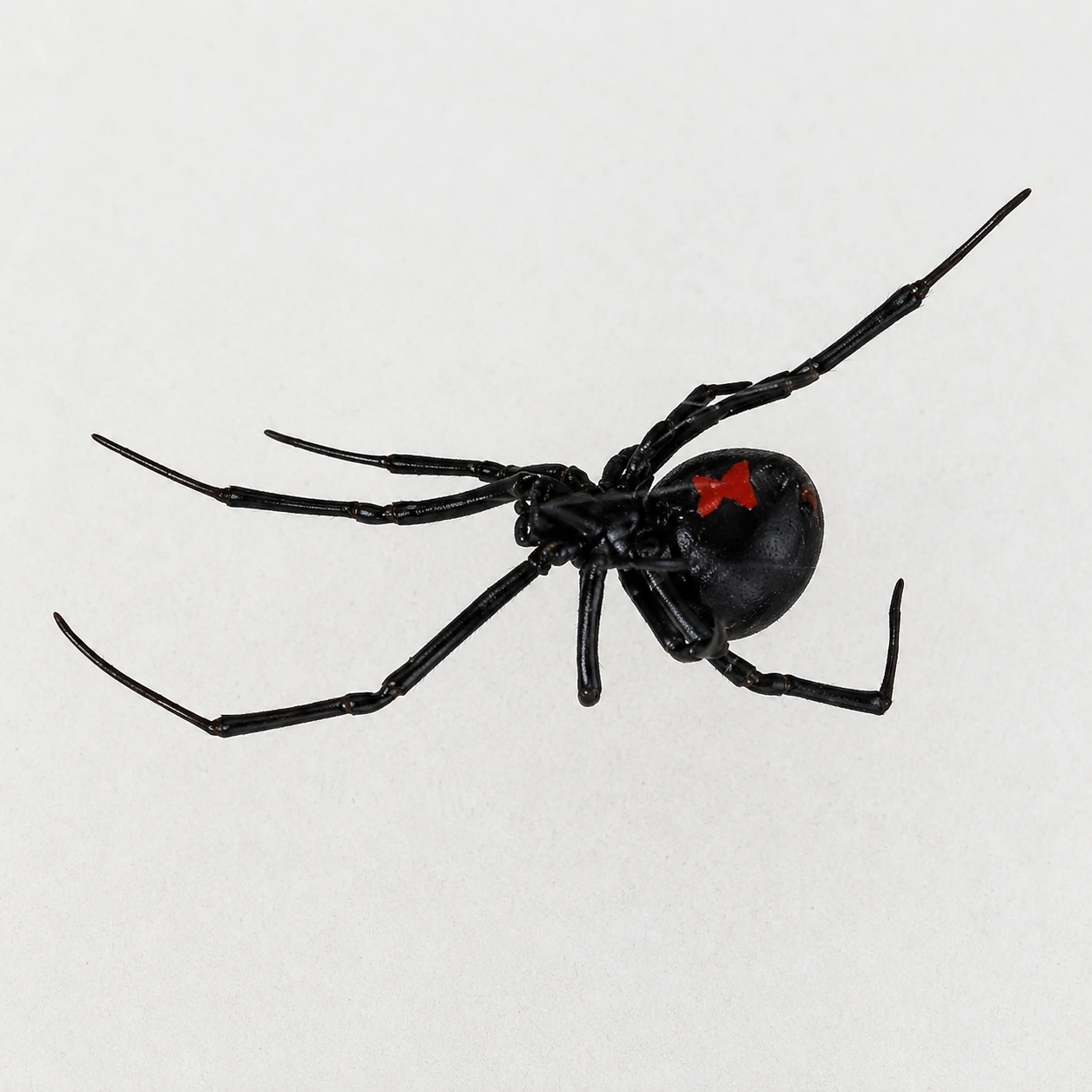
The adult female creates the image most people recognize: a glossy black body, a rounded abdomen, and a red hourglass beneath it. She also carries medically important venom. That makes correct identification and sensible risk reduction important.
I have a few rural customers who once saw black widows outside fairly regularly. Later, scorpions became common around the same properties, and the black widows almost disappeared. I treated plenty of scorpions for them.
Was there a real relationship? I don’t know.
Scorpions can eat spiders, and both predators use sheltered spaces near the ground. They may compete for prey or hiding places. Weather, landscaping, prey populations, and pest control could also explain the change. The observation interests me because field patterns often give us the first question, but they don’t automatically give us the answer.
Where the Widows Went
The customers’ reports were consistent enough to be memorable. They lived farther into the country, where structures meet pastures, brush, wood piles, outbuildings, and less disturbed habitat. They used to notice black widows in protected exterior sites. Then scorpion sightings increased and widow sightings dropped.
A direct predator relationship sounds plausible. Scorpions are generalist hunters that eat many arthropods, including spiders when they can catch them. A widow outside its web or a juvenile dispersing through shared shelter could become prey.
Competition offers another possibility. Both animals hunt at night, need secure daytime retreats, and consume overlapping prey. A change that favored scorpions might have made the same microhabitat less favorable for widows.
Then comes the problem with any field observation: several things changed at once. Rainfall, drought, clutter, vegetation, outdoor lighting, building repairs, and professional treatments all affect the small community living around a house. The black widows may have declined for reasons that had nothing to do with scorpions.
I still like the observation. I just won’t promote it from “interesting pattern” to “ecological fact” without evidence.
How to Recognize a Black Widow
An adult female black widow has a glossy black body and a large, rounded abdomen. The best known mark is a red or orange hourglass on the underside. The shape may look complete, broken, or slightly different among individuals and species.
Young widows and adult males look less familiar. They may have white, red, brown, or orange markings across the back and sides. Males remain much smaller and slimmer than mature females. A homeowner expecting every widow to look like the textbook female can easily miss juveniles or misidentify harmless spiders.
The web adds useful context. Black widows build irregular, tangled webs in protected locations, often close to the ground. The silk feels surprisingly strong. The spider commonly hangs upside down, which exposes the hourglass beneath the abdomen.
Texas A&M AgriLife Extension describes adult females as glossy black spiders with the distinctive hourglass below. Clear photographs of both the top and underside can help with identification, but no one should place a hand near a suspected widow just to improve the picture.
Protected Places Near the Ground
Black widows choose sites that offer shelter, web anchors, and passing prey. Around homes, that may include meter boxes, wood piles, stacked materials, landscape timbers, outdoor furniture, sheds, grills, crawl spaces, hollow blocks, and equipment that sits unused.
Rural properties can provide more of those undisturbed spaces. A barn, pump house, fence corner, or pile of old lumber may support widow activity for a long time without anyone noticing. The spider doesn’t need a dirty property. It needs a protected pocket that people rarely disturb.
Most encounters occur when a person reaches into that pocket. Work gloves left in a shed, the underside of a chair, a recessed handle, or material lifted from the ground can place fingers close to the spider before either party has time to retreat.
Life in a Tangled Web
Widows rely on silk rather than speed. Their web looks disorganized, but it works. Strong lines intercept crawling and flying arthropods. When prey becomes entangled, the spider approaches, adds silk, and bites after the animal can no longer fight effectively.
Insects and other spiders make up most of the diet. This predation gives widows ecological value. They help regulate arthropod populations, just like many spiders people tolerate more easily.
Females produce egg sacs that may hold many young. Spiderlings eventually disperse, sometimes using silk carried by air. Cannibalism and dispersal help prevent the dense colonies people imagine. Several widows can occupy a favorable structure, but they don’t cooperate as a social group.
Mud dauber wasps also hunt spiders, and widow spiders may become prey. Our black and yellow mud dauber guide explains why an intimidating wasp can provide useful spider control without showing much interest in people.
How Dangerous Is a Bite?
Black widow venom affects the nervous system. A bite may feel like a pinprick or go unnoticed at first. Pain and muscle cramping can spread beyond the bite site, sometimes involving the abdomen, back, chest, or legs. Sweating, nausea, restlessness, increased blood pressure, and other whole body symptoms can occur.
Not every bite produces severe illness. The amount of venom, bite location, age, body size, and individual response all influence the outcome. Children, older adults, and people with significant medical conditions deserve particular caution.
A suspected black widow bite needs professional medical guidance. Wash the area, avoid folk remedies, and contact Poison Control at 1-800-222-1222 or seek medical care. Call emergency services for trouble breathing, severe weakness, loss of consciousness, or other urgent symptoms.
Don’t rely on a web article to decide whether serious symptoms are safe to ignore. Pest professionals identify and control spiders. Medical professionals diagnose and treat bites.
Why Bites Remain Uncommon
Black widows don’t pursue people. Their body and web design favor waiting in a protected retreat, not chasing a large animal across open ground. A widow that can escape usually stays hidden or withdraws.
Bites tend to involve pressure or accidental contact. Someone puts a hand into the web, presses the spider inside clothing, grabs stored material, or traps it against skin. Gloves, visibility, and a moment of inspection reduce that risk substantially.
This explains how a medically important spider can live close to people without creating constant injuries. Risk depends on both the spider’s presence and the chance of direct contact.
Scorpions and Widows May Share More Than Space
The shift my rural customers noticed raises a useful ecological question. If scorpions increased, did they consume young widows, take over shelter, reduce shared prey, or simply respond to the same environmental change in a different way?
Any of those mechanisms could operate in a particular location. The customer observations alone don’t demonstrate any one of them. The treatment history complicates the picture further because work directed at scorpions can also change prey and other arthropod activity around a structure.
This is one reason I value long relationships with customers. They notice changes across years that a single inspection cannot reveal. Their reports help us ask better questions and look in the right places, even when the honest conclusion remains “we don’t know yet.”
Reducing Accidental Contact
Wear gloves when moving firewood, lumber, pots, outdoor furniture, or other items that have remained undisturbed. Look before placing fingers beneath an edge or into a recessed space. Shake out stored shoes, gloves, and clothing before using them.
Reduce clutter where practical and keep frequently handled materials accessible for inspection. Move firewood and long term storage away from regular foot traffic and children’s play areas. Seal gaps that allow spiders and their insect prey to enter the building.
Web removal can reduce egg sacs and reveal new activity, but use caution around any web that may contain a widow. A homeowner doesn’t need to put a face or hand close enough to confirm the hourglass.
Professional Black Widow Control
Venus Pest Company includes black widow spiders in our Basic Pest Control, HomeGard Plans and standard commercial pest control programs. We inspect protected exterior sites, remove accessible webs when appropriate, address prey and entry conditions, and adapt service to the places people actually use.
We don’t publish pesticide products, active ingredients, application rates, or homeowner pesticide instructions. A meter box, children’s play area, barn, and commercial storage room require different judgment even when the spider species remains the same.
Local Help Across Brazos County
Venus Pest Company has served the local area since 2001. Our founder, Dr. Scott Lingren, holds a PhD in entomology and built the company’s programs around identification, pest biology, and practical risk.
If you find a suspected black widow, don’t handle it. Take a clear photograph from a safe distance if possible, then call or text 979-774-0486, or email service@venuspest.com. We’ll help confirm what you’re seeing and decide whether the location calls for removal, broader inspection, or ongoing service.
Common Questions
Are they common around local homes?
They occur throughout our area but usually remain in protected outdoor sites. Rural properties, sheds, wood piles, meter boxes, and stored materials may provide more suitable shelter than open indoor rooms.
Is the red hourglass always visible?
The hourglass sits beneath an adult female, so it may remain hidden from above. Its shape and color also vary. Juveniles and males carry different markings and don’t resemble the classic glossy black female.
Will one chase or attack me?
No. Black widows rely on a web and protected retreat. They usually bite only when trapped, pressed, or disturbed at very close range.
Do scorpions eat black widows?
Scorpions can eat spiders, so direct predation is possible. My customers’ observation that widows declined as scorpions increased remains interesting but doesn’t prove that one caused the other.
Can a bite be fatal?
Severe reactions can occur, but modern medical care has greatly reduced the danger. Treat a suspected bite seriously and contact Poison Control or a medical professional, especially when whole body symptoms develop.
Where should I look before reaching?
Check beneath outdoor furniture, around stored lumber and firewood, inside meter boxes, in sheds, and anywhere that stays dark and undisturbed near the ground. Wear gloves when moving those materials.
Are they beneficial?
Yes. They eat insects and other spiders. That ecological role doesn’t require tolerating one where a child, employee, or homeowner may accidentally place a hand.
Does Venus service cover them?
Yes. Black widow spiders appear in Basic Pest Control and standard commercial coverage. Contact the office when you find one in a place that creates concern or repeated contact risk.