
Pest Expert Overview: Brown Recluse Spiders in Bryan & College Station
That doesn’t mean brown recluse spiders never occur here. They do, and a true infestation deserves careful attention. The only substantial indoor population I’ve personally handled was at the home of my PhD major professor, Dr. James Coppedge. The spiders arrived in a very ordinary way: inside stored cardboard boxes.
His granddaughters were moving into the house. They brought dozens of boxes from a storage facility in another part of Texas, and the boxes brought brown recluse spiders with them. The infestation proved much harder to control than the wolf spider problems I usually encounter. I needed a broader professional program, including a void treatment and roughly 20 glue monitors, to find and reduce the population.
No one was ever bitten.
That last detail matters. Brown recluse bites can cause serious injury, but the spiders don’t hunt people or attack without cause. Even a home with a confirmed population may have no bites. The sensible response combines respect for the medical risk with accurate identification, thorough monitoring, and calm professional control.
A Rare Brown Recluse Infestation With a Clear Source
The boxes at Dr. Coppedge’s house provided both transportation and shelter. Brown recluse spiders naturally choose dark, quiet spaces that people rarely disturb. Stacked cardboard, folded flaps, stored clothing, and the narrow spaces between boxes suit them extremely well.
Storage facilities also move belongings between regions. A spider doesn’t need to live naturally around the destination house if furniture, boxes, or equipment carries it there. In this case, the timing and volume of stored material gave us a convincing explanation for the sudden indoor population.
This kind of introduction differs from a lone spider that wanders indoors. A group of boxes can carry adults, juveniles, egg sacs, or some combination of them. Once unpacked, the spiders disperse into closets, wall spaces, furniture, and other protected areas. That makes the original container only the beginning of the inspection.
The case also taught me not to equate a dangerous reputation with easy control. Wolf spiders look much larger and more dramatic, but they usually wander through open areas and encounter control measures more readily. Brown recluse spiders remain tucked into protected spaces and move mainly at night. Their behavior makes them considerably more difficult to reach and monitor.
How to Identify a Brown Recluse
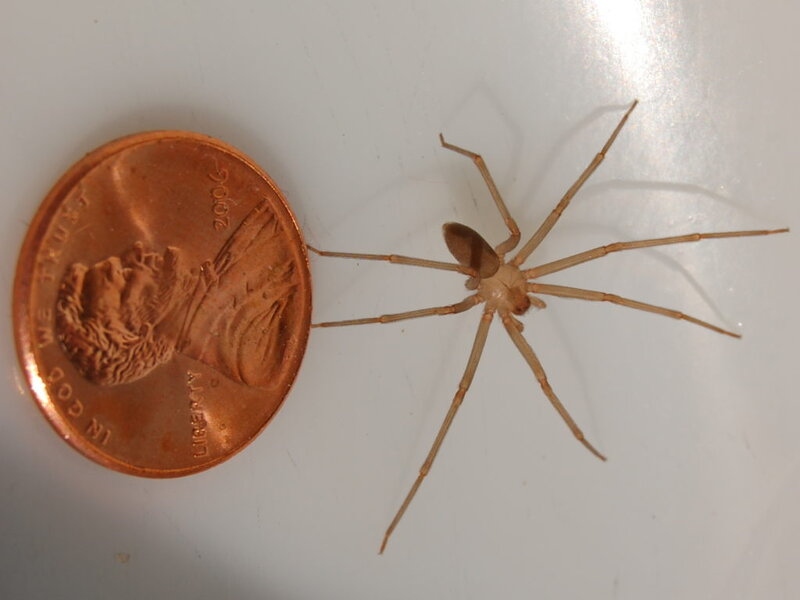
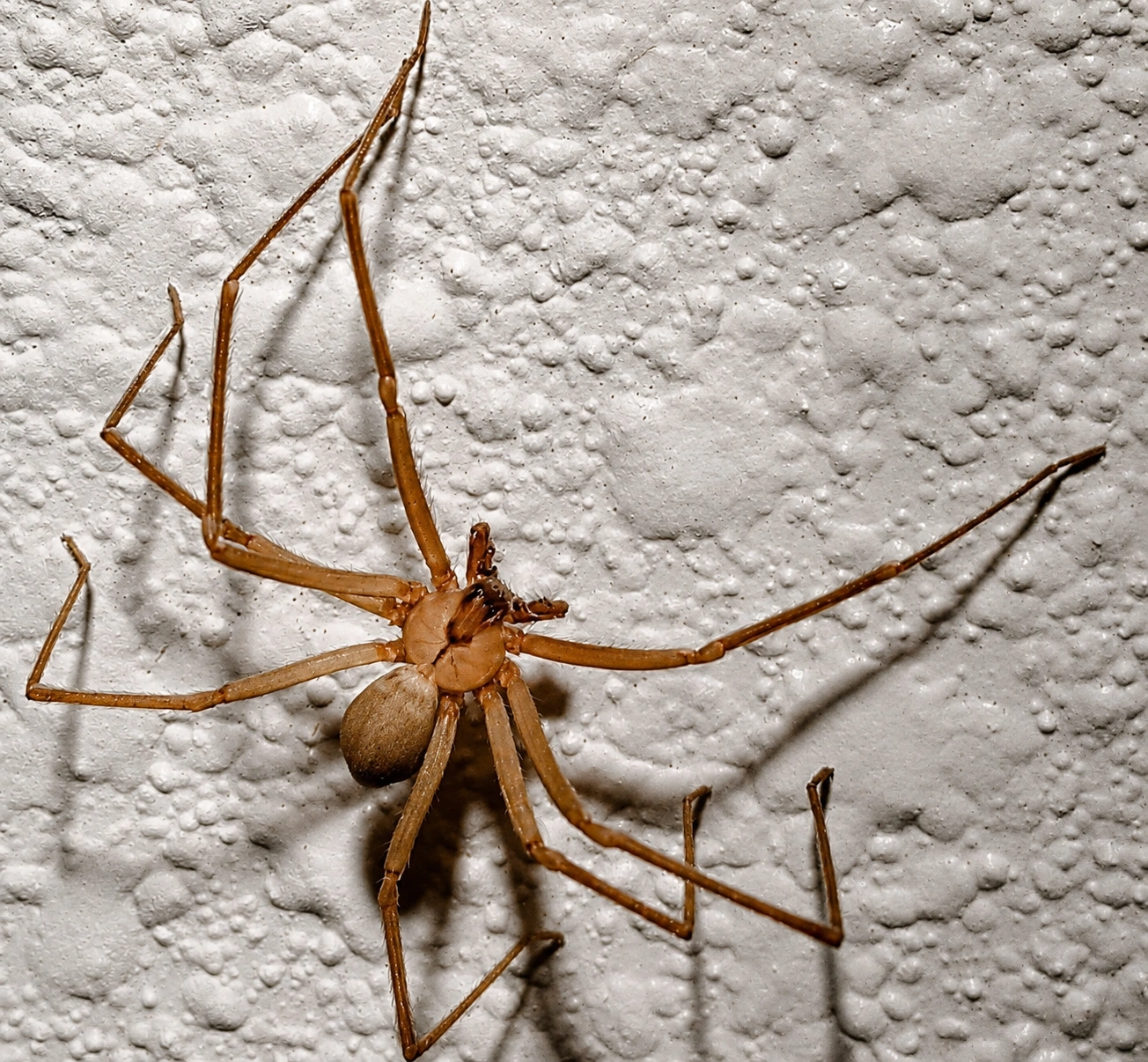
Adult brown recluse spiders range from tan to grayish brown. Their bodies look fairly plain, and their slender legs lack the obvious bands or heavy spines found on many harmless brown spiders. With the legs included, an adult may cover an area roughly the size of a quarter or slightly larger.
The famous dark violin mark sits on the top of the front body region, with the narrow neck pointing toward the abdomen. That marking can help, but it should never serve as the only feature. Several unrelated spiders have dark shapes that look close enough to fool a worried homeowner.
Eye arrangement provides a stronger clue. Brown recluse spiders have six eyes arranged in three pairs. Most spiders have eight. Confirming that feature usually requires magnification and an intact specimen.
Texas A&M AgriLife Extension provides a useful identification and control guide. When the stakes involve a medically important spider, a clear photograph or intact specimen gives an entomologist far more to work with than a description of “a brown spider with a fiddle.”
Why the Violin Mark Causes Trouble
People naturally want one simple feature that settles the identification. Unfortunately, body markings vary with lighting, age, condition, and the angle of the photograph. The violin may look faint on a real recluse and surprisingly convincing on a harmless look alike.
Size also misleads people. A close photograph can make a small spider look enormous. Juveniles may lack the visual impact people expect, while some harmless hunting spiders look much heavier and more threatening.
Behavior and location add context. A plain brown spider running at night from a box in a quiet closet deserves closer examination. A hairy, heavily patterned spider hunting in the lawn fits a wolf spider much better. A spider hanging upside down in a strong, messy web near the ground may suggest a black widow instead.
None of those clues replaces proper identification, but together they can prevent a lot of unnecessary panic.
Where They Hide
Brown recluse spiders hunt rather than build a large prey catching web. They spend daylight hours in secluded retreats and become more active after dark. Indoors, they may shelter in boxes, closets, attics, crawl spaces, garages, furniture, stored fabrics, and wall spaces.
Their preference for tight shelter creates most bite risk. A spider may become trapped against skin when someone puts on a stored shoe, reaches into a box, moves folded fabric, or rolls onto one in bed. The spider bites defensively because it cannot escape.
They feed on insects and other arthropods. A building that supports crickets, cockroaches, silverfish, or other prey gives hunting spiders a better food supply. Reducing those pests forms part of a sound spider management program even when no one sees the prey very often.
What a Brown Recluse Bite Can Do
Most spiders rarely bite people, and many skin lesions blamed on spiders have other causes. Texas A&M AgriLife Extension warns that mysterious “bug bites” often involve mistaken assumptions. Without a captured spider or a witnessed bite, a skin problem alone cannot confirm the species responsible.
A true brown recluse bite may go unnoticed at first. Some bites remain mild, while others develop increasing pain, redness, blistering, or tissue injury over the following days. Serious whole body illness can occur, although it remains uncommon. Children and anyone with severe or worsening symptoms need prompt medical attention.
This page can’t diagnose a bite. If you think a brown recluse bit you, wash the area and contact a medical professional or Poison Control at 1-800-222-1222. If you can safely contain the spider without handling it, the specimen may help with identification. Don’t delay care while trying to catch one.
Why Established Brown Recluse Populations Are Difficult
Brown recluse spiders combine several traits that work against quick control. They hide deep in protected spaces, remain active mostly at night, and can survive for long periods with limited food. A liquid treatment aimed only at open room edges may miss much of the population.
That explains the effort required at Dr. Coppedge’s house. I couldn’t judge success from the number of spiders visible during one visit. Glue monitors helped reveal where activity continued and whether the population declined. The void treatment addressed protected areas that ordinary surface work couldn’t reach.
Texas A&M reports that research from Texas A&M and Oklahoma State confirmed how difficult these spiders can be to kill with many insecticides. That finding matched my field experience. A successful program needs persistence, access to the right areas, prey reduction, clutter management, and enough monitoring to distinguish improvement from wishful thinking.
Safer Habits Around Stored Belongings
Inspect boxes, used furniture, equipment, and stored belongings before bringing them into living areas. Open long stored containers in a garage or another well lit space when practical. Wear gloves while sorting material that has sat undisturbed, and shake out shoes, clothing, towels, and bedding before use.
Reduce unnecessary cardboard and clutter, especially in closets, attics, garages, and spare rooms. This removes hiding places and makes inspection more effective. Tightly closed plastic containers offer fewer protected seams than loosely folded boxes.
Seal obvious gaps around doors and utility openings, and address insect prey. These steps reduce risk without requiring a homeowner to guess at pesticide products or attempt treatment in inaccessible spaces.
Professional Brown Recluse Control
Professional service begins with identification. A brown recluse program makes little sense if the spider turns out to be a harmless species. We inspect likely harborages, review recent moves or stored materials, look for prey, and place monitors where they can answer useful questions.
Venus Pest Company covers brown recluse spiders through our Basic Pest Control program and the HomeGard Plans. A confirmed established infestation may require more interior work and follow up than a routine wandering spider problem. We explain that difference before pretending a difficult case will behave like an easy one.
We don’t publish pesticide products, active ingredients, application rates, or homeowner treatment instructions. The proper approach depends on the identification, building, infestation level, occupied spaces, and monitoring results.
Local Help Without the Panic
Venus Pest Company has served Brazos County since 2001. Dr. Scott Lingren founded the company after earning his PhD in entomology at Texas A&M, where Dr. James Coppedge served as his major professor. That personal connection made the stored box infestation memorable, but the biology made it instructive.
If you think you’ve found a brown recluse, save an intact specimen or take clear photographs from more than one angle if you can do so safely. Then call or text 979-774-0486, or email service@venuspest.com. We’ll start with the identification and build the response around what is actually present.
Common Questions
Are they common in Bryan and College Station?
I rarely encounter confirmed indoor infestations here, although brown recluse spiders can occur in Texas. Many suspected specimens turn out to be other brown spiders. Stored belongings can also move them from one region to another.
Does every indoor sighting mean there is an infestation?
No. One spider may have wandered in or arrived with an object. Multiple specimens, different life stages, repeated captures, or egg sacs provide stronger evidence of an established population.
Is the violin mark enough for identification?
No. It helps, but several harmless spiders carry similar dark markings. Body shape, leg features, and the arrangement of six eyes in three pairs provide better confirmation.
Can a home have many without anyone getting bitten?
Yes. No one was bitten during the substantial infestation I handled at Dr. Coppedge’s home. These spiders avoid people and usually bite only when trapped against skin, but their presence still deserves attention.
Why do cardboard boxes create risk?
Folded cardboard offers dark, narrow shelter. Boxes can remain undisturbed for months and then transport spiders, juveniles, or egg sacs into another building.
Are they harder to control than wolf spiders?
In my experience, yes. Wolf spiders often travel through exposed areas. Brown recluse spiders hide in protected spaces, move mostly at night, and may require extended monitoring before we can confirm control.
What should I do about a possible bite?
Wash the area and contact a medical professional or Poison Control at 1-800-222-1222. Seek urgent care for severe pain, spreading symptoms, breathing trouble, fever, or other concerning changes.
Does regular Venus service cover them?
Yes. Brown recluse spiders appear in Basic Pest Control coverage. A confirmed established infestation may need a more involved interior plan, so contact the office for an assessment and current service details.