
Pest Expert Overview: Cellar Spiders in Bryan & College Station
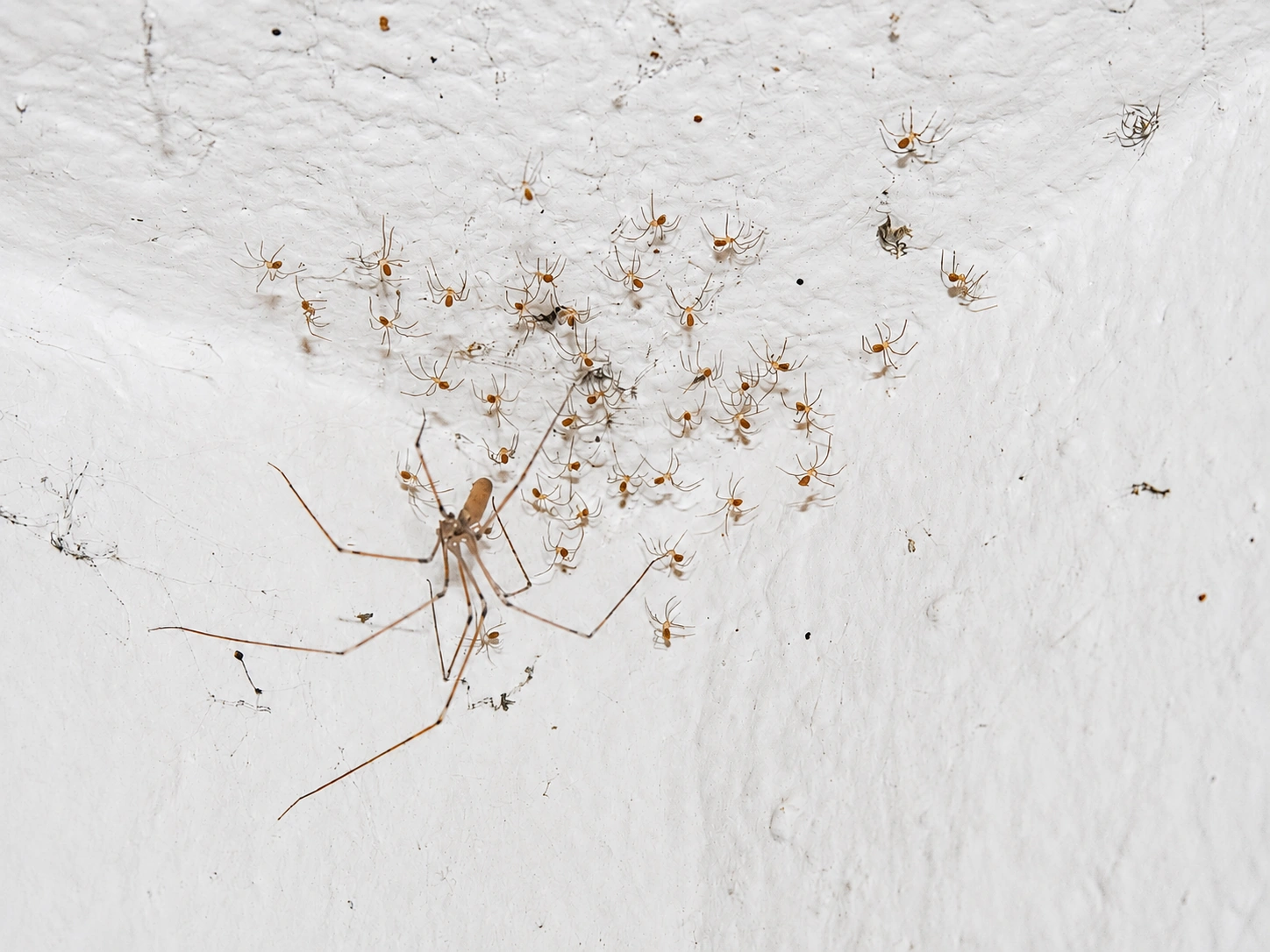
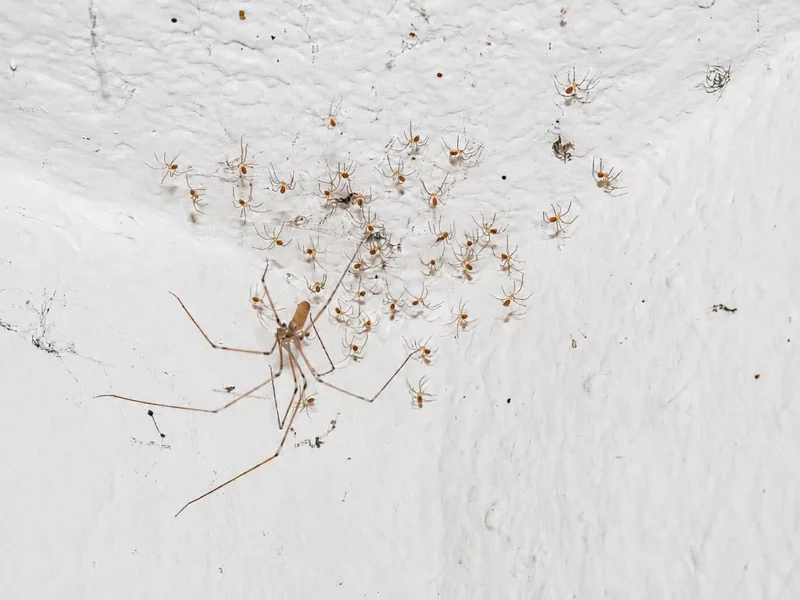
Many people call them daddy longlegs, which creates immediate confusion. That same name can refer to harvestmen, which aren’t spiders, and crane flies, which are insects. Cellar spiders are true spiders in the family Pholcidae. They have fangs, venom, and the ability to bite prey.
Then comes the playground story: daddy longlegs have the world’s deadliest venom, but their fangs are too short to penetrate human skin.
No part of that story holds up very well. One of my favorite treatments of the myth came from MythBusters. Adam Savage eventually persuaded a cellar spider to bite him. He reported a very mild, brief sensation.
He did not die.
That television moment made the point memorable, but the science matters more. Cellar spider venom helps subdue small prey. Researchers have found no evidence that these spiders pose a meaningful danger to people. Their webs can become an ugly nuisance, but the spider itself belongs near the bottom of any rational list of household threats.
MythBusters Took the Cellar Spider Bite
The 2004 MythBusters segment tested two parts of the legend. Could the spider penetrate human skin, and would the bite produce the terrible effect people claimed?
Adam Savage placed his arm among cellar spiders and eventually received a bite. The fangs penetrated his skin, so the “too short to bite” claim failed. The result amounted to a mild burning sensation that faded quickly, which also did nothing to support the deadly venom claim.
One television experiment doesn’t replace toxicology, but it gave the public a direct demonstration of what arachnologists had already explained. University of California, Riverside entomologist Rick Vetter has spent years correcting this myth. Cellar spiders possess venom because they need it for prey, yet no evidence supports the idea that their venom ranks among the most dangerous to people.
The experiment also showed how reluctant the spider was to bite. Adam had to provoke close contact to get the result. That doesn’t make handling spiders a good hobby for everyone. It does put an accidental encounter in a garage into perspective.
Which Daddy Longlegs Do You Mean?
Common names often create more confusion than clarity. “Daddy longlegs” can describe three very different animals.
A cellar spider has two main body regions, eight legs, fangs, venom glands, and a web. Its body looks small compared with its extremely long, delicate legs.
A harvestman belongs to the order Opiliones. Its body looks like one compact oval rather than two distinct regions. Harvestmen don’t have venom glands or spider fangs, and they don’t spin webs.
A crane fly has six legs and wings. It is an insect that resembles an oversized mosquito, not a spider. Crane flies don’t belong in this discussion beyond sharing the same nickname in some places.
If the animal lives in a loose web in a garage corner and shakes rapidly when disturbed, you’re probably looking at a cellar spider.
Why They Shake in Their Webs
Cellar spiders often vibrate so fast that their bodies become a blur. The movement can make the spider difficult for a predator to target. It may also confuse an animal approaching the web.
The behavior looks dramatic because the legs trace a large circle even though the spider’s body remains near the same spot. A person who reaches toward a corner may think the spider is charging. It isn’t. The animal usually stays on the web and relies on movement as a defense.
Their irregular silk lacks the neat geometry of an orb weaver web. Fine strands cross in many directions and form a loose trap. When a small insect touches the silk, the spider throws more strands over it, approaches carefully, and bites once the prey can no longer escape.
Predators of Other Spiders
Cellar spiders eat flies, mosquitoes, moths, small cockroaches, and other household arthropods. Some species also invade the webs of other spiders.
The cellar spider may pluck or vibrate the silk in a way that imitates trapped prey. When the resident spider approaches, the cellar spider uses its long legs and silk to restrain the target from a safer distance. This behavior helps explain how such a delicate looking animal can capture prey that appears more formidable.
Some cellar spiders can take widow spiders under the right conditions. That fact may have helped inspire the venom myth. People assume that a spider capable of killing a dangerous spider must possess even stronger venom. Hunting technique, reach, silk, and surprise provide a much better explanation.
Where Cellar Spider Webs Accumulate
Cellar spiders favor protected spaces with limited disturbance and enough prey. Garages give them everything they need: overhead corners, open doors, lighting that attracts insects, and long stretches without anyone sweeping the ceiling.
They also occupy sheds, warehouses, crawl spaces, covered porches, closets, utility rooms, and quiet indoor corners. Their webs trap dust and collect the dry remains of prey. Over time, several generations may build silk over old silk until the area looks neglected.
A large number of webs often says as much about insect prey as it does about spiders. Exterior lighting, gaps around doors, and an open garage can bring a steady supply of flying insects inside. The spiders simply settle where food keeps arriving.
Are Cellar Spiders Dangerous?
For practical household purposes, no. They don’t seek people, their bites remain exceptionally uncommon, and available evidence doesn’t support a medically significant threat.
That answer doesn’t require claiming that no person could ever react to any bite. Individual sensitivity varies, and any broken skin can become irritated. A severe or worsening reaction deserves medical attention regardless of what someone thinks caused it.
The important comparison involves ordinary risk. A cellar spider living above the garage door poses less concern than a black widow hiding near a place someone reaches without looking. Cellar spiders also differ sharply from brown recluse spiders, which can cause medically important bites when trapped against skin.
Why People Still Want Them Gone
A harmless animal can still become a pest when it fills a structure with webs. Silk hangs from ceilings, collects dust, catches dead insects, and makes a clean garage or business look poorly maintained.
Cellar spiders may also become numerous in spaces with abundant prey. Removing one web without changing the insect activity may leave the same corner occupied again soon. The web marks a useful location, and another spider can discover it.
The right response depends on tolerance. One spider in a seldom used shed may deserve to stay. Dozens of dusty webs above a customer entrance create a legitimate maintenance problem.
Practical Prevention Without the Long List
Remove accessible webs with a vacuum or web brush and clean up the captured insects. Regular removal interrupts egg sacs and makes new activity easier to notice.
Keep garage doors closed when no one needs them open. Repair worn seals and screens, and close gaps around utility openings where practical. Reducing insect entry removes food as well as spiders.
Review exterior lighting near doors and windows. Bright fixtures can concentrate moths and other prey against the building. Better placement, shielding, and less attractive lighting can reduce that nightly food supply without turning the property dark.
Clutter matters when it creates quiet corners that no one can inspect or clean. You don’t need an empty garage, but a little access along walls and around stored items makes web removal much easier.
Professional Cellar Spider Control
Venus Pest Company includes cellar spiders in our Basic Pest Control, HomeGard Plans and standard commercial pest control programs. We focus on accessible webs, prey activity, entry routes, and the protected areas that support repeated buildup.
We don’t publish pesticide products, active ingredients, rates, or homeowner application instructions. For cellar spiders, treatment alone rarely makes as much sense as combining removal, exclusion, and prey reduction.
Local Help Across Brazos County
Venus Pest Company has served local homes and businesses since 2001. Our founder, Dr. Scott Lingren, brings a PhD in entomology to pest identification and service design. Sometimes that expertise means taking a dangerous spider seriously. Sometimes it means telling a customer that the trembling spider in the ceiling corner isn’t plotting their death.
If cellar spider webs keep returning around your home or business, call or text 979-774-0486, or email service@venuspest.com. We’ll help reduce the spiders, the mess, and the insect activity supporting them.
Common Questions
Are daddy longlegs and cellar spiders the same thing?
Sometimes. Many people use daddy longlegs for cellar spiders, but the nickname also refers to harvestmen and, in some regions, crane flies. Only the cellar spider builds the familiar loose corner web.
Do they have the world’s strongest venom?
No. That claim has no scientific support. Cellar spiders use venom on small prey, but researchers have found no evidence that they present a serious danger to people.
Can their fangs penetrate human skin?
Yes, at least some cellar spiders can bite through skin. The MythBusters experiment demonstrated that point. The mild, brief result did not support the claim that the venom is unusually dangerous.
Why does one shake when I approach?
Rapid vibration makes the spider harder for a predator to target. It may look aggressive, but the spider normally stays on its web and uses the motion defensively.
Do they eat black widows?
Some cellar spider species can invade other spiders’ webs and capture widow spiders. Silk, reach, and hunting behavior give them the advantage. That ability doesn’t mean their venom is stronger than widow venom.
Why are there so many in my garage?
Garages offer quiet corners and a steady supply of insects entering through doors or gathering near lights. Old webs can remain for months and make the population look even larger.
Should I leave them alone?
That depends on the location and your tolerance. A few provide useful predation. Numerous dusty webs in a living area, garage, or business may justify removal and control.
Does Venus service cover them?
Yes. Cellar spiders appear in Basic Pest Control, HomeGard Plans and standard commercial coverage. Current customers can contact the office when activity or web buildup exceeds the expected result.