
Pest Expert Overview: Wolf Spiders in Bryan & College Station
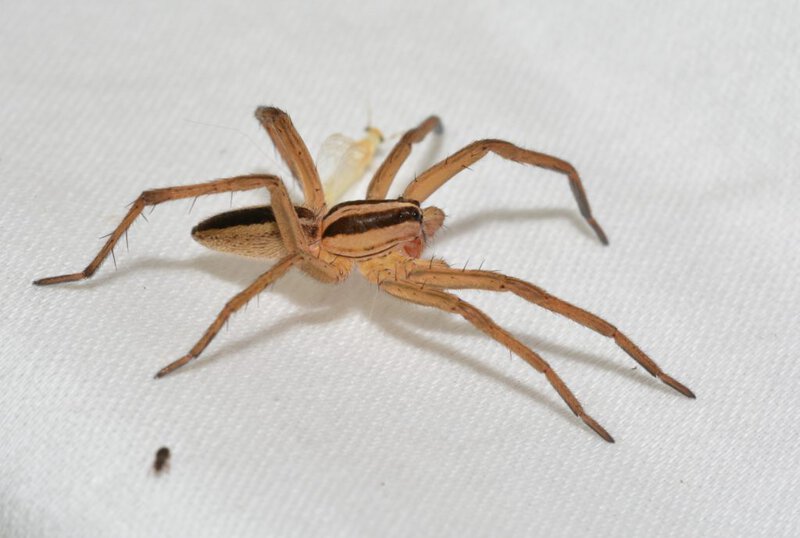
“Wolf spider” describes an entire family rather than one species. The family Lycosidae includes small spiders that disappear into the lawn and large species that can stop a homeowner in midstep. Their size, markings, and preferred habitat vary enough that different parts of our service area can feel like they have different wolf spider populations.
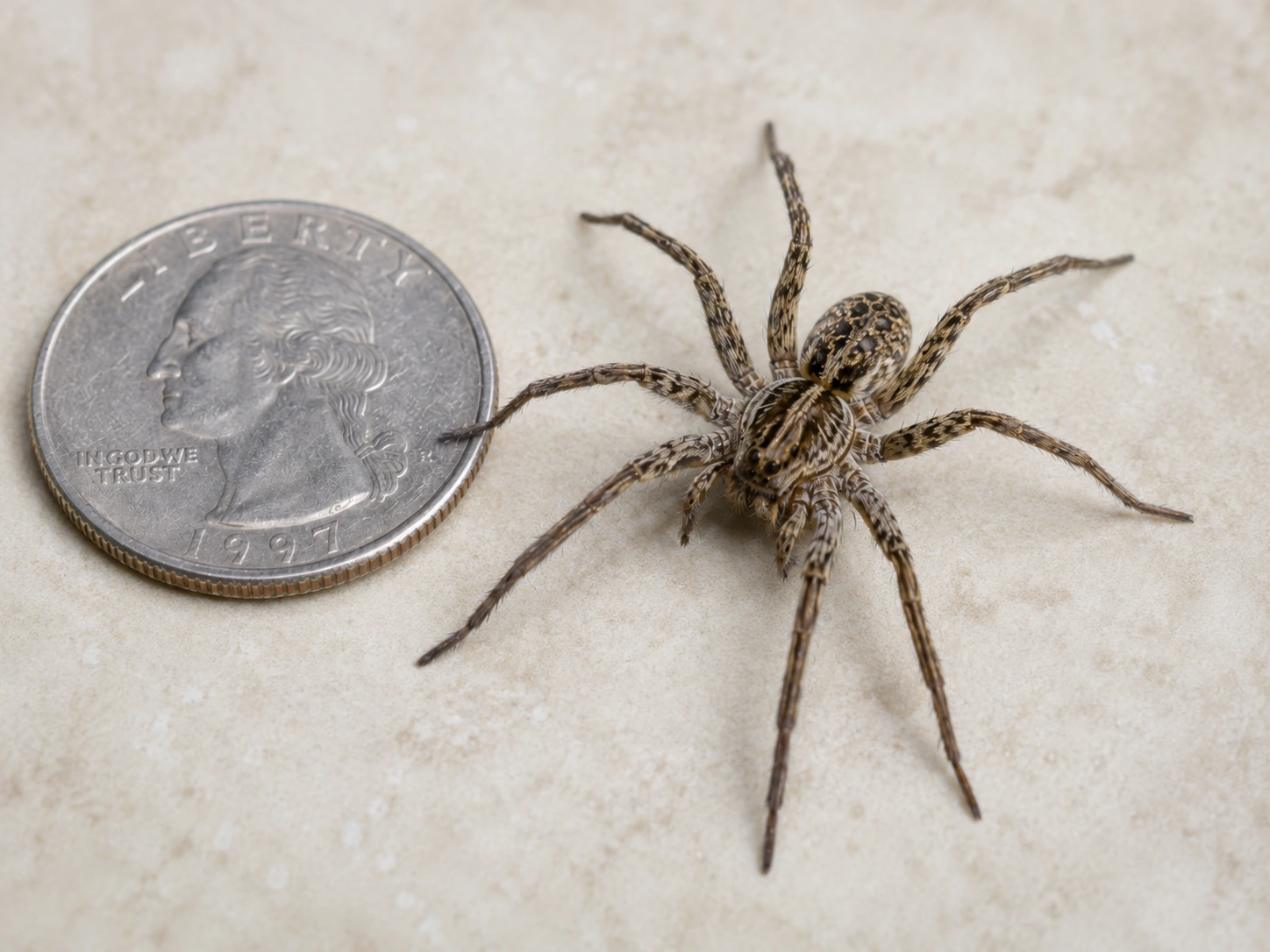
That matches what I’ve seen in the field. Certain species seem to occur in pockets. West of Wellborn Road and continuing toward Caldwell, Carolina wolf spiders can become remarkably numerous. These are massive compared with the species we encounter more often in town. A big female has the visual impact of a small tarantula, especially when she runs across a driveway after dark.
They aren’t tarantulas, and they aren’t looking for people. They’re simply large native predators living where soil, cover, and prey suit them.
Big Wolf Spiders West of Wellborn Road
The local pattern has repeated often enough for me to notice it. In town, customers usually call about medium sized wolf spiders that wander through garages, bathrooms, or living rooms. On properties west of Wellborn Road and out toward Caldwell, I am more likely to encounter the Carolina wolf spider, Hogna carolinensis.
This doesn’t create a formal boundary. A spider doesn’t stop at a road sign, and Carolina wolf spiders occur across a broad part of North America. My observation describes a pocket of abundance within the Venus service area and just beyond it, not the edge of the species range.
Habitat probably explains much of the pattern. Carolina wolf spiders favor open ground, fields, pastures, and places where they can use burrows. Larger lots and rural landscapes west of town provide more of that habitat than dense neighborhoods with heavily managed yards.
Penn State Extension lists adult female Carolina wolf spiders at 22 to 35 millimeters in body length. That measurement excludes the legs. Once the legs extend, a large female occupies enough space to look much closer to a tarantula than most people expect from a wolf spider.
Carolina Wolf Spider Versus Tarantula
Both animals look large, brown, and hairy, but their proportions differ. A Carolina wolf spider has a flatter, more streamlined body with long legs suited for running. A Texas tarantula has a heavier body, thicker legs, and much denser hair.
The size comparison needs some restraint. Carolina wolf spiders rank among the largest wolf spiders in North America, but adult Texas tarantulas can grow substantially larger and heavier. A wolf spider may approach a small tarantula in the space it covers, especially during a quick nighttime glimpse. Side by side, the tarantula usually looks much more robust.
Behavior helps too. Carolina wolf spiders often wait near a burrow or move across open ground after dark. Tarantulas also use burrows, but mature males may wander conspicuously during mating season. Neither animal builds the kind of prey catching web people associate with orb weavers or cellar spiders.
How to Recognize Wolf Spiders
Wolf spiders generally have sturdy bodies, strong legs, and brown, gray, tan, or nearly black camouflage. Many show stripes or mottled patterns across the front body region and abdomen. Their legs may carry bands, hairs, or spines.
The eyes provide the best family clue. Wolf spiders have eight eyes arranged in three rows. Four small eyes sit low across the front, two large eyes face forward above them, and two more sit farther back. Those large eyes support their hunting lifestyle.
At night, the eyes reflect a flashlight beam. Hold a light near your own eye level and sweep it across a lawn, and tiny points may sparkle back. Many of those points belong to wolf spiders. Texas A&M AgriLife Extension describes wolf spiders as extraordinarily common even in manicured Texas lawns.
That abundance surprises people because most of the spiders stay hidden. They become obvious only when a flashlight catches the eye shine or weather sends one indoors.
Hunters Without Capture Webs
Wolf spiders don’t use webs to trap meals. Some move actively through vegetation and across soil. Others wait at burrow entrances or in favorable hunting spots until prey comes within reach.
They eat insects, other spiders, and many small arthropods. Crickets, cockroaches, beetles, and similar prey can support wolf spiders around a structure. Their presence outdoors usually reflects a functioning food web rather than a problem that needs correction.
Most species hunt at night and hide during the day beneath vegetation, stones, landscape materials, or ground level objects. Burrowing species may remain close to an underground retreat. Wandering males often travel farther while searching for females.
Mothers Carry Their Young
Wolf spiders have one of the easiest reproductive behaviors to recognize. The female attaches her egg sac to the spinnerets at the end of her abdomen and carries it behind her. She continues walking and hunting while keeping the sac with her.
After the eggs hatch, the spiderlings climb onto their mother’s abdomen. Dozens may ride together until they disperse. A person who crushes or disturbs the female may see what looks like a sudden explosion of tiny spiders.
The sight can be startling, but it isn’t an indoor hatching event in the usual pest sense. The young were already riding on the mother. They don’t form a social colony, and a normal dry room doesn’t suddenly become a permanent wolf spider nursery.
Maternal care distinguishes wolf spiders from many familiar household spiders. It also makes a female carrying young one of the most interesting spiders a homeowner may encounter, assuming everyone can pause long enough to appreciate it.
Why They Wander Indoors
Most indoor wolf spiders entered from outside. Doors, garage corners, worn sweeps, utility gaps, and openings along the foundation provide access. A spider may follow prey, seek shelter from weather, or simply take the wrong route during nighttime movement.
Heavy rain can flood ground level retreats and push spiders toward dry structures. Drought may send them searching for better conditions. Exterior lighting attracts insects near doors and creates productive hunting areas. An open garage then turns a good exterior hunting site into an easy entrance.
Repeated sightings may indicate an entry problem or abundant prey. They usually don’t mean wolf spiders have built a hidden colony inside the walls.
Are Wolf Spiders Dangerous?
Wolf spiders have venom for subduing prey, but they don’t present the medical risk associated with brown recluse spiders or black widows. They avoid people and usually run when disturbed.
A trapped or roughly handled spider can bite. The result may cause localized pain, redness, swelling, or itching. Severe reactions remain uncommon, but anyone with significant or worsening symptoms should contact a medical professional.
Size drives most of the fear. A Carolina wolf spider looks capable of doing much more than it normally will. Its speed also makes an encounter feel aggressive when the animal is actually racing for cover.
Why Control Is Usually Straightforward
The traits that make wolf spiders noticeable also make them easier to intercept than brown recluse spiders. They travel across exposed floors, garages, patios, and exterior surfaces. They don’t spend nearly all their time tucked into boxes and wall spaces.
That contrast surprised me during the brown recluse infestation at Dr. James Coppedge’s house. The smaller recluse spiders required more monitoring and persistence than the much larger wolf spiders I handle routinely. Appearance did a poor job of predicting control difficulty.
An isolated wolf spider indoors often needs only removal. Repeated activity calls for a broader look at doors, gaps, weather, exterior lighting, and prey. Killing the spider in the middle of the room doesn’t explain how it arrived.
Keeping Outdoor Hunters Outside
Repair worn door sweeps and garage seals, close gaps around utility lines, and keep screens in good condition. Pay attention to the lower corners of doors, where small openings can admit surprisingly large spiders.
Reduce insect attraction near entrances. Review exterior lighting, keep garage doors closed when practical, and address cockroach, cricket, or other prey activity around the structure.
Move dense clutter and long stored objects away from entry areas. You don’t need to remove all outdoor habitat. The goal is to keep sheltered hunting routes from running directly into the house.
Professional Wolf Spider Control
Venus Pest Company includes wolf spiders in our Basic Pest Control, HomeGard Plans and standard commercial pest control programs. We consider species, entry routes, prey, lighting, weather, and surrounding habitat rather than treating every large brown spider as the same problem.
We don’t publish pesticide products, active ingredients, application rates, or homeowner pesticide recommendations. The appropriate service depends on whether the property receives an occasional wandering hunter or repeated pressure from a large outdoor population.
Local Help Across Brazos County
Venus Pest Company has served local homes and businesses since 2001. Dr. Scott Lingren founded the company after earning his PhD in entomology at Texas A&M, and decades of local fieldwork shape the way we read pest patterns across the county.
If large wolf spiders keep entering your home or business, call or text 979-774-0486, or email service@venuspest.com. A photograph can help us distinguish a Carolina wolf spider from other large hunting spiders, but nobody needs to chase one across the house for a close portrait.
Common Questions
Are the huge spiders west of Wellborn Road Carolina wolf spiders?
Many are. I have repeatedly found pockets of large Carolina wolf spiders west of Wellborn Road and toward Caldwell. That field observation describes local abundance, not a strict species boundary.
How large can they get?
Adult female Carolina wolf spiders can reach about 35 millimeters in body length, with the legs adding substantially to the visible size. They rank among the largest wolf spiders in North America.
Are they as large as tarantulas?
A large female can approach the visual spread of a small tarantula, especially at night. True Texas tarantulas usually have heavier bodies, thicker legs, and the potential to grow considerably larger.
Do they build webs?
They use silk for egg sacs, retreats, and other purposes, but they don’t build a capture web. They hunt prey on foot or wait in ambush.
Why do their eyes shine at night?
Structures in the eyes reflect light back toward its source. A flashlight held near eye level can reveal many tiny points across a lawn that remain invisible during the day.
Why was the spider covered with babies?
Female wolf spiders carry newly hatched spiderlings on their abdomen. The young ride there for protection before dispersing. They aren’t a social colony.
Will one bite me?
It may bite if trapped or handled roughly, but wolf spiders normally run from people. Their bites usually cause limited local symptoms rather than the serious effects associated with widows or recluse spiders.
Does Venus service cover them?
Yes. Wolf spiders appear in Basic Pest Control and standard commercial coverage. Contact the office when repeated indoor sightings suggest continuing entry or heavy outdoor pressure.