
Pest Expert Overview: Fall Webworm in Bryan & College Station
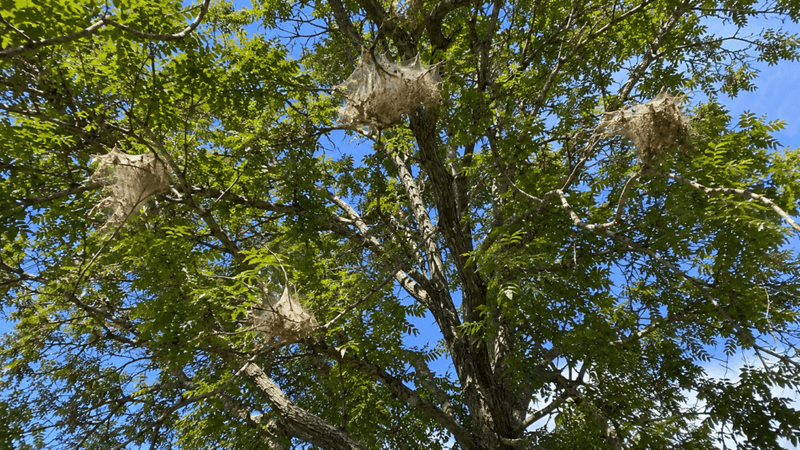
The webs look worse than the damage usually is. Fall webworms can strip leaves from part of a tree and make a beautiful pecan look neglected, but one or two colonies rarely threaten a large, healthy tree. Young trees, heavily infested trees, and trees already struggling with drought or other stress deserve more attention.
Treatment works best while the webs remain small. Once a colony covers several feet of a branch high in the canopy, the silk protects the caterpillars and makes complete spray coverage difficult.
What Do Fall Webworms Look Like?
Most homeowners notice the nest before they see a caterpillar. A new colony starts as a patch of silk around a few leaves near the end of a branch. The caterpillars feed inside that web and expand it as they need more foliage. A mature nest may surround several feet of branches and contain leaves, droppings, shed skins, and dozens or even hundreds of caterpillars.
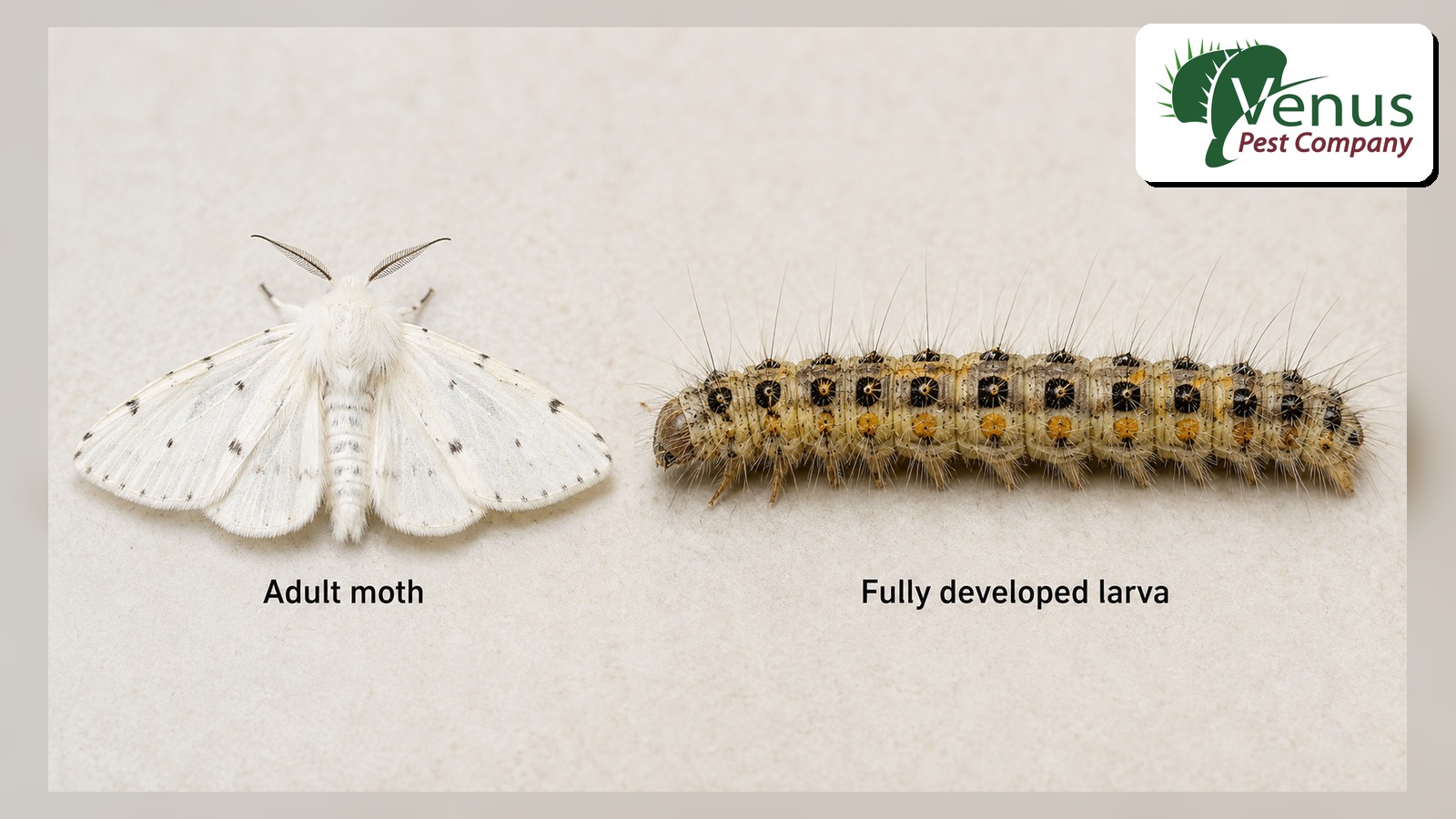
The caterpillars vary in color. Many look pale yellow, tan, greenish, or gray, with long hairs and rows of dark spots. Mature larvae reach about an inch long. Some have red heads, while others have black heads.
Adult fall webworms look nothing like the larvae. They become white moths, sometimes with small black spots on their wings. Most people never notice the moths because the webbing makes a much bigger impression.
Why Do Webworms Build Webs?
The silk gives the colony a protected dining room. Young caterpillars hatch together and cover nearby leaves with webbing. They stay inside, eat the enclosed foliage, and extend the nest over fresh leaves as they grow.
That behavior separates fall webworms from many other caterpillars. They bring their food inside the shelter instead of leaving the nest to feed. The silk reduces exposure to birds, parasitic wasps, weather, and some insecticide applications.
Fall webworms pass through egg, caterpillar, pupa, and adult stages. Several generations may occur during a warm Texas growing season, so homeowners can notice new nests from late spring through fall. Later generations often create the largest and most obvious webs.
Why Pecan Trees Get So Many Webworms
Fall webworms feed on many broadleaf trees, but pecans rank among their favorite hosts in Central Texas. That preference makes them especially noticeable around Bryan, College Station, and the rest of Brazos County, where mature pecan trees fill many yards.
They also feed on mulberry, persimmon, walnut, hickory, sweetgum, elm, willow, oak, and several fruit and ornamental trees. Homeowners do not need to identify every possible host. If hairy caterpillars live together inside a large web that surrounds leaves near the end of a branch, fall webworms provide the most likely explanation.
Will Fall Webworms Kill the Tree?
Fall webworms rarely kill a mature, healthy tree. A large tree can lose some foliage, especially late in the growing season, without suffering lasting harm. The ugly web often causes more concern than the actual leaf loss.
However, the answer changes when colonies cover a large part of the canopy. Leaves produce the energy a tree needs to grow, recover from stress, and store reserves. Heavy or repeated defoliation forces the tree to spend stored energy replacing foliage.
Pay closer attention when webworms attack a young or recently transplanted tree, cover a substantial percentage of the canopy, or return heavily over several seasons. Drought, root damage, disease, and other insect problems also reduce the amount of leaf loss a tree can tolerate.
Nut production adds another consideration. A pecan tree under heavy webworm pressure may lose enough foliage to affect its ability to mature a crop, even when the infestation does not threaten the tree’s survival.
Fall Webworms Versus Tent Caterpillars
People often confuse fall webworms with eastern tent caterpillars. The web location and time of year usually settle the question.
| Feature | Fall webworms | Eastern tent caterpillars |
|---|---|---|
| Web location | Around leaves near branch ends | In branch forks |
| Feeding behavior | Feed inside the expanded web | Leave the tent to feed |
| Typical timing | Summer through fall | Primarily spring |
Fall webworms also differ from walnut caterpillars, which may defoliate pecan trees without building large silk nests around the leaves.
When Should You Treat Fall Webworms?
Base the decision on tree health, colony size, canopy loss, appearance, and access. A healthy mature pecan with one small web may need no treatment at all. Birds, predatory insects, spiders, parasitic wasps, and disease naturally reduce many colonies.
Treatment makes more sense when several colonies continue expanding, the caterpillars threaten a young or stressed tree, or the webs create an unacceptable appearance. Early action produces the best results because small webs contain younger caterpillars and expose more foliage to treatment.
How to Get Rid of Webworms
You can often manage a small, reachable nest without treating the entire tree. Tear the web open with a pole or carefully prune the infested twig if doing so will not damage the tree’s shape. Opening the silk exposes the caterpillars to birds, heat, rain, and any targeted treatment.
Do not burn webworm nests. Fire damages bark and leaves, and a flaming pecan tree creates a much larger problem than caterpillars ever will. Also avoid climbing or using long conductive poles near electrical lines.
When a colony needs treatment, the correct approach depends on the caterpillars’ age, the size and location of the webs, the type of tree, and whether it produces edible nuts or fruit. The application also needs to reach the caterpillars inside the silk without creating unnecessary drift around the property.
Large trees make that difficult. Homeowner equipment may reach the lowest branches while leaving most colonies untouched. A professional can choose an appropriate labeled treatment, open the webs when necessary, and deliver the application into the canopy with better reach and control.
Can You Prevent Webworms?
No practical treatment will guarantee that moths never lay eggs in a tree. Regular inspection offers the best defense. Check pecans and other susceptible trees during warm weather and look for fresh silk around small groups of leaves. A colony that fits in your hand takes far less effort to manage than one that spans an entire limb.
Good tree care also improves tolerance. Water appropriately during drought, protect roots from construction damage, and address disease or other insect problems promptly. Avoid fertilizing automatically after an infestation. Extra nitrogen does not repair every stressed tree and may create new problems.
Professional Webworm Control in Brazos County
Venus Pest Company provides fall webworm control as a one time service in Bryan, College Station, and Brazos County. We confirm the insect, evaluate the amount of canopy involved, and determine whether the tree needs treatment or can safely tolerate the infestation.
When treatment makes sense, we focus on active colonies and choose a product that fits the tree. Large pecans may require equipment that can deliver the application into the canopy from the ground. We also consider nearby structures, gardens, electrical lines, wind, and the tree’s role as a food crop before we spray.
Our pest management programs come from Dr. Scott Lingren, a Texas A&M trained entomologist with more than 40 years of hands on experience studying and managing pests.
If webworms have taken over your pecan tree, call Venus Pest Company at 979-774-0486 or request service online. We’ll tell you whether the tree needs treatment and recommend the most practical approach.
Frequently Asked Questions About Fall Webworms
Are webworms the same as silkworms?
No. People often use “silkworm” for any caterpillar that produces silk, but true silkworms belong to a different species. The large nests common in local pecan trees come from fall webworms.
Do fall webworms bite or sting?
They do not sting and rarely cause problems for people. Their hairs may irritate sensitive skin, so wear gloves when handling caterpillars, webs, or pruned branches.
Should I cut webworm nests out of my tree?
Pruning can remove a small nest at the end of a minor branch. Do not remove a large or structurally important limb just to eliminate a web. Excessive pruning may harm the tree more than the caterpillars.
Will rain wash webworms away?
Heavy weather may damage a nest and expose some caterpillars, but the silk provides substantial protection. Do not rely on ordinary rain to eliminate an established colony.
Can webworms come back after treatment?
Yes. Treatment controls the active caterpillars it reaches, but moths can lay new eggs later in the season. Inspect the tree for new patches of silk, especially if it has a history of heavy infestations.