Pest Expert Overview: Smokybrown Cockroaches in Bryan & College Station
An adult may fly through an open door or toward a porch light without starting an indoor infestation. Repeated sightings tell a different story. If you keep finding large dark roaches upstairs, in an attic, near a fireplace, or below an attic access, they may live in the roofline or another protected area nearby.
Correct identification matters. Smokybrown cockroaches resemble American cockroaches, and people sometimes confuse them with wood cockroaches or Oriental cockroaches. Each species behaves differently, so a treatment plan should begin with the insect, not just the word “roach.”
What Does a Smokybrown Cockroach Look Like?
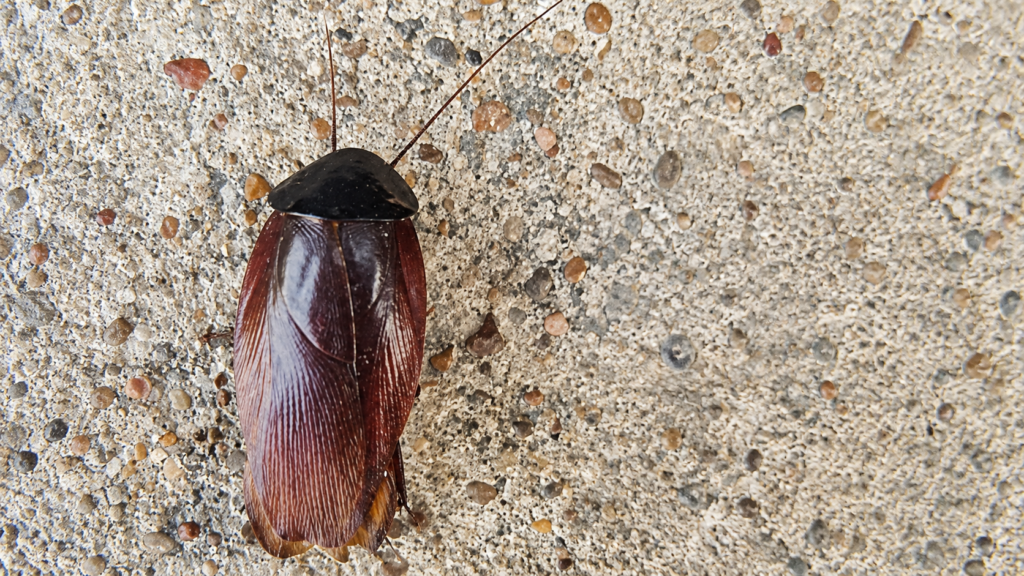
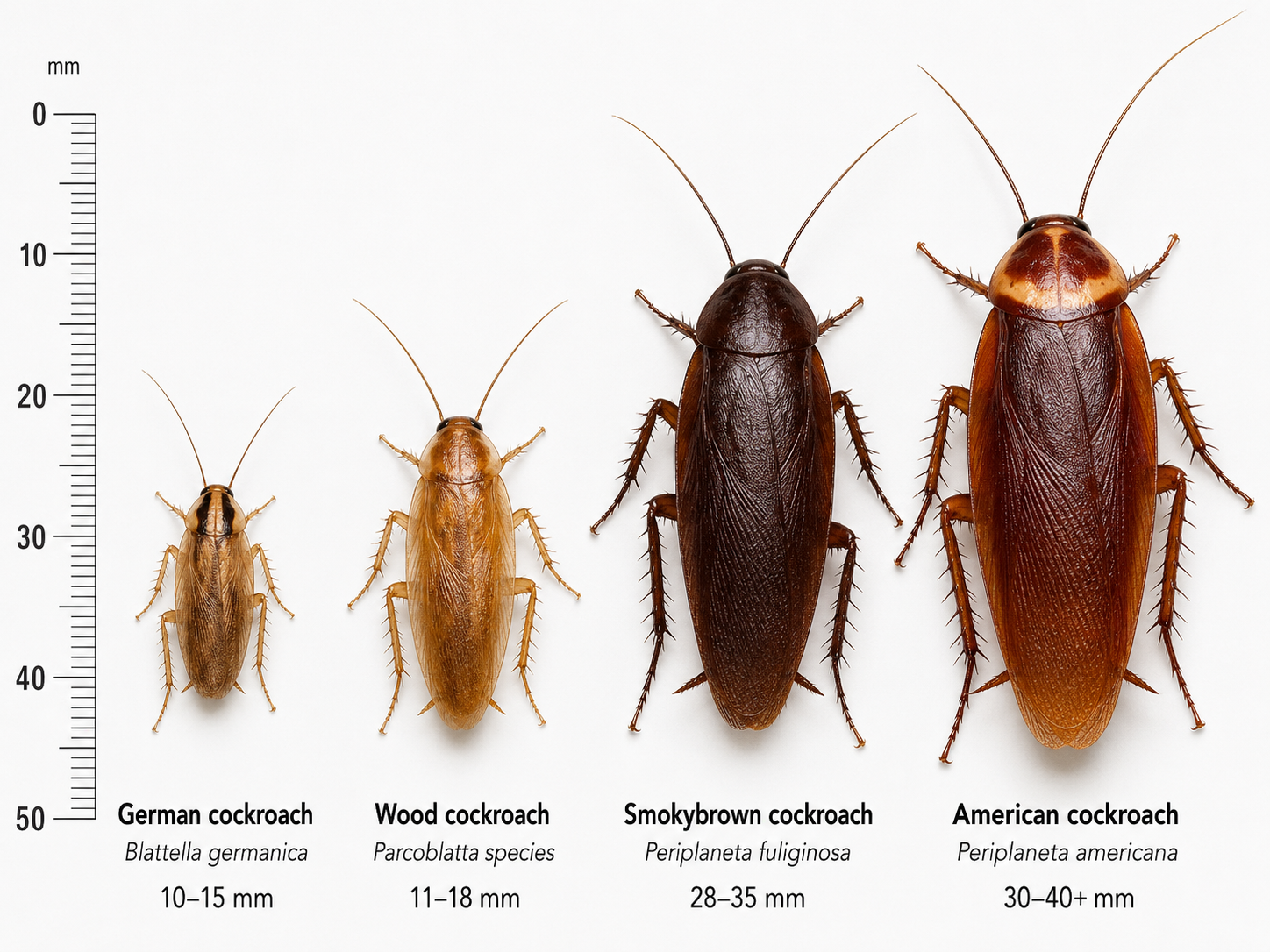
Adult smokybrown cockroaches measure about 1¼ to 1½ inches long. Their smooth bodies range from dark mahogany brown to nearly black and often look glossy. The shield behind the head, called the pronotum, has the same solid dark color as the rest of the body. It lacks the pale border or figure eight pattern that helps identify an American cockroach.
Both adult males and females have long wings that extend beyond the abdomen. They can fly well, especially on warm, humid nights. Their long antennae often equal or exceed the length of the body.
Young smokybrown cockroaches look very different from the adults. Early nymphs have dark bodies with pale bands and light markings on the antennae. They have no functional wings. Finding these nymphs indoors deserves attention because they could not have flown in from a tree or porch light. Their presence can point to a nearby breeding site.
Smokybrown Cockroach or American Cockroach?
Homeowners often call every large roach a water bug or palmetto bug, but those names do not identify the species. Color, markings, wings, and location provide better clues.
| Feature | Smokybrown cockroach | American cockroach | Wood cockroach | Oriental cockroach |
|---|---|---|---|---|
| Adult color | Uniform glossy dark brown or mahogany | Reddish brown with a pale marking behind the head | Usually lighter brown and less glossy | Very dark brown to black |
| Wings | Long wings on both sexes; strong flyer | Long wings; may glide or fly | Males fly readily; females vary by species | Males have shorter wings; females have very short wing pads |
| Typical location | Trees, gutters, rooflines, attics, and damp landscape areas | Sewers, drains, utility areas, and warm structural voids | Wooded areas; usually an accidental indoor visitor | Cool, damp areas near ground level |
| Indoor concern | Can reproduce in protected, humid parts of a structure | Can establish indoors | Usually does not establish indoors | Can establish in suitable damp areas |
A clear photograph of the back and the area behind the head often helps with identification. A crushed specimen gives away many of the features that separate one large cockroach from another, so capture it intact when practical.
Why Smokybrown Cockroaches Like Brazos County
Smokybrown cockroaches need warmth and high humidity. Our long summers and frequent stretches of muggy weather give them both. Outdoors, they shelter in tree holes, beneath loose bark, under leaf litter, within dense ground cover, and around piles of wood or other organic debris. They feed on decaying plant material, animal waste, and many other organic foods.
They also use parts of a home that mimic a hollow tree. A shaded gutter full of wet leaves offers moisture, shelter, and food. A roof gap can lead to a protected attic. A leaky roof or condensate problem can provide the humidity they need to survive above the living space.
This explains why smokybrown cockroach activity can seem upside down compared with many pest problems. Homeowners may see them near a second floor ceiling, attic hatch, fireplace, or upper wall even when the kitchen looks spotless. In those cases, searching only beneath sinks and behind appliances misses the likely source.
How Do Smokybrown Cockroaches Get Inside?
Adults can fly from trees and landscape areas to a roof, window, or exterior light. From there, they may enter through attic vents, soffit gaps, damaged screens, roof edges, or openings around utility lines. Limbs that touch or overhang a roof give them another route to the structure.
They also crawl through gaps around doors and windows or travel inside with firewood, boxes, outdoor furniture, and stored items. Warm weather, rain, dry spells, and changes around their shelter can increase movement. One wandering adult may simply have taken a wrong turn. Multiple adults over time, pale banded nymphs, egg cases, droppings, or shed skins suggest a more established problem.
Do Smokybrown Cockroaches Infest Homes?
Yes. Smokybrown cockroaches spend much of their time outdoors, but they can reproduce inside a structure when they find enough moisture, warmth, food, and shelter. Attics, crawl spaces, garages, wall voids, and areas near a leaking roof can support them.
Female cockroaches place their eggs inside a dark capsule called an ootheca. One smokybrown cockroach egg case usually holds about 20 eggs. The nymphs pass through several molts before they reach adulthood, and the full process can take many months. That slow development does not make an established population harmless. It means the insects may occupy a protected area for a long time before someone recognizes the pattern.
Nymphs provide one of the most useful clues. An adult can fly indoors from outside, but a wingless nymph usually stays closer to where it hatched. If you repeatedly find young smokybrown cockroaches in the same room or beneath the attic access, the inspection should include the spaces above and around that area.
Are Smokybrown Cockroaches Dangerous?
Smokybrown cockroaches do not bite or sting people under normal circumstances. The main concerns involve sanitation and allergens. They move through decaying organic material, animal waste, trash, and other dirty environments, then may cross counters, stored items, and other indoor surfaces.
Cockroach droppings, shed skins, and body fragments contain allergens that can aggravate asthma and allergies in sensitive people. An established population may also leave droppings, egg cases, and dead insects inside attics or wall voids. Large numbers can create an unpleasant odor.
A single outdoor cockroach does not automatically mean a dirty home. Even well maintained homes can receive visitors from trees, gutters, sewers, or neighboring habitat. The number, life stage, location, and frequency of sightings matter more than one isolated encounter.
How to Make Your Home Less Attractive to Them
Start with moisture and organic debris. Keep gutters clear so wet leaves do not collect along the roof. Repair roof leaks, plumbing leaks, dripping outdoor faucets, and irrigation problems. Avoid letting water stand near the foundation, and correct drainage conditions that keep shaded areas damp.
Rake heavy leaf litter away from the house, thin dense ground cover, and avoid piling mulch against the foundation. Store firewood off the ground and away from exterior walls. Trim limbs and shrubs that touch the roof or siding when practical. These changes reduce shelter and make it harder for cockroaches to move directly onto the structure.
Next, look up. Repair damaged soffits, close roofline gaps, screen vents properly, and seal openings around pipes or cables. Make sure exterior doors close tightly and window screens remain intact. Because adults fly toward lights, unnecessary lighting next to doors and windows can increase nighttime encounters. Moving a light away from an entry or choosing a less attractive outdoor lighting setup may help reduce that pressure.
These steps can lower the number of cockroaches around a home, but they may not resolve an active population in an attic, wall void, or nearby tree. The best plan depends on where the insects actually live and how they reach the structure.
Professional Smokybrown Cockroach Control
Venus Pest Company begins with identification and inspection. We look at where you find the cockroaches, which life stages appear, how often sightings occur, and what conditions may support them. For this species, the inspection may include trees, gutters, roof edges, soffits, attic areas, crawl spaces, garages, landscape beds, and moisture sources.
We then build a treatment plan around the property and the location of the activity. The goal goes beyond killing the cockroach that happened to cross the floor. We want to address the places that support the population and the routes that bring cockroaches inside. Every property differs, so the plan should reflect the structure, surrounding habitat, and evidence we find.
Venus Pest Company serves Bryan, College Station, and the rest of Brazos County. Owner Scott Lingren holds a PhD in entomology and brings decades of field experience to local pest problems. If large dark cockroaches keep appearing around your roofline or inside your home, we can identify the species and determine what the pattern means.
Call or text 979-774-0486 or request service online.
Frequently Asked Questions
Can smokybrown cockroaches fly?
Yes. Adult males and females have fully developed wings and fly well. Warm, humid nights and exterior lights often increase flight activity around homes.
Why do I find smokybrown cockroaches in my attic?
Attics can provide warmth, shelter, and access from the roofline. A roof leak, clogged gutter, poor ventilation, or another moisture source can make the space more suitable. Nearby trees and overhanging limbs may also put cockroaches close to soffits and vents.
Does one smokybrown cockroach mean I have an infestation?
Not necessarily. One adult may fly in from outdoors. Repeated sightings, nymphs, egg cases, droppings, or several cockroaches in the same area provide stronger evidence of an established population.
What do baby smokybrown cockroaches look like?
Young nymphs have dark brown or black bodies with distinctive pale bands and light markings on their antennae. They lack functional wings. Those markings fade as the cockroaches mature.
What attracts smokybrown cockroaches to a house?
Moisture, shade, decaying organic material, tree cavities, wet gutters, roof leaks, and exterior lights can attract or support them. Openings around the roofline, doors, windows, vents, and utilities give them access.
Are smokybrown cockroaches the same as American cockroaches?
No. Both species grow large and have long wings, but smokybrown cockroaches have a uniform dark mahogany color. American cockroaches look more reddish brown and have a pale yellow or tan marking behind the head.