
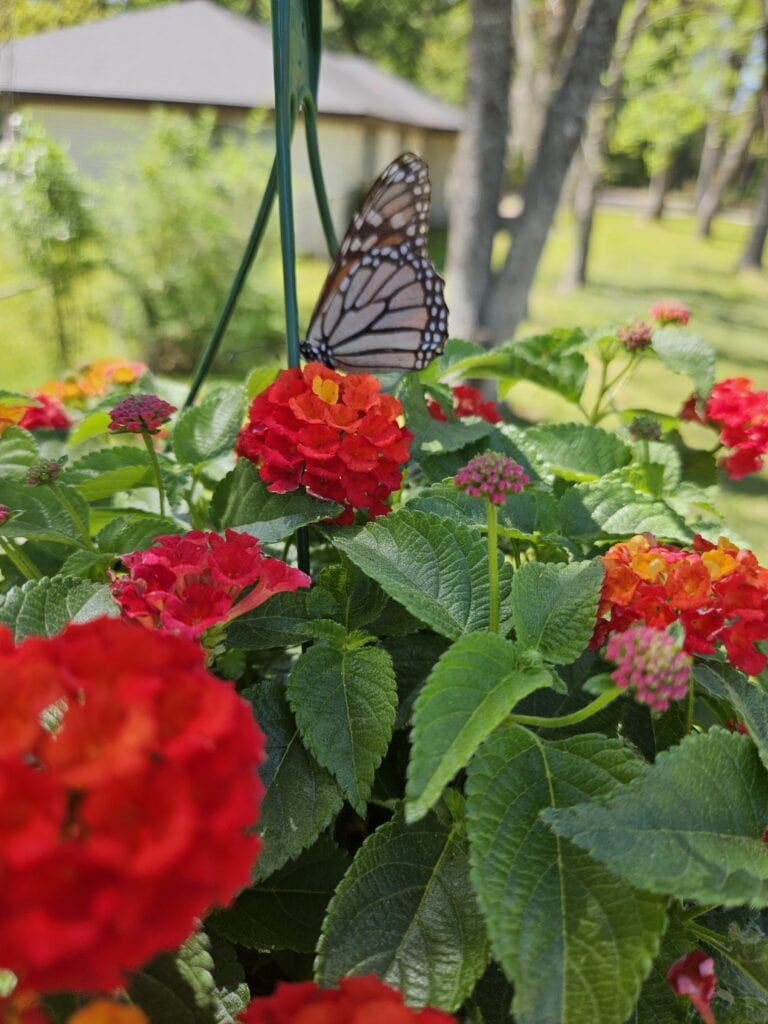
If you have looked up this week and wondered when the monarchs got so thick, you are not imagining it. Here in College Station, we have been seeing large numbers in the first week of November. Those sightings are a local reminder of one of the great animal migrations on Earth: monarch butterflies traveling through Texas toward mountain forests in central Mexico.
It feels late compared with the usual inland migration schedule. Texas Parks and Wildlife describes most monarchs on the inland route as having reached Mexico by early November, while the coastal passage continues into the middle of the month. Our sightings show that there are still butterflies to watch locally. They do not tell us whether the entire migration is late, but they are a good reason to step outside at lunch and look up.
The monarch is not a pest, and this is not a pest warning. It is the official state insect of Texas, it weighs less than a gram, and twice a year our state is the most important ground it crosses. November is a useful month to plant for its return, and this year it has also brought plenty to watch locally.
The State Insect of Texas
The Texas Legislature designated the monarch butterfly as the official state insect on June 16, 1995. The resolution language earns its poetry. It calls the monarch “as beautiful and memorable as a Texas sunset, soaring above all other insects in its nobility and determination.”
Texas sits between much of the eastern monarch population’s summer breeding range in the United States and Canada and its wintering grounds in Mexico. That makes our state a crucial migration corridor and gives Texans a special reason to care about what grows along the route.
The Texas Funnel
Stand anywhere in Texas in October and the migration may look like a scattering of butterflies. On a map it is a funnel. Monarchs pour into the state along a corridor roughly 300 miles wide, running from Wichita Falls to Eagle Pass, with butterflies continuing south toward Mexico. A second route, the coastal flyway, carries monarchs down the Gulf Coast from mid October into November, which is why the coast still sees butterflies after Central Texas has emptied out.
On cool evenings along the way, migrating monarchs gather by the hundreds in pecan and oak trees along creeks and river bottoms, rest for the night, and lift off again when the morning warms.
Seasonal changes in daylight and temperature help set migration in motion, and weather affects the pace and route. Favorable winds can carry butterflies south in waves, while poor flying conditions can hold them in place. That can help explain why sightings vary from day to day, although our local observations alone cannot establish what caused this November’s concentrations. To see it at its best, pick a sunny day and watch from late morning to mid afternoon, when monarchs do most of their flying. Toward evening, check the pecan and oak trees along creeks and low ground for overnight roosts, clusters of butterflies settling in to wait out the cool night.
These fall travelers are a special generation. Summer monarchs live a few weeks. The generation born in late summer enters a suspended state, puts off breeding, and lives up to eight months, long enough to fly as far as 3,000 miles to Mexico, survive the winter, and start the journey back in spring. The same fall migrants can return to Texas the following spring, but the complete annual journey through the northern breeding range takes several generations. Their descendants eventually head south to wintering forests they have never visited.
By about the first of November the leading monarchs reach the oyamel fir forests west of Mexico City, arriving as local communities celebrate the Day of the Dead. In the tradition there, the returning butterflies are welcomed as visiting souls of ancestors. Science and folklore agree on the timing, if nothing else.
The Winter Count Brought Good News
Because the wintering butterflies cluster so densely, researchers do not count individuals. They measure the area of forest the colonies cover. The most recent survey, covering the winter of 2025 to 2026 and released in March 2026 by Mexico’s National Commission of Protected Natural Areas and the World Wildlife Fund, found eastern monarchs occupying 2.93 hectares of forest, about 7.24 acres. That is a 64 percent increase over the winter before, and the second increase in a row. The area is a population index, not an exact head count.
Hold the celebration at a measured level. Conservation scientists use an average of about 6 hectares as a recovery benchmark. The record winter of 1996 to 1997 covered more than 18 hectares. The latest figure is a genuine improvement, but it is still below that benchmark and does not establish that the population has recovered. Weather during one breeding season can swing the number sharply in either direction. What does not swing is the value of habitat at our end of the route, because Texas is where the migration gets made twice a year.
Milkweed Is the Whole Game
Monarch caterpillars depend on milkweeds, their host plants. Females lay eggs on these plants, and the caterpillars feed on their leaves. The plants carry bitter toxins called cardenolides, the caterpillars store those toxins in their own bodies, and the bright orange wings of the adult help advertise its chemical defenses to predators. No milkweed, no monarchs. That part of the story has no substitute and no workaround.
Texas grows more than 35 native milkweed species. Native options to consider for Brazos County yards and acreage include antelope horns, green milkweed, zizotes milkweed, and butterfly weed. Match the species to your soil, drainage, and sun rather than assuming every milkweed fits every garden. Antelope horns is especially familiar in sunny Texas grasslands.
November is planting season for them, and the timing is not an accident. Many native milkweed seeds germinate more reliably after a stretch of cold, moist conditions, a process growers call cold stratification. Fall sowing lets outdoor winter conditions provide that treatment, with germination depending on the species, moisture, and weather. Follow the supplier’s instructions for the particular native seed you choose. Plants are slow to establish and put their first energy into a deep taproot, so a patch planted this fall is an investment that pays out over years, not weeks.
One caution belongs in every Texas monarch conversation. Tropical milkweed, sold in many garden centers, is not native here. In mild winters it can stay green instead of dying back, which encourages monarchs to keep breeding when they should be migrating, and it can build up a debilitating parasite called OE on the plants. Locally appropriate native milkweeds follow a more suitable seasonal growth cycle, although they are not immune to OE contamination. Plant native.
Texas Matters Twice a Year
The fall funnel gets the attention, but the spring passage may matter even more. In March the wintering monarchs leave Mexico and stream into Texas, worn and faded, looking for the first milkweed of the year. The eggs they lay on Texas milkweed become the first new generation of the season, the butterflies that push on to repopulate the entire eastern half of the continent. If Texas milkweed is scarce in March, the whole northern summer starts short handed.
That is why a November planting matters. The milkweed you sow this month is an investment in future breeding seasons. New plants may take time to establish, so do not count on a newly seeded patch being ready for the first March arrivals. Add fall blooming nectar plants such as Gregg’s mistflower, frostweed, fall aster, and goldenrod to feed adults passing through in autumn. Milkweed feeds the caterpillars; nectar fuels the flight.
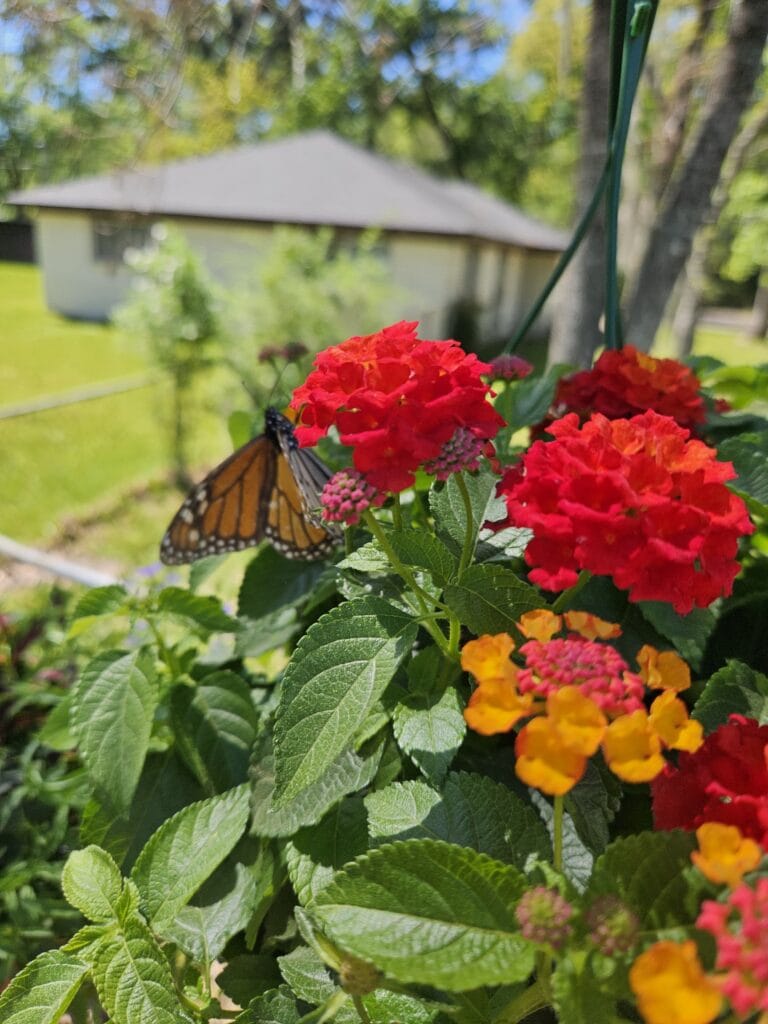
Those Signs in People’s Yards
Drive around Bryan and College Station and you will see official looking signs in gardens: Monarch Waystation, with an ID number. Those come from Monarch Watch, a research and conservation program at the University of Kansas, and the yard behind the sign has been registered as monarch habitat.
A waystation is a working patch, not a plaque. The guidelines call for at least ten milkweed plants, ideally two or more species so bloom and fresh growth stagger across the season, nectar plants in flower through the growing season, a sunny site with at least six hours of sun, plants set close enough to give shelter, and management without insecticides on the habitat plantings. There is no minimum area for certification, although Monarch Watch recommends at least 100 square feet for an effective habitat. The gardener registers the site for an application fee and receives a certificate with a Waystation ID number. The weatherproof aluminum sign itself is an optional purchase on top of registration. The similar Certified Wildlife Habitat sign comes from the National Wildlife Federation and covers wildlife needs more broadly.
The point of the sign is the same point this article is making. A yard can be habitat on purpose, and in a state that hosts the whole eastern migration twice a year, a deliberate yard is not a small thing.
Help Exists for Landowners and Community Gardens
Texas land is overwhelmingly private, so monarch conservation here runs through landowners, and several programs put money behind the habitat.
Homeowners and community groups can start with the Bring Back the Monarchs to Texas garden grants from the Native Plant Society of Texas, which award up to $600 to schools, nature centers, and other organizations creating monarch gardens with native Texas plants on public sites. Check the program’s current application page for the next cycle’s dates and eligibility before planning around a deadline.
For landowners, the USDA Natural Resources Conservation Service and Texas Parks and Wildlife are useful starting points for habitat planning and possible financial assistance. Ask about current eligibility, application windows, and whether a proposed milkweed or nectar planting fits an available program. Funding and requirements change, so confirm the details before committing to a project.
A Pest Control Company, For Monarchs
An entomologist owned pest company cheering for an insect surprises some people. It should not. Our work is about the insects that enter homes and the conditions that invite them, and it has never required a war on everything with six legs. Monarchs do not infest houses, do not bite, do not damage property, and do not need a treatment of any kind.
The honest tension is spray reaching the wrong plants, and it is manageable. Keep treatments targeted at the structure and the pest harborage around it. Keep applications off blooming plants and out of habitat beds. Tell your pest company where your milkweed patch is, the same way you would point out a vegetable garden or a beehive, and expect them to work around it. When Venus treats a home under Quarterly Pest Control, the goal is a protected structure, not a sterile yard. A monarch patch in the back corner and a protected home are fully compatible, and we are glad to help a customer plan for both.
Is That Orange Butterfly Actually a Monarch
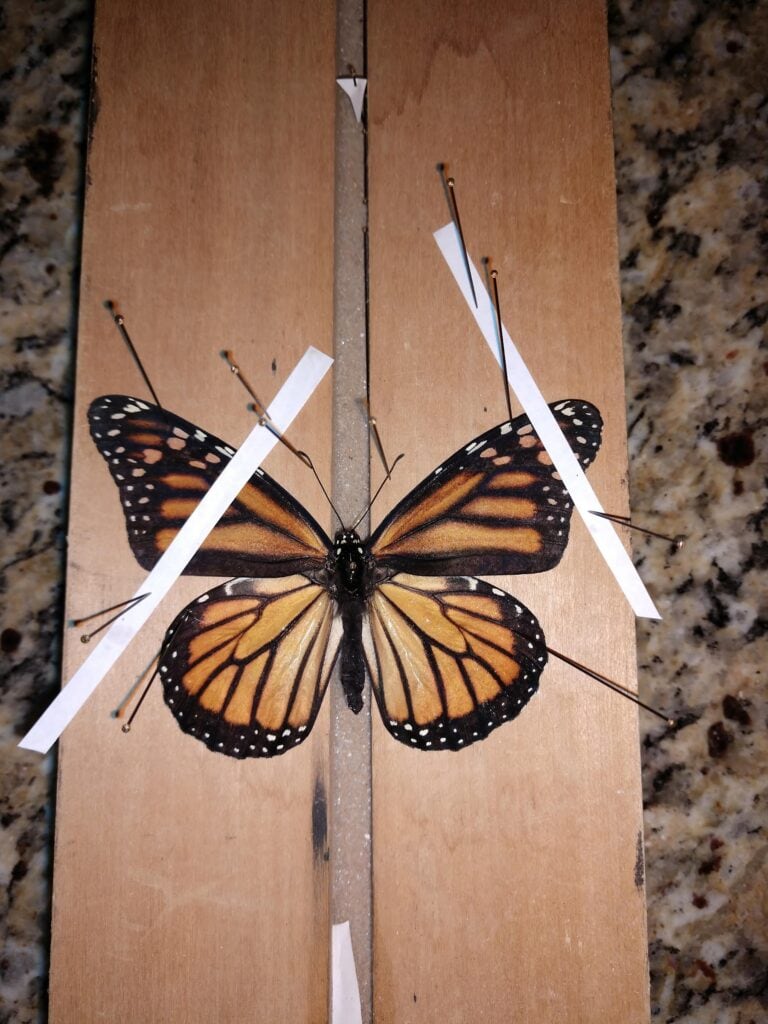
One teaser for a future article. Texas yards host an accomplished monarch look alike called the viceroy, a different butterfly entirely whose caterpillars feed on willow, not milkweed. For a century, textbooks used the viceroy as the classic case of a harmless mimic copying a toxic model. Research in the 1990s complicated the story in the best possible way: the viceroy turns out to be distasteful in its own right, which changes the science and the story. The field mark, the research, and the rest of the mimicry story deserve their own post, and they will get one.
If the butterfly in your yard carries a thin black line arcing across each hindwing, you have met the viceroy. Monarchs never wear that line.
Not sure what you’re seeing? Text a picture to 979.774.0486 or email us a picture, and we’ll help you identify it. Some of our favorite conversations start with something that needs no treatment at all. You can also call 979.774.0486 with questions about pest control around your home.
Questions About Monarchs in Texas
When do monarchs come back through Brazos County?
The northbound passage begins in March, when wintering monarchs leave Mexico and reach Texas looking for fresh milkweed. Numbers are smaller and more spread out than the fall funnel, and the butterflies you see are worn from the winter. Their offspring carry the migration onward through spring and summer.
What milkweed should I plant in College Station?
Consider antelope horns, green milkweed, zizotes milkweed, and butterfly weed, choosing a locally appropriate native that fits your particular soil, sun, and drainage. Sow seed outdoors in the fall so winter cold prepares it to germinate, or start with plants in spring. Skip tropical milkweed, which is not native and can interfere with migration timing.
Can I still plant milkweed in November?
Yes. Fall sowing can work well for native milkweed. Many species benefit from cold, moist conditions before germination. Follow the directions for the particular species and seed source, and keep expectations tied to local weather and moisture. Expect slow establishment in the first year while the plants build root systems.
What does the Monarch Waystation sign in a yard mean?
It means the gardener registered the site with Monarch Watch at the University of Kansas as habitat meeting its guidelines: ten or more milkweed plants, nectar plants across the season, sun and shelter, and no insecticides on the plantings. Registration brings a certificate and an ID number in the registry. The metal sign is an optional purchase, and the similar National Wildlife Federation sign marks its Certified Wildlife Habitat program.
Does protecting monarchs mean giving up pest control?
No. It means keeping treatments targeted. Pest work aimed at the structure, entry points, and harborage around the home does not need to touch a habitat bed across the yard. Point out your milkweed and nectar plantings to your technician, keep applications off blooms, and the two goals coexist without strain.
Why am I seeing so many monarchs in November?
We have been seeing large numbers locally in early November, later than the usual peak of the inland Texas passage. Weather influences when butterflies travel and gather, but sightings alone do not establish why a particular wave arrived when it did. The coastal migration normally continues into mid November. Enjoy the butterflies while they are here, and keep fall nectar available for passing adults.
Photos by Dr. Scott Lingren.