

Pest Expert Overview: Chinch Bugs in Bryan & College Station
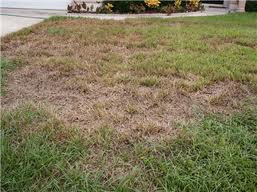
I barely got the lawn treated in time to save it. Even then, the surviving grass remained stunted for quite a while. That experience taught me something I still tell customers today: when chinch bugs become numerous enough to leave the grass and crawl across the patio, driveway, or sidewalk, the lawn may already be in serious trouble. This isn’t a pest you watch for another week to see what happens.
Southern chinch bugs are among the most destructive insect pests of St. Augustine grass in Brazos County. Their injury often looks like drought stress, a lawn disease, or simple heat damage. Meanwhile, the population keeps feeding and the damaged area keeps expanding. Early identification can mean the difference between a lawn that recovers and one that needs new sod.
What Are Southern Chinch Bugs?
The chinch bug that causes serious lawn damage in our area is the southern chinch bug, Blissus insularis. The previous version of this page identified Blissus leucopterus, another chinch bug species, but that isn’t the primary pest attacking St. Augustine lawns in Bryan and College Station.
Southern chinch bugs are true bugs, which means they have piercing and sucking mouthparts. They stay low in the turf, where they feed around grass stems, leaf sheaths, and the thatch layer. Both nymphs and adults damage the lawn.
St. Augustine grass suffers the most severe injury. Southern chinch bugs may also feed on zoysia, bermudagrass, bahiagrass, or centipedegrass growing next to St. Augustine, but Texas A&M AgriLife reports that damage to those grasses usually remains minor. They do not normally create the broad ornamental plant problem described in the old article.
What Do Chinch Bugs Look Like?
Adult southern chinch bugs measure only about 3 to 3.6 millimeters long. That makes them small, but still visible without magnification. Adults have black bodies and white wings folded flat across their backs. Dark triangular marks on the wings create a recognizable black and white pattern.
The young bugs, called nymphs, change appearance as they grow. Newly hatched nymphs look bright red or reddish orange with a white band across the abdomen. Older nymphs gradually darken to brown, gray, and then nearly black. They pass through five nymphal stages before becoming adults.
Homeowners often miss the early stages because the insects remain beneath the grass canopy. When a large population starts walking across concrete, the bugs become much easier to see. Unfortunately, that can also signal that crowding or dying turf has pushed them out of the lawn.
How Chinch Bugs Damage St. Augustine Grass
Chinch bugs insert slender mouthparts into the grass and remove plant fluids. Their feeding and saliva disrupt the plant tissue, causing blades and stems to lose color and die. One insect causes little visible injury. Hundreds or thousands feeding in the same part of a lawn can overwhelm the grass quickly.
Damage usually begins as an irregular yellow patch. The grass then turns reddish brown, straw colored, and eventually dead. The patch expands outward as the bugs move into healthy turf. Chinch bugs often gather along the border where damaged grass meets grass that still looks green. That moving edge provides the best place to look for them.
Hot, sunny portions of the lawn tend to show damage first. Common starting points include grass beside driveways, sidewalks, patios, curbs, and other areas that absorb and radiate heat. Drought stressed turf has less ability to tolerate feeding, so chinch bug injury often becomes obvious during the hottest part of summer.
That pattern explains why many people assume the lawn simply needs more water. They irrigate the brown area and wait. The grass keeps declining because water cannot stop insects from feeding. By the time the homeowner realizes something else is wrong, the infestation may cover a much larger area.
How Fast Can Chinch Bugs Ruin a Lawn?
The change can happen in days when a large population meets hot, stressed grass. My backyard is a good example. I saw adult bugs crossing the patio, then watched the lawn begin to fail within roughly two days. The insects probably had been feeding out of sight before I noticed them, but the visible decline felt almost immediate.
Several biological factors drive that speed. Southern chinch bugs develop quickly in warm weather, and Texas may support three to six generations in a year. Females place eggs in protected crevices around grass stems and nodes. Depending on temperature, the eggs can hatch in about two weeks. Nymphs begin feeding soon after they emerge.
Generations can overlap, so a lawn may contain eggs, several sizes of nymphs, and adults at the same time. The homeowner doesn’t face one brief wave of insects. A growing population can keep adding new feeders while existing bugs move toward healthy grass.
Chinch Bug Damage or Something Else?
Brown St. Augustine does not automatically mean chinch bugs. Drought stress, take all root rot, large patch, gray leaf spot, compacted soil, irrigation trouble, pet urine, grubs, and other problems can produce yellow or brown areas. Treating the wrong cause wastes time while the lawn continues to decline.
| Possible cause | Typical clue | What separates it from chinch bugs |
|---|---|---|
| Chinch bugs | Expanding yellow and brown patches in hot, sunny turf | Live nymphs or adults cluster near the edge of the damage |
| Drought or irrigation trouble | Grass wilts or folds and follows a dry irrigation pattern | Inspection finds dry soil but no concentration of chinch bugs |
| Take all root rot | Weak, thinning St. Augustine with poor roots | Grass pulls loose more easily and the problem often extends beyond hot pavement edges |
| Large patch | Circular or irregular patches, often during cooler wet weather | The season and leaf symptoms differ from typical summer chinch bug activity |
| White grubs | Turf loses roots and may lift like loose carpet | Digging below the damaged edge reveals grubs in the soil |
The shape of a brown patch alone cannot confirm the cause. Finding the insects in the right location and in numbers capable of causing injury provides much stronger evidence.
How We Inspect for Chinch Bugs
We start at the active margin of the damage, not in the dead center. Chinch bugs usually abandon grass after they have exhausted it. The highest numbers often sit just inside the remaining green turf, where food still exists.
Parting the grass and watching the soil surface can reveal moving adults and nymphs. Sunlight, heat, and the insects’ small size can make that harder than it sounds. We may check several locations because populations rarely spread evenly across the lawn.
Extension publications also describe a flotation test. A bottomless metal cylinder goes into the turf and holds water for several minutes. Chinch bugs inside the sample float to the surface. The method can help confirm an infestation, but testing the wrong part of the lawn may still produce a false sense of security. The active border matters more than the brown center.
Seeing one chinch bug does not prove that it caused the damage. These insects can live in turf at low levels without producing obvious injury. We consider the number present, the grass species, the damage pattern, the weather, and competing explanations before recommending service.
Why Chinch Bugs Thrive During Brazos Valley Summers
Southern chinch bugs handle heat well, and their populations often become most noticeable during hot, dry periods. St. Augustine grass also experiences greater stress during prolonged heat, especially where irrigation coverage falls short or reflected heat raises the temperature beside pavement.
Thick thatch gives the insects protected space near the base of the grass. Excess nitrogen can encourage soft, rapid growth and contribute to thatch accumulation. Scalping the lawn adds more stress and reduces the plant’s ability to recover. None of these conditions creates chinch bugs from nothing, but each can make an existing infestation more damaging.
Good lawn care improves the turf’s ability to tolerate stress. Mow St. Augustine at an appropriate height with a sharp blade. Water deeply enough to reach the root zone, then allow reasonable drying between irrigation cycles. Check sprinkler coverage instead of assuming every brown patch receives the same amount of water. Avoid pushing excessive growth with more fertilizer than the lawn needs.
These practices support the grass, but they cannot stop a heavy chinch bug infestation by themselves. A well maintained lawn can still suffer serious damage when populations climb. Cultural care works best as part of prevention and recovery, not as a reason to delay action after someone confirms active injury.
Professional Chinch Bug Control
Effective service starts with identification. We need to know that chinch bugs caused the damage, locate the active population, and determine how far it has spread. The dead center of a patch does not need protection from further feeding. The living edge and nearby susceptible turf matter most.
Timing becomes critical once the insects begin damaging the lawn. A professional treatment can stop active chinch bug feeding and protect surviving grass, but it cannot bring dead turf back to life. Waiting until an entire area turns brown may leave little grass to save.
We also look at the larger lawn problem. If poor irrigation coverage, excessive thatch, mowing stress, or another condition weakened the turf, treatment alone will not correct it. The insects may die while the lawn continues struggling for a different reason. Honest diagnosis sometimes means explaining that a property has both chinch bugs and a turf care issue.
After control, recovery depends on how much living plant tissue remains. St. Augustine spreads through aboveground runners called stolons. Surviving runners can gradually fill a thin area during active growth if they receive proper care. Completely dead sections usually require repair or replacement. Even grass saved in time may remain discolored or stunted for weeks, just as mine did.
Venus Pest Company provides chinch bug inspections and control in Brazos County, including Bryan and College Station. If St. Augustine grass starts turning yellow or brown during hot weather, don’t wait for the patch to spread across the lawn. Call or text 979-774-0486, or email [email protected].
Chinch Bug Questions
Are chinch bugs mainly a problem in St. Augustine grass?
Yes. Southern chinch bugs can feed on several warm season grasses, but St. Augustine suffers the most serious lawn damage in Texas. Minor feeding may occur in nearby zoysia, bermudagrass, bahiagrass, or centipedegrass.
Can chinch bugs kill a lawn in a few days?
A large population can produce visible decline within days, especially in hot, drought stressed St. Augustine. The insects usually begin feeding before the homeowner notices them, so the damage may appear sudden even though the infestation has been building.
Why are chinch bugs crawling on my patio or driveway?
Large populations often move out of damaged turf and cross nearby hard surfaces while searching for healthy grass. Seeing many of them on concrete can indicate a serious infestation in the adjoining lawn.
Does watering get rid of chinch bugs?
No. Proper irrigation helps St. Augustine tolerate heat and recover from stress, but water does not eliminate an established chinch bug population. Continued decline after watering gives you a good reason to inspect for insects or another lawn problem.
Where should I look for chinch bugs?
Inspect the border between damaged and healthy grass. Part the turf and watch near the soil and thatch surface for tiny red nymphs or black and white adults. Checking only the middle of a dead patch can miss the population.
Will brown grass recover after chinch bug control?
Living but injured grass may recover slowly, and healthy St. Augustine runners can spread into thin areas. Dead grass cannot recover. Severe infestations may leave sections that need new sod even after the insects no longer threaten the remaining lawn.