
Pest Expert Overview: Buffalo Gnats in Bryan & College Station
For many years, buffalo gnats barely registered as a pest in the Brazos Valley. That changed in 2012. My former Texas A&M professor, Dr. Bart Drees, documented reports from Navasota and the Bryan and College Station area during a Central Texas outbreak that spring. I noticed the same shift. Before 2012, I did not consider these flies a recurring local pest. Since then, they have returned often enough that residents recognize the bites and call us with questions.
Buffalo gnats create an unusual pest control problem. They may fly several miles from the water where they developed, and they do not spend much time resting on the surfaces around a home. That behavior leaves a pest control company with no practical target on an individual property. Venus Pest Company has not found a residential treatment that reliably controls them, and we will not sell a service that we do not expect to work.
What Do Buffalo Gnats Look Like?
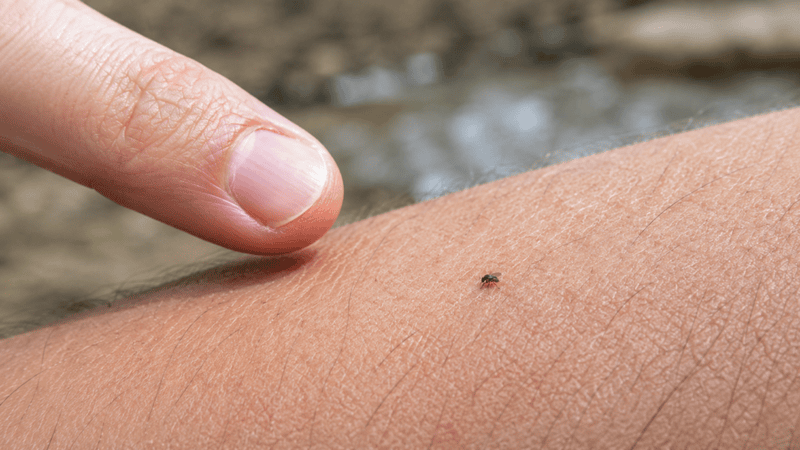
Adult buffalo gnats usually measure less than 5 millimeters long. Their compact bodies, short legs, broad clear wings, and arched backs give them a humpbacked appearance. That rounded profile inspired the name “buffalo gnat.” Most look dark gray or black, although color varies among species.
Their behavior often provides a better identification clue than their appearance. Buffalo gnats fly during the day and gather around the head, hairline, ears, and neck. A person may notice fast, persistent flies around the face before feeling a sharp bite. Unlike mosquitoes, they do not have the familiar long-legged shape or obvious needlelike mouthparts.
Several small flies occur around Brazos County, and people commonly use “gnat” for all of them. The name alone does not identify the pest.
| Small fly | Where you usually notice it | Does it bite people? | Most useful clue |
|---|---|---|---|
| Buffalo gnat or black fly | Outdoors, often around the head and neck | Yes, females of biting species | Small, dark, humpbacked body and a painful daytime bite |
| Mosquito | Shaded outdoor areas and near standing water | Yes, females | Long legs, slender body, and a visible proboscis |
| Biting midge or no-see-um | Outdoors near moist soil, marshy areas, or water | Yes, females | Extremely small size and a bite that seems to come from an almost invisible fly |
| Fungus gnat | Near damp potting soil or indoor plants | No | Delicate dark fly that hovers near plants and windows |
Correct identification matters because these flies develop in different places and respond to completely different management strategies. A mosquito problem may originate in a container holding water on the property. A buffalo gnat problem usually begins in moving water well beyond the property line.
Why Buffalo Gnats Appeared in the Brazos Valley in 2012
In May 2012, Dr. Drees published Black Fly Outbreak in Central Texas. He identified the outbreak species as Simulium meridionale and noted reports from Navasota and Bryan and College Station beginning in mid-April. He also wrote that the high rainfall that year could have created or expanded the aquatic habitat the flies needed.
At the time, I suspected that the historic 2011 drought helped set the stage. When rain returned in 2012, the landscape contained plenty of low, muddy areas. That sequence looked like a reasonable explanation for a pest we had not previously seen cause trouble here.
Black fly biology adds an important correction to that early assumption. Muddy standing water alone does not produce buffalo gnats. Their larvae need water movement. Rain after the drought may have restored flow, expanded shallow streams and drainage channels, and created more suitable habitat in muddy bayous. Dr. Drees noted that S. meridionale can develop in both sandy streams and slow, muddy bayous. The drought and rain sequence still may help explain the timing, but the water had to provide current and oxygen for the larvae.
No single weather event guarantees an outbreak. Water flow, temperature, food in the current, and the species present all affect development. The 2012 history gives us a strong local observation and a biologically plausible explanation, not proof that the drought alone caused the outbreak.
The Life Cycle Starts in Moving Water
Buffalo gnats undergo complete metamorphosis through egg, larval, pupal, and adult stages. Females place their eggs in flowing water or on wet objects near the current. After hatching, the larvae anchor themselves to submerged rocks, branches, leaves, grasses, or other firm surfaces.
Each larva uses fanlike structures near its head to filter small bits of organic material from the passing water. The current brings food and oxygen while the larva remains attached. This feeding method explains why an abandoned bucket, birdbath, or clogged gutter does not function as a buffalo gnat nursery. Those containers can raise mosquitoes, but they lack the current that black fly larvae require.
The larvae eventually pupate underwater. Adults emerge, reach the air, mate, and disperse from the stream or channel. Development time and the number of generations vary with species and environmental conditions. In Brazos County, the most noticeable activity usually occurs during spring, and the flies often fade by the end of May. Weather can shift that schedule.
I have watched dragonflies aggressively hunt these gnats during outbreaks. They catch them readily, but even a large number of dragonflies does not seem capable of making a noticeable dent in a major emergence. The water system can produce more adult flies than predators around one property can remove.
Why Yard Treatments Do Not Reliably Control Buffalo Gnats
Most household pest problems give us a target. We can find where the pest lives, where it enters, or where it rests. Buffalo gnats break that pattern.
The larvae develop in moving water that may sit miles from the home where the adults bite. University of Minnesota Extension reports that black flies can travel about 10 miles from their breeding source, with wind carrying some even farther. Dr. Drees also found them well away from streams in urban Bryan and College Station during the 2012 outbreak.
Adult behavior creates a second obstacle. Mosquitoes often rest on shaded vegetation and other surfaces between periods of activity. A professional mosquito program can take advantage of that behavior. Buffalo gnats tend to stay active around hosts instead of settling on the surfaces a property service could target. Even if someone reduced a few flies in one yard, more could arrive from distant water.
Large regional programs sometimes target black fly larvae in known waterways. Those programs require species identification, water monitoring, environmental oversight, and treatment across the actual breeding system. A homeowner or pest control company working on one lot cannot reproduce that approach responsibly.
For those reasons, Venus Pest Company does not offer a buffalo gnat control treatment. This is not a case where a stronger or more frequent residential service solves the problem. The source lies outside the yard, and the adult fly does not give us a dependable treatment surface.
Why the Bites Hurt
Only females of biting black fly species take blood meals. Males feed on nectar and cannot bite. The female cuts the skin and feeds from the small pool of blood, which feels different from a mosquito probing the skin. Many people notice a sudden sharp sensation, followed by a red spot, itching, tenderness, or swelling.
Buffalo gnats often attack exposed skin around the hairline, ears, neck, arms, and ankles. They may also crawl beneath loose clothing. Reactions vary considerably. One person may develop a small itchy spot, while another may experience substantial localized swelling.
During the 2017 outbreak, one bit me directly on the cheek while I was working in the Indian Lakes neighborhood. The swelling was still visible two days later. That experience matched what customers described: the initial bite was not extraordinary, but the reaction lingered much longer than a typical mosquito bite.
Purdue University Extension reports no documented human disease transmission by black flies in the United States. Their bites can still cause significant discomfort. Try not to scratch, since broken skin can invite infection. Anyone who develops trouble breathing, widespread hives, severe swelling, or another serious reaction should seek prompt medical care.
Dogs, livestock, poultry, and wildlife can also attract buffalo gnats. Dense swarms can distress animals, particularly around the face and ears. Move an affected pet or animal into a protected indoor or screened area when possible, and contact a veterinarian if it shows marked swelling, breathing difficulty, weakness, or unusual behavior.
What Can You Do During an Outbreak?
Physical barriers provide the most dependable personal protection. Lightweight long sleeves, long pants, a hat, and fine mesh around the head can keep flies away from skin. Tuck or close loose openings when pressure becomes intense because the flies can crawl beneath clothing. Lighter colors may attract fewer black flies than dark blue or black clothing.
Timing and location also help. Buffalo gnats remain active during daylight, often with stronger activity after sunrise and before sunset. Windy, open areas may offer relief compared with sheltered, wooded locations. If flies begin swarming heavily around your head, going indoors or into a well-screened space usually works better than trying to remain outside.
One of our technicians, Ken, spends a lot of time working and exercising outdoors. He swears that diluted vanilla extract helps keep buffalo gnats from biting him. I include that because it is a genuine field observation from someone who deals with these flies, not because research has established vanilla as a reliable repellent. We do not know a proven concentration, duration, or level of protection, and other people may get different results. Do not depend on an unverified home remedy when bites could pose a serious health risk.
When an Identification Visit Can Still Help
An individual-property treatment does not provide reliable buffalo gnat control, but identification can still prevent wasted effort. Mosquitoes, biting midges, stable flies, fungus gnats, and other small flies require different responses. If the insect does not match buffalo gnat behavior, the source may sit on or near the property and may allow practical correction.
Pay attention to when and where the flies appear. Buffalo gnats usually bother people outdoors during daylight, concentrate around the upper body and head, and produce a sharp bite. Indoor flies around drains, houseplants, windows, or food point toward another pest. Photos can help, but a captured specimen gives the clearest answer because several small flies look similar in a phone image.
Venus Pest Company serves Brazos County, including Bryan and College Station. If you need help identifying a biting fly, call 979-774-0486. We will tell you what the evidence supports, including when a pest does not have a worthwhile residential treatment.
Common Questions
Are buffalo gnats and black flies the same insect?
Yes. Buffalo gnat, black fly, and turkey gnat are common names for members of the black fly family, Simuliidae. “Gnat” also serves as a loose name for many unrelated small flies, so behavior and physical features matter more than the common name.
Are the biting gnats around Bryan and College Station usually black flies?
During the recurring spring outbreaks, black flies are often the insects people describe as biting gnats. Texas A&M identified Simulium meridionale during the 2012 Central Texas outbreak. The phrase “biting gnat” can also describe biting midges and other small flies, so season, behavior, and a specimen still matter.
Do they breed in standing water?
No. Their larvae attach to submerged objects in moving water and filter food from the current. Mosquitoes often develop in standing water, which explains why emptying containers can reduce mosquitoes but does not solve a buffalo gnat outbreak.
Why did they become noticeable here in 2012?
Dr. Bart Drees documented a Central Texas outbreak that spring after substantial rainfall. I also remember 2012 as the first year they became a notable Brazos Valley pest. Rain may have restored or expanded suitable flowing water habitat after the 2011 drought, although we cannot assign the outbreak to one weather event with certainty.
How far can they fly?
Black flies can travel several miles from the water where they developed. Extension sources report flights of about 10 miles, and wind may carry them farther. That range explains why they can swarm around homes with no stream nearby.
Why does Venus not offer a yard treatment?
The larvae usually develop beyond the property, and the adults do not reliably rest on yard surfaces. New flies can also arrive from miles away. We have not found a residential property treatment that produces dependable control, so we do not offer one.
Does vanilla extract repel them?
Ken, one of our technicians, reports good personal results with diluted vanilla extract while working outdoors. Scientific evidence has not established it as a reliable buffalo gnat repellent, however. Treat his experience as an anecdote rather than a guarantee.
When do the spring outbreaksusually end?
Local pressure often declines by the end of May, although weather can move that timing in either direction. A major emergence may feel endless while it lasts, but adult numbers usually fall as seasonal water and temperature conditions change.