 Pest Expert Overview: Stored Product Weevils in Bryan & College Station
Granary weevils, rice weevils, and maize weevils belong to the genus Sitophilus. People often call all three grain weevils or pantry weevils. They look similar, eat many of the same foods, and cause the same basic problem in a home. The most important job isn’t separating one species from another. It’s confirming that you have a true grain weevil and finding the product where it’s developing.
In Bryan, College Station, and across Brazos County, that source may sit somewhere other than the kitchen. Bird seed, deer corn, grass seed, decorative corn, and animal feed containing whole grain often stay in garages, utility rooms, or storage closets. One forgotten bag can keep sending adults into the house even after you clean the pantry.
What Do Grain Weevils Look Like?
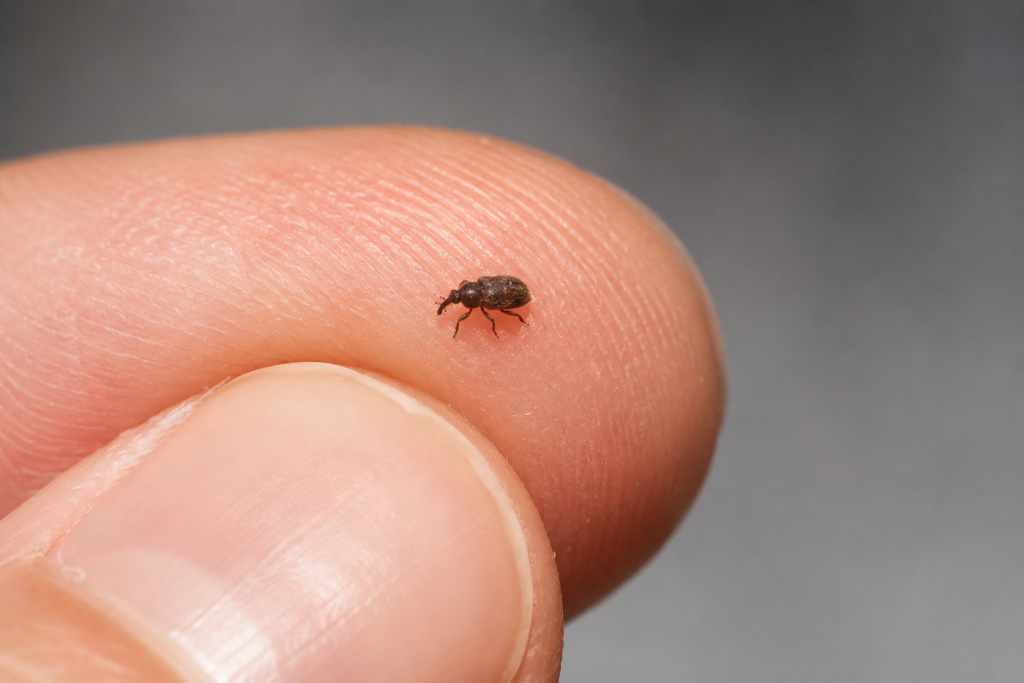
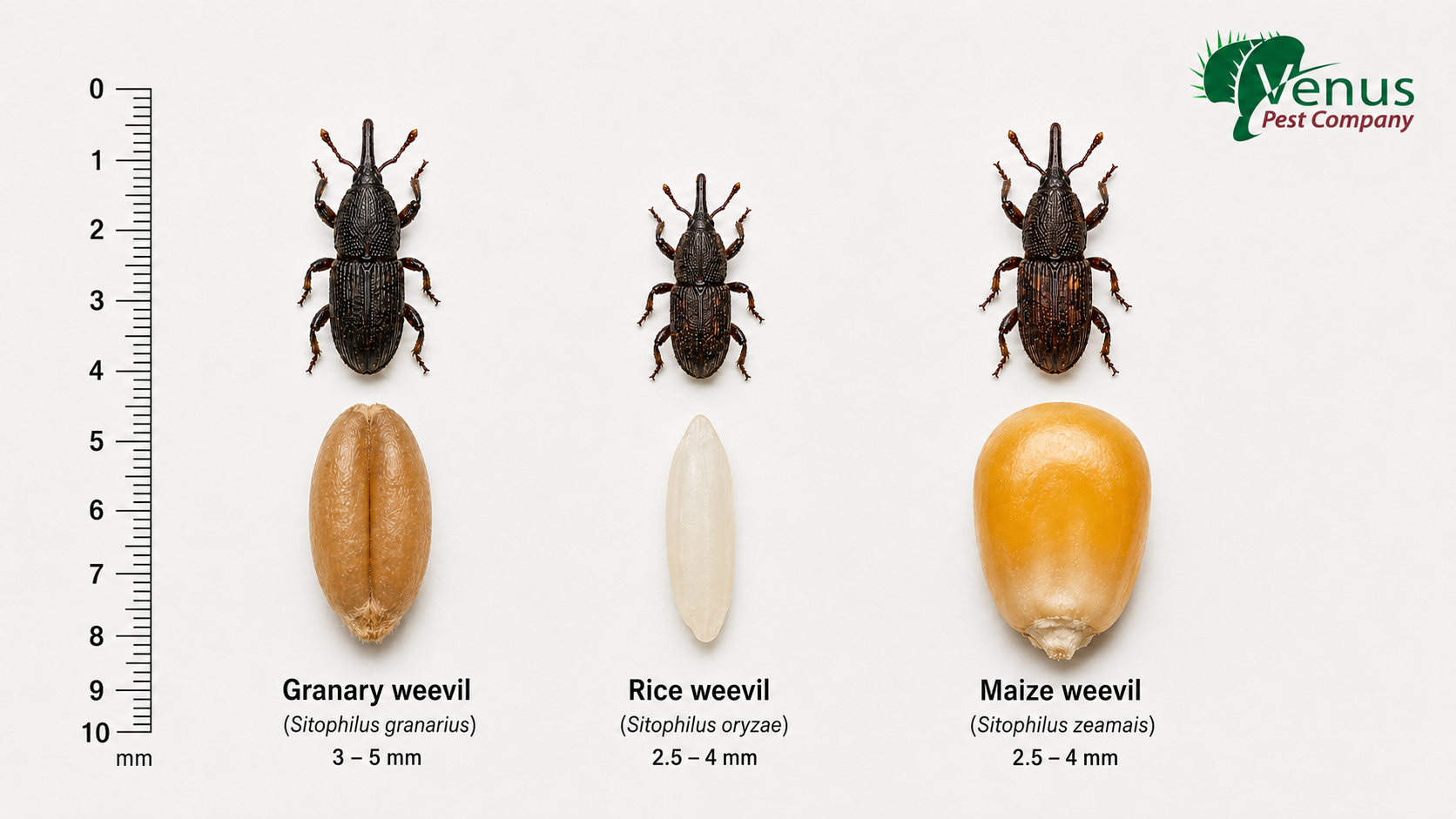
Adult granary, rice, and maize weevils measure less than 3/16 inch long. Their most recognizable feature is a narrow snout that extends forward from the head. The mouthparts sit at the end of this snout. Their bodies look cylindrical rather than broad or flattened, and their color ranges from reddish brown to nearly black.
Size and color alone won’t separate the three species reliably. Granary weevils usually have a solid dark appearance and cannot fly. Rice and maize weevils often show four reddish or yellowish spots on their wing covers, and both can fly. Those spots may look faint on a dark specimen.
Rice and maize weevils look so much alike that even a good photograph may not settle the identification. An entomologist often needs magnification and close examination of the thorax and other structures. Fortunately, homeowners rarely need a species level answer before addressing an infestation. The food source matters far more.
| Feature | Granary weevil | Rice weevil | Maize weevil |
|---|---|---|---|
| Scientific name | Sitophilus granarius | Sitophilus oryzae | Sitophilus zeamais |
| Typical appearance | Dark brown to nearly black, usually without pale wing spots | Reddish brown to nearly black, often with four lighter spots | Similar to the rice weevil, often somewhat larger or darker |
| Flight | Cannot fly | Can fly | Can fly and usually flies more readily |
| Identification difficulty | Often separated by its plain wing covers and lack of flight | Difficult to separate from maize weevil without magnification | Difficult to separate from rice weevil without magnification |
Why Are Weevils in My Pantry?
Grain weevils usually enter a home inside food, seed, or feed. A female uses her snout to chew a small opening in a whole kernel. She deposits one egg inside, seals the opening, and moves to another kernel. The egg and the young insect remain out of sight.
After the egg hatches, a small white larva feeds inside the grain. It has no legs and rarely appears during a normal pantry inspection because the kernel surrounds it. The larva later pupates in the same protected space. The adult finally chews its way out and leaves a small, roughly round hole behind.
Under warm conditions, some grain weevils can complete a generation in about a month. A package may look normal when someone buys it because eggs and larvae remain concealed. Then adults seem to appear all at once. They didn’t spontaneously develop in the cabinet, and a dirty kitchen didn’t create them. The package already contained the beginning of the infestation or became infested while stored near another affected product.
What Foods Do Granary, Rice and Maize Weevils Infest?
These insects primarily attack intact grains and seeds. Rice, wheat, corn, oats, barley, rye, sorghum, and millet can support their complete development. Bird seed, grass seed, garden seed, wildlife feed, and decorative seed arrangements can also harbor them. They sometimes turn up in dry beans, pasta, nuts, or dried fruit, but whole kernels and seeds deserve the closest inspection.
Their feeding habits separate them from many other pantry pests. Flour beetles and sawtoothed grain beetles usually feed on milled, cracked, or previously damaged foods. Grain weevil larvae can develop inside an intact kernel. That makes them primary stored product pests.
Adults may wander into flour, cereal, spices, or other packages after leaving their original source. Finding a weevil in flour doesn’t prove the flour produced it. If you focus only on the package where an adult happens to be crawling, you may throw away the wrong food and leave the actual source untouched.
Signs of a Grain Weevil Infestation
Live adults provide the most obvious sign. You may see them crawling through grain, along pantry shelves, or across a countertop. Rice and maize weevils can fly, so they may also collect near windows or lights. Granary weevils walk away from the food and can still appear several rooms from the source.
Look closely at whole kernels. Infested grain may contain small round or slightly jagged exit holes. A damaged kernel may feel light or hollow because a larva consumed much of the interior. Grain dust, insects inside clear packaging, or an unusual odor can also point to a problem.
An unopened package can still contain weevils because the insects may have entered the grain before packaging. On the other hand, a weevil on the outside of a bag doesn’t automatically prove that bag is the source. Open suspect products over a light colored tray so tiny beetles and damaged kernels stand out.
How to Find the Source
Start with every intact grain and seed stored near the activity. Check rice, popcorn, dried corn, whole wheat, oats, and similar foods, then expand the search beyond the pantry. In Brazos County homes, bird seed and deer corn deserve special attention because people often buy them in large bags and store them for long periods. Decorative corn, seed filled crafts, and forgotten garden seed can cause surprisingly persistent infestations too.
Don’t stop after finding the first affected package. Flying rice or maize weevils may reach other suitable foods, and adults can crawl through small openings. Inspect nearby products before returning them to the shelf. Pay extra attention to older items, damaged packages, spilled grain beneath shelving, and containers that received new food before someone washed out the old contents.
Once you identify an infested product, place it in a sealed bag and remove it from the home. Vacuum loose grain, dust, and insects from shelf corners, cracks, peg holes, and the floor beneath storage areas. Empty the vacuum outside afterward. Store replacement grains and seeds in tightly closed glass or sturdy plastic containers.
Sealed containers keep an infestation from spreading and make future activity easier to spot. They cannot prevent insects already inside a kernel from emerging, but they keep the problem contained.
You may still see a few adults after removing the source. Some had already left the food and started wandering. Activity should decline. If it continues or increases, another infested product probably remains somewhere in the building.
Are Grain Weevils Harmful?
Granary, rice, and maize weevils don’t bite or sting people. They don’t feed on wood, clothing, or the structure of a house. Their damage centers on stored food and seed.
The larvae consume the inside of kernels and reduce the quality of the product. An infestation also adds live insects, dead insects, shed material, waste, and damaged grain. In commercial storage, heavy populations can cause serious losses and contribute to warmer, more humid conditions within stored grain. In a home, the practical issue usually involves contaminated food and adults spreading from one overlooked package.
Discarding inexpensive infested food usually makes more sense than trying to save it. Killing the insects wouldn’t remove the damaged kernels or contamination they left behind. For valuable or sentimental seed products, professional identification can help determine what you have before you decide what to do.
Preventing Future Pantry Weevil Problems
Buy amounts of whole grain, bird seed, and wildlife feed that you can use within a reasonable time. Long storage gives a small hidden infestation time to grow. Avoid damaged bags that leak grain or contain visible insects.
Keep storage areas clean and remove spills promptly. Wash and dry reusable containers before refilling them, and don’t pour new grain on top of an older batch. This simple habit prevents a few remaining kernels from carrying an infestation into fresh food.
Large bags stored in a garage need the same attention as food in the kitchen. Heat can speed insect development, and loose grain provides additional feeding sites. Keeping feed and seed in clean, tightly closed containers makes inspection easier and limits how far emerging adults can travel.
Professional Weevil Identification and Control
Stored product pest problems can become frustrating because many small beetles look alike. A drugstore beetle, flour beetle, sawtoothed grain beetle, or bean weevil points toward a different range of foods. If the identification starts wrong, the inspection may focus on the wrong products.
Venus Pest Company can identify the insect, trace the pattern of activity, and help locate sources that a normal pantry cleanout missed. We inspect the kitchen, but we also consider garages, utility rooms, closets, pet areas, and any place that holds seed or whole grain. The goal is to find where the insects develop, not simply remove the adults you can see.
Venus Pest Company serves Bryan, College Station, and the rest of Brazos County. Owner Scott Lingren holds a PhD in entomology and has worked with insects since childhood. If tiny beetles with long snouts keep appearing in your pantry or around your windows, we can tell you what they are and where the search should lead.
Call or text 979-774-0486 or request service online.
Frequently Asked Questions
Can rice weevils fly?
Yes. Rice weevils have functional wings and can fly, although they also spend plenty of time walking. Maize weevils fly readily as well. Granary weevils cannot fly.
Do rice weevils only infest rice?
No. Rice weevils infest several whole grains and seeds, including wheat, corn, oats, barley, and rye. Their common name describes one familiar host, not their full diet.
Can grain weevils come from an unopened bag?
Yes. Eggs and larvae can remain hidden inside kernels, so a package may contain an infestation without showing obvious damage. Adults may emerge weeks after purchase.
Why are pantry weevils near my windows?
Adult weevils often wander away from the food where they developed. Rice and maize weevils can fly and may move toward light. Their location near a window doesn’t mean they entered from outside.
Do grain weevils live in flour?
True grain weevils need intact kernels for normal larval development. An adult may crawl into flour after leaving another product, but whole grains and seeds usually provide the source.
Will cleaning the pantry solve the problem?
Cleaning removes spilled food and wandering insects, but it won’t solve the problem unless you also find every infested product. Continued activity usually means a source remains in the pantry or another storage area.