
Pest Expert Overview: Army Worms in Bryan & College Station
The first sign may look minor. A few grass tips appear pale or transparent. Then birds begin working the lawn, small caterpillars become easier to find, and brown areas seem to spread overnight. By the time large caterpillars march across a sidewalk or driveway, they may have already consumed most of the food in one part of the yard.
Quick identification matters because armyworms do most of their feeding near the end of the caterpillar stage. A lawn can look almost normal while young larvae remain small, then decline rapidly as those caterpillars mature and their appetite increases.
Which Armyworm Is Damaging the Lawn?
“Armyworm” appears in the common names of several related moths. They share the habit of producing caterpillars that may gather in large numbers and move together when they run short of food. They are not all the same insect.
The main residential lawn pest in Brazos County is the fall armyworm, Spodoptera frugiperda. It attacks bermudagrass, St. Augustine grass, and many other grasses. Outbreaks often become noticeable in late summer or early fall, although warm weather can support activity outside that window.
The true armyworm, Mythimna unipuncta, prefers grasses and grain crops. It tends to cause agricultural problems during spring and early summer, although it can also feed in turf. Beet armyworms and several other species occasionally enter the conversation, which explains why a photo of “an armyworm” online may not match the caterpillar in your yard.
| Species | Scientific name | When we usually associate it with damage | Useful identification clue |
|---|---|---|---|
| Fall armyworm | Spodoptera frugiperda | Late summer and fall lawn or crop damage | Pale inverted Y on the head and four dark spots forming a square near the rear |
| True armyworm | Mythimna unipuncta | Spring and early summer grass or grain damage | Striped caterpillar with a netlike head pattern and dark bands at the base of its abdominal legs |
| Corn earworm | Helicoverpa zea | Corn, cotton, tomatoes, and other crops | Variable striped caterpillar with small spines; the adult moth can resemble a true armyworm moth at a glance |
For a residential lawn, the pest’s identity matters more than the common name someone uses. We look at the caterpillar, feeding pattern, grass species, and season before deciding what caused the damage.
My Personal Grudge Against the True Armyworm
I spent summers working for my dad, Dr. Pete Lingren, with the USDA Agricultural Research Service. Part of our work involved collecting corn earworm moths at night to help determine how they migrated north into places where they could not survive the winter.
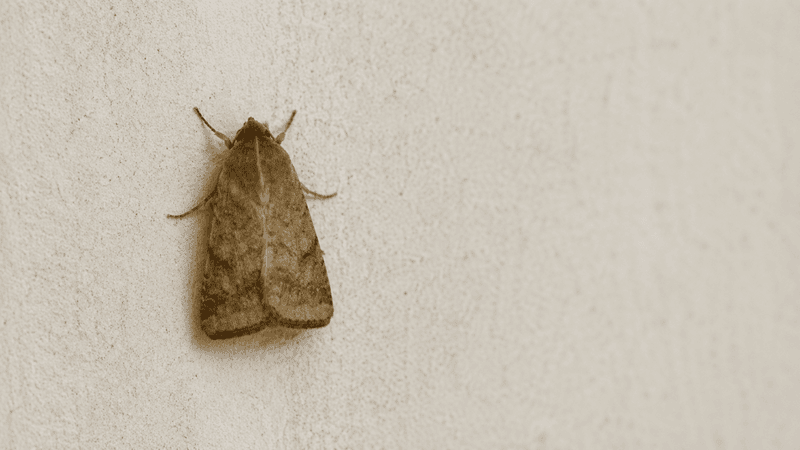
Night collecting requires you to recognize moths quickly under less than ideal lighting. The true armyworm moth was the only species that consistently fooled me into thinking I had collected a corn earworm moth. After enough false identifications, I developed a unique dislike for it. That has stayed with me much longer than the field work did.
The resemblance also illustrates why adult moths rarely provide the easiest identification. Wing color and markings can vary, scales rub off, and nighttime lighting changes what you see. Caterpillars often provide clearer characters, especially the fall armyworm’s pale inverted Y and the four dark spots arranged in a square near its rear.
The migration work addressed a broader fact about several major crop pests. Some moths cannot tolerate winters in the northern part of their range, yet they appear there every year. Adult moths move north from warmer areas and use favorable winds to cover long distances. Current University of Minnesota Extension guidance on true armyworms explains how nighttime low level air currents can carry moths hundreds of miles from southern overwintering areas.
What Do Fall Armyworms Look Like?
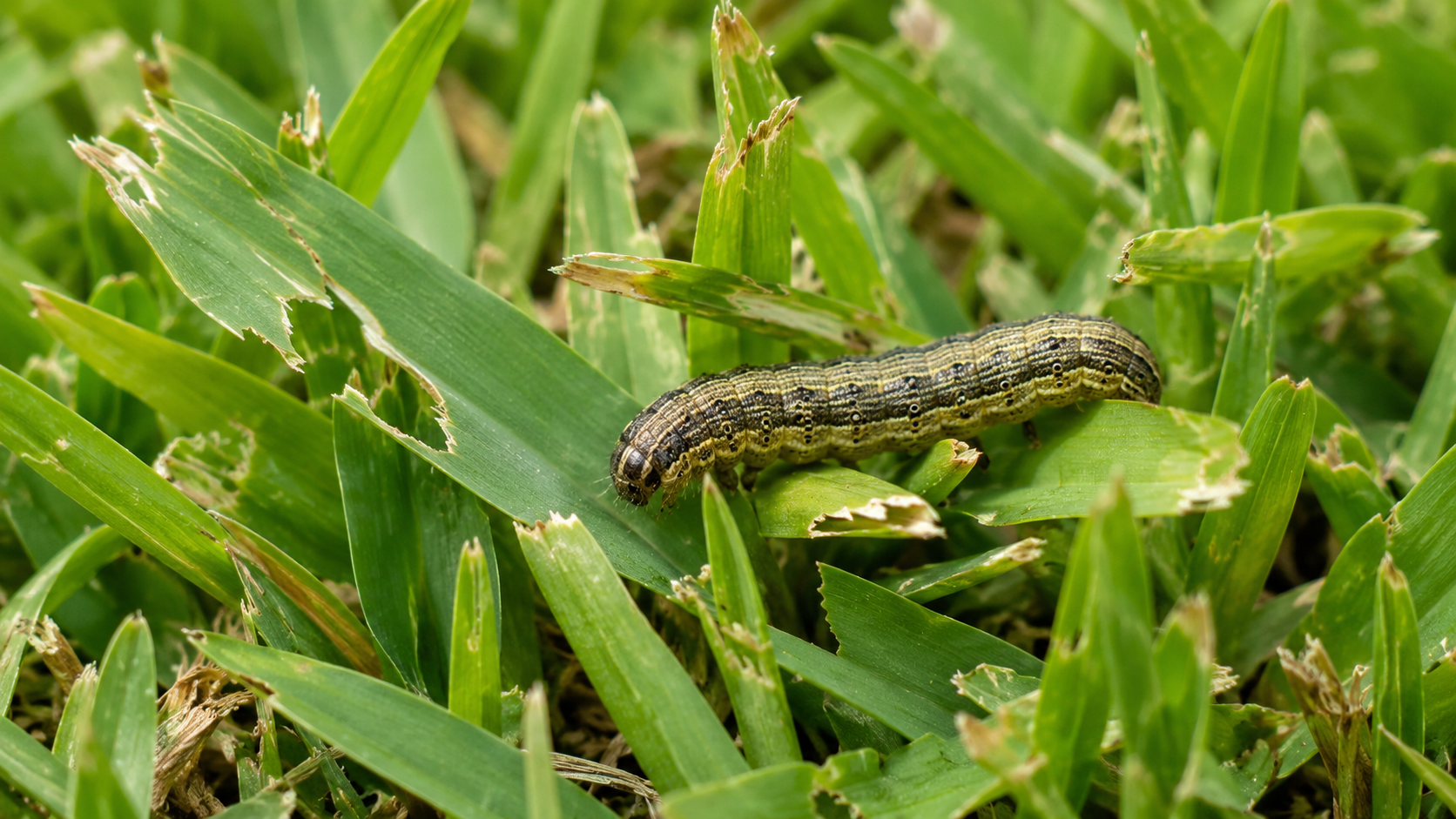
Fall armyworm caterpillars change color as they grow. Depending on age, food, and individual variation, they may look green, tan, brown, gray, or almost black. Stripes run lengthwise along the body. A fully grown caterpillar may reach about 1.5 inches long.
Two markings help separate a fall armyworm from many similar caterpillars. The head usually carries a pale line shaped like an upside down Y. Near the rear, four dark raised spots form a square. Smaller dark spots occur along the rest of the body, but the rear square provides the stronger clue.
Very young larvae are harder to identify. They may scrape only the surface of a grass blade, leaving a thin transparent area that people overlook. As they grow, they chew larger notches and remove entire sections of the blade.
Adult fall armyworms are mottled gray and brown moths. They fly at night, mate, and place egg masses on suitable surfaces. A female may deposit eggs on grass, fences, light colored walls, outdoor furniture, signs, or other objects near turf. The mass often looks fuzzy because she covers it with scales from her body.
The Fall Armyworm Life Cycle
Fall armyworms undergo complete metamorphosis through egg, caterpillar, pupal, and adult stages. A moth deposits a mass that may contain dozens or hundreds of eggs. The eggs can hatch within a few days during warm weather.
The caterpillars pass through several growth stages over roughly two to three weeks. Most of the visible damage occurs during the later stages, when each caterpillar consumes far more grass than it did while small. This uneven appetite explains the sudden collapse people describe. The caterpillars started feeding earlier, but the lawn changes quickly once hundreds of them reach their hungriest stage together.
Mature caterpillars enter the soil and pupate. Adult moths can emerge about 10 to 14 days later during favorable weather, and the cycle begins again. Several generations may occur in a year. In the warmest parts of southern Texas, development can continue for much of the year. Farther north, new infestations depend heavily on moths arriving from warmer regions.
Does Rain Cause Armyworm Outbreaks?
Rain does not cause dormant armyworms to suddenly emerge. The relationship involves weather, migration, and grass growth rather than a simple rain equals armyworms rule.
Storm systems and strong southerly winds can carry migrating moths into new areas. Rain also produces lush grass that attracts egg laying females and gives young caterpillars abundant food. Moist conditions may improve the survival of eggs and small larvae while also supporting the dense turf they prefer.
That creates a pattern homeowners remember: it rains, the grass grows rapidly, and armyworms seem to appear soon afterward. The rain did not create the insects, but the same weather may have delivered adult moths and improved conditions for their offspring. A period of green growth followed by warm weather deserves closer observation, especially when regional reports indicate fall armyworm activity.
How Armyworm Damage Appears in Turf
Fall armyworm injury begins above ground. Small larvae scrape cells from the leaf surface, creating pale or translucent tips. Larger larvae chew through the blades and leave ragged turf. With enough caterpillars, the lawn develops brown or gray patches that may join into a much larger damaged area.
The boundary between damaged and undamaged grass can look unusually sharp. Caterpillars advance into fresh turf as they consume the available foliage. Some literally march across pavement or landscape beds when a crowded area no longer offers enough food, which gives armyworms their name.
Bird activity can provide an early clue. Grackles, cattle egrets, and other insect eating birds may gather on an infested lawn to feed on the caterpillars. A few birds in the yard prove nothing by themselves, but a sudden concentration of birds combined with ragged or thinning grass deserves an inspection.
Armyworm damage can resemble drought stress, fertilizer injury, disease, sod webworm feeding, or a mowing problem. The difference comes from finding caterpillars and matching them to the injury. Brown grass alone does not identify the pest.
How to Check a Lawn for Armyworms
Inspect the transition between damaged grass and turf that still looks healthy. Look down into the canopy and around the soil surface. Armyworms often hide lower in the grass during bright, hot parts of the day, then feed more openly in the evening, at night, or during cloudy weather.
Run your hands over the grass and separate the blades in several locations. Look for caterpillars, fresh chewing, dark droppings, and clipped leaf material. Check beneath loose debris and along the advancing edge. A flashlight inspection after sunset often reveals activity that midday scouting misses.
Texas A&M’s AggieTurf fall armyworm guide emphasizes careful scouting because the insects can cause extensive injury quickly. Finding one caterpillar does not mean a lawn needs treatment. Finding many larvae along with fresh, expanding damage presents a very different situation.
Will the Grass Recover?
Recovery depends on the grass, its condition before the outbreak, and how much tissue the caterpillars removed. Fall armyworms usually eat leaves without destroying the crown or root system. Healthy bermudagrass often grows back because it spreads aggressively through underground rhizomes and aboveground runners.
St. Augustine can also recover when enough healthy stolons and growing points remain, but severe defoliation stresses it. Heat, drought, weak roots, disease, or poor irrigation can slow regrowth. Newly installed sod and recently seeded turf have fewer reserves and may suffer lasting injury.
Brown does not always mean dead. Before replacing turf, give the lawn time to show whether the crowns and runners remain alive. Proper irrigation and normal mowing help recovery. Excess fertilizer does not replace missing leaves overnight and may create additional stress, so avoid trying to force an immediate green response.
Professional Armyworm Control
Armyworm control becomes a race against feeding damage. Control works best while the caterpillars remain small, but most homeowners do not notice the infestation until larger larvae begin stripping the turf. A professional inspection confirms the pest, identifies the active area, and determines whether treatment still offers a practical benefit.
Timing matters at the other end of the outbreak too. A mature caterpillar stops feeding before it pupates. Treating after most larvae have entered the soil will not repair the grass or change damage that already happened. We need to find actively feeding caterpillars rather than react to an empty brown patch.
Venus Pest Company provides armyworm inspection and control throughout Brazos County, including Bryan and College Station. If your lawn begins losing color quickly or you see caterpillars crossing pavement, call or text 979-774-0486, or email [email protected].
Armyworm Questions
Are armyworms worms?
No. They are caterpillars, which means they are the immature stage of a moth. The caterpillar damages grass and crops. The adult moth feeds differently and does not chew turf.
What kind of armyworm damages Brazos County lawns?
Fall armyworms cause most residential lawn outbreaks in our area. True armyworms may also feed on turf, but they more often draw attention in grasses, pastures, small grains, and corn during spring or early summer.
How quickly can armyworms damage a lawn?
A heavy population of large caterpillars can remove much of the green foliage within a few days. Damage seems sudden because the older larvae consume far more than the small early stages.
Do armyworms attack St. Augustine grass?
Yes. Fall armyworms feed on St. Augustine, bermudagrass, and many other grasses. The lawn’s ability to recover depends on how severely the caterpillars defoliated it and how healthy it was before the outbreak.
Why are birds gathering on my lawn?
The birds may be feeding on armyworms or another abundant insect. Look for chewed grass and inspect the turf for caterpillars. Bird activity supports the diagnosis, but it does not confirm armyworms by itself.
Does rain bring armyworms?
Rain does not generate armyworms, but weather systems can carry moths into the area. Rain also encourages lush grass that attracts egg laying moths and supports young caterpillars. The connection is real, but indirect.
Will an armyworm treatment make brown grass green again?
No treatment can replace tissue the caterpillars already ate. Control protects the remaining turf from continued feeding. Grass with healthy roots, crowns, or runners may regrow, while severely weakened or newly established turf may need repair.