

Pest Expert Overview: American Cockroaches in Bryan & College Station
One American cockroach inside does not automatically mean that a colony lives in the kitchen. The insect may have entered from outside or moved through a drain or plumbing gap. Repeated sightings, daytime activity, small nymphs, egg cases, or cockroaches appearing in several rooms give us more reason to suspect an established population.
The source can also sit beneath the property rather than inside the living space. I took the featured image for this post during a service in the Spring Loop area of College Station. After I applied professional granular cockroach bait, I noticed hundreds of antennae extending from beneath a manhole cover in the customer’s front lawn. Within a few minutes, one unusually brave American cockroach came out in broad daylight and began feeding. The homeowner was aghast. I took the picture.
That manhole provided a much better explanation than anything inside the home. American cockroaches can build enormous populations in sewer systems, then move through utility openings, drains, and gaps around pipes. Effective control starts by understanding that larger environment.
How to Identify an American Cockroach
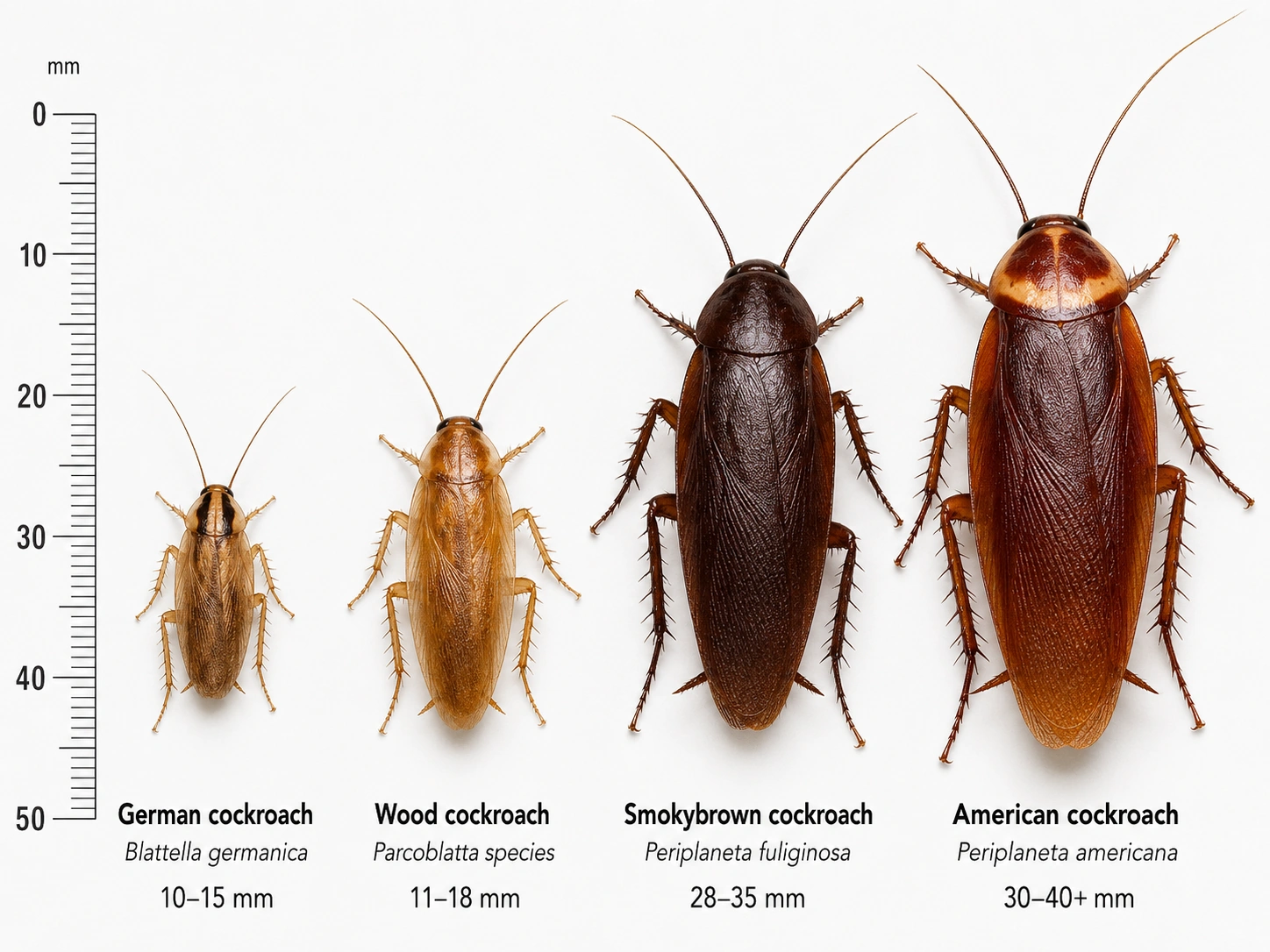
The American cockroach, Periplaneta americana, ranks among the largest cockroaches commonly found around Texas buildings. Adults usually measure 1.5 to 2 inches long. Their bodies look reddish brown, with a pale yellow or cream border around the shield behind the head.
Adult males and females have long wings. They can glide and occasionally fly, especially in warm conditions, but they usually run. A large cockroach sailing from a wall or tree makes a lasting impression, yet flight does not define most encounters.
Young American cockroaches, called nymphs, lack developed wings. They look reddish brown and become larger with each molt. Nymphs inside a home provide more evidence of nearby development than a single adult that may have wandered in.
Texas A&M’s Urban and Structural Entomology Program describes American cockroaches as one of the largest and most common Texas species and emphasizes their association with high humidity and sewer systems.
American Cockroach or Another Large Roach?
Several large cockroach species occur in Brazos County. Homeowners often call all of them waterbugs, but identification affects where we inspect and what conditions we expect to find.
| Cockroach | Typical appearance | Where we commonly associate it |
|---|---|---|
| American cockroach | Reddish brown with a pale border behind the head | Sewers, drains, utility spaces, basements, crawlspaces, and damp outdoor areas |
| Smokybrown cockroach | Uniform dark mahogany or nearly black body | Tree holes, roofs, gutters, attics, soffits, and heavy landscape debris |
| Oriental cockroach | Dark brown to black, with shorter wings on females | Cool damp areas, drains, crawlspaces, and ground level debris |
| Wood cockroach | Brown outdoor roach, often with visible pale margins depending on species | Wooded areas, leaf litter, firewood, and temporary accidental entry |
| German cockroach | Much smaller tan cockroach with two dark stripes behind the head | Indoor kitchens, bathrooms, appliances, and commercial food areas |
Size and color help, but the pattern behind the head gives the strongest quick clue. American cockroaches have a pale ring or border. Smokybrown cockroaches look much more uniformly dark.
The Spring Loop Manhole Photograph
The featured photograph captures something homeowners rarely see. Hundreds of American cockroaches can occupy the dark space beneath a sewer or utility cover while only one or two appear above ground. In this case, the antennae became visible around the cover before a cockroach finally emerged to feed.
The broad daylight appearance made the scene even more unusual. Cockroaches normally avoid exposed, bright conditions. A daytime sighting may occur after disturbance, when a food source draws an individual out, or when crowding creates enough pressure to override normal hiding behavior.
The homeowner’s reaction made sense. Seeing one large cockroach is unpleasant. Realizing that hundreds may sit a few feet below the front lawn feels much worse. From a control standpoint, however, the observation gave us valuable information. It identified a concentrated outdoor source instead of leaving us to guess why occasional cockroaches reached the house.
Suggested image caption: An American cockroach emerges from a manhole in the Spring Loop area of College Station during a Venus Pest Company service. Hundreds of antennae were visible beneath the cover.
Where American Cockroaches Live
American cockroaches prefer warmth, moisture, darkness, and access to organic material. Sewers provide all four. They also live in storm drainage structures, steam tunnels, boiler rooms, commercial kitchens, trash areas, basements, crawlspaces, wall voids, and utility chases.
Outdoors, they shelter beneath loose bark, landscape timbers, heavy leaf litter, mulch, boards, and debris. Irrigation valve boxes and other damp enclosures can provide protected habitat. A mature landscape with abundant moisture may support cockroaches even when the home remains clean.
The species eats a wide variety of decaying plant and animal material, food waste, starches, and other organic matter. In a sewer, it can survive on material that enters the system. Around buildings, trash residue, pet food, compost, grease, and decomposing leaves may provide additional food.
Warm Texas weather allows outdoor populations to persist for long periods. Cold snaps may push cockroaches toward protected structures. Heavy rain can flood harborages and send them upward, while drought can increase their search for moisture. Construction or sewer work may also disturb a population and change where residents notice activity.
Can American Cockroaches Come Through Drains?
Yes. Adults and nymphs can travel through sewer and drainage systems, then enter around plumbing or through a drain that lacks a functioning water barrier. A properly filled trap beneath a sink, shower, or floor drain blocks direct movement from the sewer. An infrequently used drain can dry enough to lose that protection.
Not every bathroom cockroach climbed through the drain opening. Gaps around pipes often provide an easier route. A cockroach may move inside a wall, follow a plumbing line, and emerge beside the escutcheon or beneath a cabinet. That distinction matters because pouring something down a drain will not correct a gap around the pipe.
Floor drains, laundry rooms, mechanical spaces, and commercial kitchens deserve particular attention. These areas combine water, warmth, food residue, and openings around utilities. Repeated sightings in the same location usually point toward a consistent route or nearby harborage.
The American Cockroach Life Cycle
American cockroaches develop through egg, nymph, and adult stages. A female produces a hardened egg capsule called an ootheca. Each capsule usually contains about 14 to 16 eggs. She deposits it in a protected crack or attaches it near a suitable harborage.
The eggs hatch into small wingless nymphs. Those nymphs molt repeatedly as they grow, often taking six months to more than a year to reach adulthood depending on temperature and food. Cooler conditions slow the process.
Adults may live for many months. A female can produce multiple egg cases during her life, so a protected sewer or utility space can support a large population over time. The slow nymphal development does not prevent high numbers when the habitat remains stable year after year.
Health and Sanitation Concerns
American cockroaches move through sewers, trash areas, decaying organic matter, and other unsanitary environments. Their bodies and digestive systems can pick up bacteria and other microorganisms, which they may mechanically move onto surfaces. That risk becomes more relevant in kitchens, food storage areas, hospitals, and commercial facilities.
Cockroach droppings, shed skins, egg cases, and body fragments also contain allergens. Sensitive people may experience allergy or asthma symptoms after exposure. The insects can leave dark fecal spots and produce a noticeable musty odor when populations grow large.
A cockroach sighting does not prove that it transmitted an illness. The practical concern comes from allowing insects that frequent contaminated environments to move through areas where people prepare food or touch surfaces.
Why Clean Homes Still Get American Cockroaches
Sanitation reduces food and hiding places, but it cannot move a sewer, stop every outdoor adult, or seal every utility opening by itself. A well maintained home may still receive cockroaches from a drain system, landscape, neighboring structure, or exterior utility space.
The location and frequency of sightings tell us more than housekeeping does. One adult near an exterior door after a storm suggests accidental entry. Nymphs under a sink, recurring activity beside a floor drain, or cockroaches in several rooms suggest a problem that deserves a closer inspection.
This is one reason generic advice to “clean better” often frustrates homeowners. Cleaning helps, but it does not identify the source. A pristine kitchen can sit above an active sewer line or beside a damp crawlspace.
Reducing American Cockroach Entry
Moisture correction offers the best starting point. Repair plumbing leaks, address wet crawlspaces, keep gutters and drainage working, and avoid letting irrigation create constantly damp conditions against the foundation. Remove heavy leaf litter, decaying wood, and unnecessary debris near the structure.
Physical maintenance also helps. Door sweeps, screens, sealed utility penetrations, and intact drain traps reduce common entry routes. Check rarely used sinks, showers, and floor drains so their water barriers do not dry out.
Outdoor lighting can attract flying insects, including occasional cockroaches. Adjusting fixture placement or reducing unnecessary nighttime light near doors may lower accidental entry, although it will not eliminate a population living in a sewer or landscape.
These steps reduce pressure but may not solve an established source. A large population beneath a cover, inside a utility system, or within a structure requires a plan based on where the cockroaches live and travel.
Professional American Cockroach Control
Venus Pest Company starts with identification and source assessment. We inspect moisture, drains, plumbing gaps, exterior harborages, utility spaces, and the pattern of sightings. Treatment then focuses on places where cockroaches actually live or move rather than applying the same material everywhere.
The Spring Loop property provided an unusually obvious source. Most homes offer subtler evidence. We may need to distinguish outdoor invaders from indoor reproduction, determine whether activity centers on plumbing, and separate American cockroaches from smokybrown or wood cockroaches.
Control does not always mean eliminating every cockroach from the surrounding environment. A municipal sewer or mature wooded neighborhood can keep producing pressure. The practical goal involves reducing the population on the property, blocking routes where possible, and keeping cockroaches out of occupied spaces.
Venus serves Brazos County, including Bryan and College Station. If large cockroaches keep appearing indoors or you suspect activity around a drain or utility area, call or text 979-774-0486, or email service@venuspest.com.
American Cockroach Questions
Are American cockroaches the same as waterbugs?
People often call them waterbugs because they favor damp places, but they are cockroaches rather than true aquatic bugs. The name may also refer loosely to other large cockroach species.
Do American cockroaches live in sewers?
Yes. Warm, humid sewer systems provide shelter, food, and travel corridors. Large populations may develop beneath individual manholes and move through connected pipes and utility routes.
Can American cockroaches fly?
Adults have developed wings and can glide or fly short distances under favorable conditions. They spend much more time running than flying.
Does one American cockroach mean my house is infested?
Not necessarily. A single adult may wander in from outside. Repeated sightings, daytime activity, egg cases, and wingless nymphs provide stronger evidence of nearby development.
Why did a cockroach appear in my bathtub or sink?
It may have followed a drain or plumbing route, fallen into the smooth fixture, and become unable to climb out. Check the drain trap and gaps around nearby pipes rather than assuming it came through the open drain.
What is the difference between an American and smokybrown cockroach?
American cockroaches look reddish brown with a pale border behind the head. Smokybrown cockroaches have a more uniform dark mahogany color and often associate with trees, roofs, gutters, and attics.
Why am I seeing American cockroaches during the day?
Disturbance, crowding, hunger, or an attractive food source can bring one into daylight. Repeated daytime sightings may indicate a large population or a nearby harborage.