
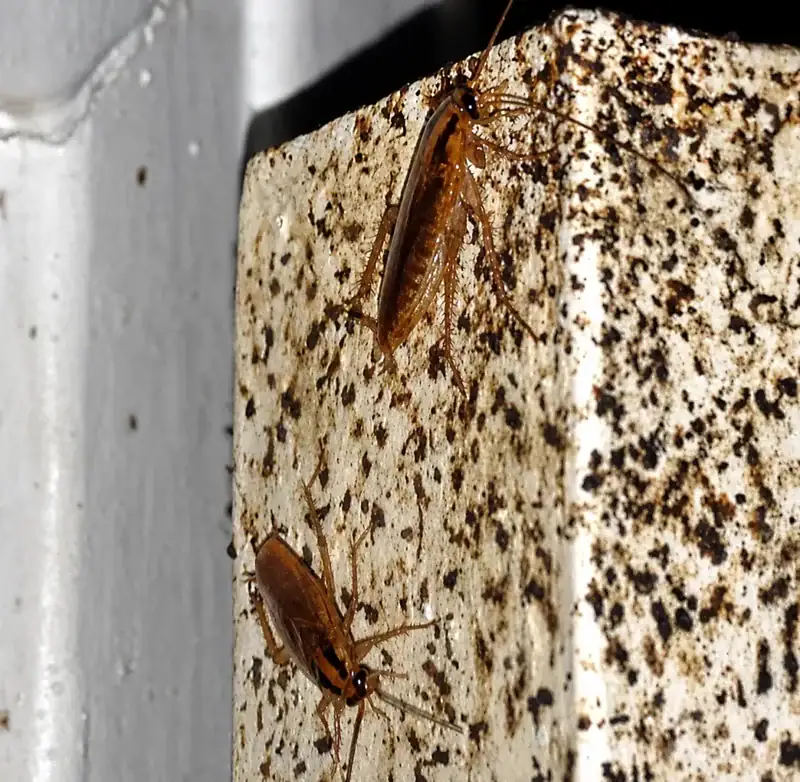
Pest Expert Overview: German Cockroaches in Bryan & College Station
That distinction matters in Bryan and College Station, where we treat German cockroaches in apartments, restaurants, offices, and homes at every price level. Sanitation affects how easily we can gain control, but it does not determine who can bring an infestation home.
I have found German cockroaches in absolutely pristine premium homes under circumstances that had nothing to do with dirty dishes or neglected housekeeping. In both cases, equipment carried the insects inside.
The Abandoned Restaurant Equipment
One customer owned restaurants and took over an abandoned location. He temporarily moved equipment from that restaurant into his garage. Within a few weeks, German cockroaches appeared in the kitchen island inside his home.
The equipment looked like business property awaiting its next use. To a German cockroach, it offered narrow seams, hidden cavities, warmth from past operation, and the odors of a commercial food environment. Adults, nymphs, or egg cases traveled with it. Once the equipment sat near the house, the insects found a way into the kitchen.
Restaurant owners, managers, and employees face this risk more often than most people. Small appliances, electronics, storage racks, cardboard, uniforms, bags, and personal items can move between an infested commercial kitchen and a home. You may never see the cockroach hiding inside.
The Contaminated Water Cooler
The second home belonged to a builder and was every bit as clean. The family used a water cooler with large refillable jugs in the kitchen. Their water company brought in a cooler base that had previously sat at an infested location.
No one noticed a problem when the equipment arrived. By the time cockroaches became obvious, an active infestation had spread through the kitchen.
A water cooler base provides exactly what German cockroaches seek. Internal voids offer tight shelter, and the equipment supplies moisture and warmth. The jug and visible surfaces may look spotless while insects remain hidden below.
These two homes had different equipment and the same lesson: use caution when bringing used appliances, furniture, electronics, restaurant equipment, or rented equipment into a home. Clean appearance does not prove that the internal spaces are pest free.
Why People Call Them Restaurant Cockroaches
German cockroaches, Blattella germanica, thrive around commercial food preparation. Pest professionals sometimes call them restaurant cockroaches because restaurants combine steady warmth, water, food residue, equipment voids, deliveries, and constant movement of supplies.
That is a practical nickname rather than a separate species. The same cockroach infests homes, apartments, hotels, hospitals, schools, break rooms, assisted living facilities, and other occupied buildings.
Quite a few Venus restaurant customers came to us after another pest control company failed to control their German cockroaches. This is a problem we are very good at solving. Success requires more than a routine service around the baseboards. We inspect equipment, follow activity into harborages, coordinate cleaning and access, monitor the response, and return often enough to stay ahead of the life cycle.
How to Identify German Cockroaches
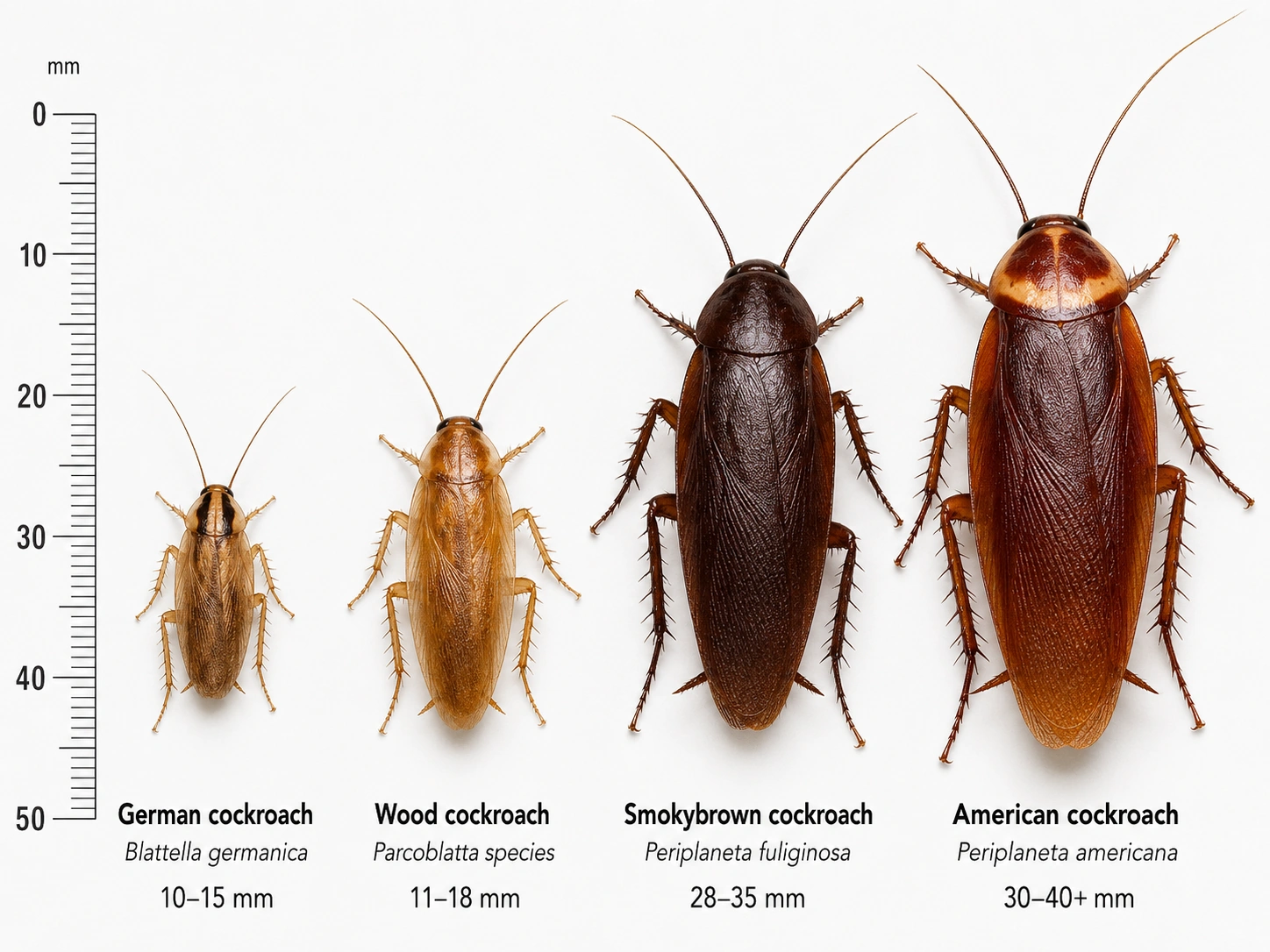
German cockroaches are much smaller than the American or smokybrown cockroaches that commonly wander indoors from outside. Adults usually measure about half an inch to five eighths of an inch long. Their bodies range from light tan to brown.
Two dark parallel stripes run lengthwise across the shield directly behind the head. That marking provides the strongest quick identification clue. Adults have developed wings but rarely fly.
Nymphs lack wings and look darker than adults. A pale stripe often runs down the middle of the back. Newly hatched nymphs are small enough to hide inside narrow cracks, screw holes, appliance seams, and corrugated cardboard.
Texas A&M’s Urban and Structural Entomology Program identifies German cockroaches as primarily indoor pests commonly found in kitchens, bathrooms, homes, apartments, and commercial food establishments.
| Cockroach | Size and appearance | What the sighting usually suggests |
|---|---|---|
| German cockroach | Small tan roach with two dark stripes behind the head | Indoor introduction and reproduction near food, water, and warmth |
| American cockroach | Large reddish brown roach with a pale border behind the head | Sewer, drain, utility, crawlspace, or damp outdoor source |
| Smokybrown cockroach | Large uniformly dark mahogany roach | Landscape, tree, roof, gutter, soffit, or attic source |
| Wood cockroach | Medium brown outdoor roach with species dependent markings | Accidental entry from leaf litter, wood, or wooded habitat |
Finding the correct species prevents a wasted exterior program for a cockroach that lives almost entirely indoors. German cockroaches reach new locations through transport and movement within connected buildings, not through a normal outdoor population in the yard.
How German Cockroaches Enter Clean Homes
German cockroaches are expert hitchhikers. They hide inside used refrigerators, microwaves, coffee makers, dishwashers, water dispensers, vending machines, televisions, game systems, and other equipment. They also travel in grocery cartons, produce boxes, beverage cases, luggage, purses, backpacks, and delivery totes.
An egg case makes the introduction even harder to notice. A female carries it until shortly before the eggs hatch. One hidden female can therefore transport dozens of nearly developed offspring into a new kitchen.
Apartments, townhomes, dormitories, and connected commercial suites add another route. Cockroaches can follow plumbing, electrical lines, wall voids, and gaps between units. Treating one space while an adjoining unit maintains a large population may produce repeated reinvasion.
This biology explains why embarrassment gets in the way of control. People sometimes delay calling because they fear what the infestation says about their home. It says only that German cockroaches reached a suitable indoor environment and began reproducing. Early action makes the problem easier.
Where German Cockroaches Hide
German cockroaches prefer tight spaces where their backs and undersides nearly touch surrounding surfaces. We call this positive thigmotaxis. In plain English, they like to squeeze into narrow cracks.
Kitchens provide the highest concentration of suitable harborages. Common activity centers include the spaces around refrigerator motors, dishwasher insulation, stove controls, cabinet hinges, sink plumbing, electrical outlets, countertop appliances, and the void beneath a kitchen island.
Bathrooms, laundry rooms, water heater closets, break rooms, and equipment cabinets can also support them. As populations grow, cockroaches spread farther from the original kitchen and may appear in bedrooms, living areas, offices, or storage rooms.
Daytime activity often indicates crowding or a large infestation, although disturbance can also bring an individual into view. Turning on a kitchen light and seeing several cockroaches scatter suggests more activity than the visible insects alone.
Why German Cockroaches Multiply So Quickly
German cockroaches develop through egg, nymph, and adult stages. The female carries her egg capsule, called an ootheca, protruding from the end of her abdomen until shortly before hatch. That behavior protects the eggs from drying and many environmental hazards.
Each egg case commonly holds about 30 to 40 eggs. A female can produce several cases during her life. Warm indoor conditions allow nymphs to mature quickly, sometimes reaching adulthood in two to three months.
Generations overlap. An established kitchen may contain adult males, females carrying egg cases, several nymph sizes, and newly hatched young at the same time. A service that affects exposed adults but misses hidden nymphs and egg cases can look successful briefly, then appear to fail when the next group emerges.
Food does not need to sit in obvious piles. Grease film, crumbs beneath equipment, residue around a trash container, cardboard glue, pet food, and organic material inside a drain can support them. Water from condensation, leaking plumbing, a wet sponge, or an appliance drip pan may matter even more than food.
Health and Food Safety Concerns
German cockroaches travel across food residue, trash, drains, and other contaminated surfaces. Their movement can mechanically transfer bacteria and other microorganisms to food preparation areas. Restaurants and other regulated facilities cannot treat them as a cosmetic nuisance.
Droppings, shed skins, egg cases, saliva, and body fragments contain cockroach allergens. Exposure can trigger allergy and asthma symptoms in sensitive people. Research has paid particular attention to German cockroach allergens in kitchens and bathrooms, where people often encounter the highest concentrations.
An infestation may also create odor and leave dark fecal spotting in cabinet corners, equipment seams, and other harborages. Heavy spotting tells us where cockroaches spend time and helps direct the inspection.
Sanitation Helps, but Cleaning Alone Is Not Control
A clean, uncluttered environment removes competing food and gives a professional better access to harborages. It also makes monitoring easier. That is why sanitation remains part of German cockroach management.
Cleaning alone cannot reach insects inside appliance insulation, wall voids, electronics, cabinet gaps, or a contaminated cooler base. It also cannot stop cockroaches arriving from another apartment or hiding in a newly delivered piece of equipment.
The useful question is not whether a customer cleans enough. We need to identify what the cockroaches use for food, water, and shelter, then remove or reduce those resources where practical. In a restaurant, that may require moving equipment, repairing leaks, cleaning grease from inaccessible edges, changing storage practices, and giving the technician access to the actual activity.
Why German Cockroach Programs Fail
Routine service fails when it never reaches the harborages. A quick pass around open floor edges may miss most of the population inside appliances and cabinets. Surface activity then returns because the breeding population remained untouched.
Failure can also come from incomplete access, missed adjoining units, new introductions, or too much time between follow up visits. German cockroaches reproduce too quickly for a program that responds only after customers begin seeing adults again.
Restaurant conditions add complexity. Equipment may operate around the clock, food preparation limits access, cleaning can remove or contaminate monitoring devices, and deliveries can introduce new cockroaches. Control requires coordination with management rather than a technician working alone for a few minutes after closing.
Cockroach populations can also respond differently to materials that worked at another location. A professional needs to read the evidence, evaluate feeding and activity, and adjust the strategy instead of repeating an ineffective routine.
Professional German Cockroach Control
Venus Pest Company treats German cockroaches as a focused elimination project. We inspect with attention to equipment, heat, moisture, droppings, egg cases, and the size distribution of the population. Monitoring shows where activity concentrates and whether the program is working.
Our treatment stays targeted to cockroach harborages and travel areas. We do not rely on a broad exterior application for an insect that lives indoors. Heavily infested accounts require follow up because protected egg cases and hidden nymphs can outlast the first visit.
In restaurants, we work with management to identify sanitation and maintenance conditions that compete with control. That may include grease beneath equipment, leaking plumbing, inaccessible voids, incoming deliveries, or equipment that staff move between locations. The goal is not to assign blame. It is to remove every advantage the cockroaches have.
We have taken over many restaurant accounts where the previous company could not control German cockroaches. That experience has made this one of Venus Pest Company’s strongest specialties.
Venus serves Brazos County, including Bryan and College Station. If you find small tan cockroaches in a kitchen, restaurant, apartment, or break room, call or text 979-774-0486, or email service@venuspest.com.
German Cockroach Questions
Do German cockroaches mean a home is dirty?
No. They can enter an immaculate home inside equipment, boxes, bags, deliveries, or items from an infested location. Poor sanitation gives them more resources, but cleanliness cannot prevent every introduction.
Why are German cockroaches called restaurant cockroaches?
That nickname reflects their strong association with commercial kitchens. Restaurants provide warmth, water, food, equipment voids, and frequent deliveries. German cockroaches also infest homes and many other buildings.
Can German cockroaches come in used appliances?
Yes. Appliances and electronics contain tight, warm cavities where adults, nymphs, and egg cases can hide. Inspect used or relocated equipment before bringing it into a home.
How can I identify a German cockroach?
Look for a small tan to brown cockroach with two dark parallel stripes on the shield behind its head. Nymphs look darker and lack wings.
Do German cockroaches live outside?
They function primarily as indoor pests in Texas and do not maintain the normal outdoor populations associated with American, smokybrown, or wood cockroaches. Exterior treatment does not address an indoor German cockroach infestation.
Why did the cockroaches return after treatment?
Protected egg cases, missed harborages, incomplete access, adjoining infestations, or a new introduction can produce renewed activity. German cockroach control usually requires inspection, targeted treatment, monitoring, and follow up.
Can one female start an infestation?
Yes. A female carrying an egg case may bring 30 to 40 developing offspring into a new location. Whether they establish depends on survival and access to suitable food, water, warmth, and shelter.
Why is Venus good at restaurant German cockroach control?
We treat the problem as an elimination project rather than routine baseboard service. Our inspection follows activity into equipment and hidden harborages, and we coordinate sanitation, maintenance, monitoring, and follow up with restaurant management.