
Pest Expert Overview: Pillbugs in Bryan & College Station
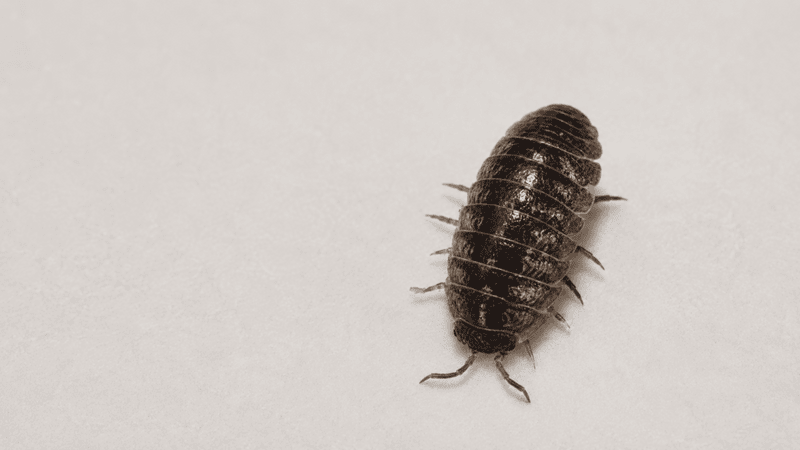
 Pillbugs are the little gray arthropods that roll into tight balls when disturbed. Most people in Texas grew up calling them roly polies. Children find them under flowerpots, rocks, boards, and damp leaves, then spend a surprising amount of time making them curl up and waiting for them to unfold.
Around Bryan, College Station, and the rest of Brazos County, pillbugs thrive wherever moisture and decaying plant material come together. They usually help the landscape by breaking down organic debris. They become household pests only when large numbers wander indoors or favorable moisture lets them persist next to the foundation.
Pillbugs Aren’t Insects
Pillbugs are terrestrial crustaceans in the order Isopoda. That makes them relatives of crabs, shrimp, lobsters, and crawfish rather than insects. The common pillbug, Armadillidium vulgare, came from Europe but now occurs widely across North America.
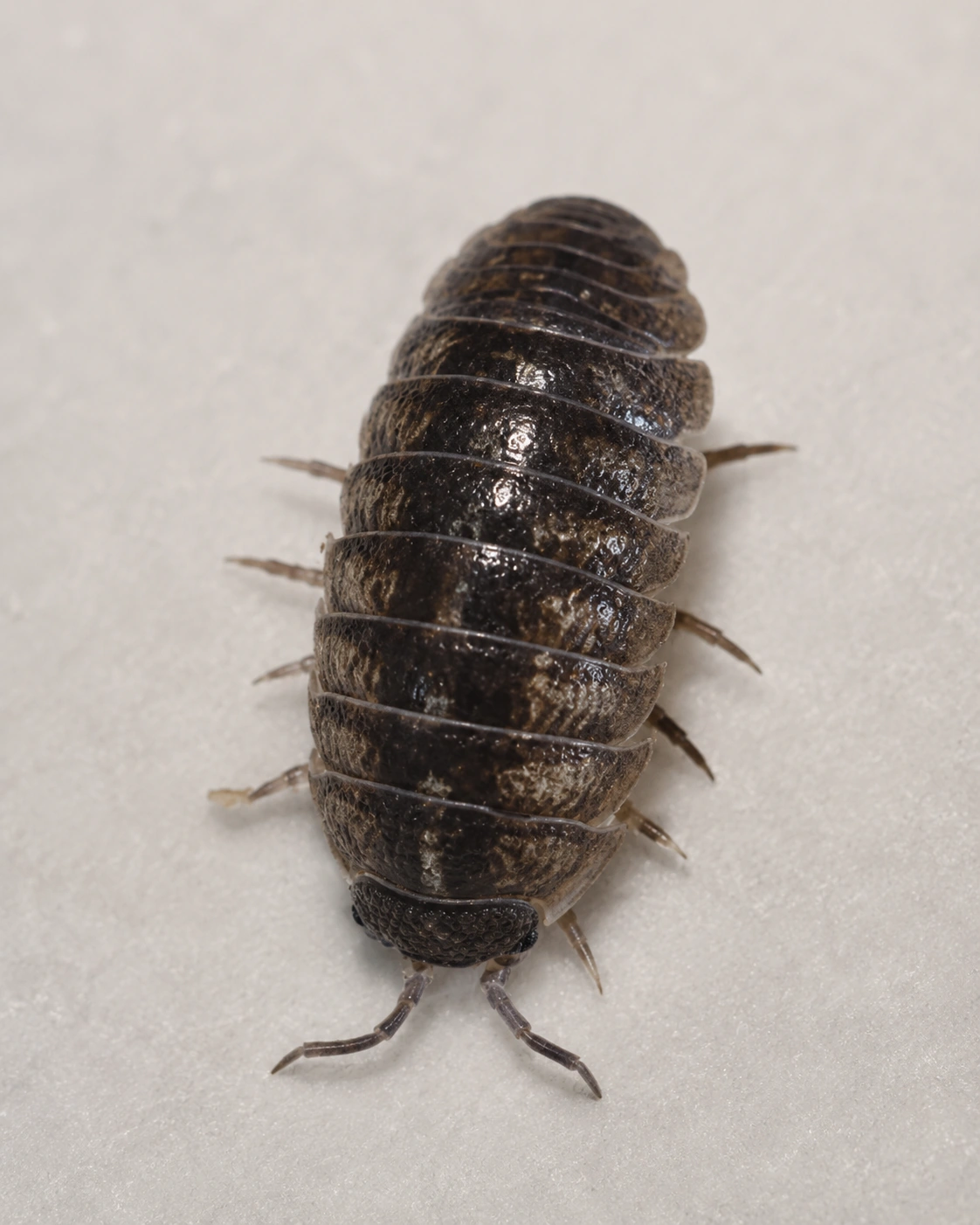
An insect has six legs. An adult pillbug has seven pairs, for a total of fourteen. Overlapping plates cover its back and create the armored appearance. The body usually looks slate gray, although age, moisture, and species can produce brown or mottled individuals.
Their crustacean ancestry explains their dependence on damp places. Pillbugs exchange gases through specialized structures associated with the appendages beneath the abdomen. Those structures work best when they remain moist. A pillbug can live on land, but it can’t tolerate dry indoor air the way many insects can.
Utah State University Extension describes pillbugs and sowbugs as soil dwelling crustaceans with seven pairs of legs. Its guide also emphasizes their need for moisture and their usual diet of decaying organic matter.
Why They Roll Into a Ball
The ability to curl completely into a ball has a scientific name: conglobation. The pillbug pulls its legs and softer underside inside while its hard back plates form a protective shell. That posture makes it harder for many predators to bite or pry the animal apart. It also reduces exposed surface area and may help slow water loss.
Children tend to interpret the response as a game. Touch the pillbug, watch it become a ball, then wait for the antennae to emerge. The pillbug sees the interaction differently, of course. From its perspective, a giant predator has picked it up and won’t take the hint.
Rolling also explains the common names pillbug and roly poly. In some parts of the country, people call them doodlebugs, potato bugs, or woodlice. Common names overlap and can cause confusion, especially because “potato bug” also refers to insects that look nothing like a pillbug.
How to Tell Them From Sowbugs
People often use pillbug and sowbug interchangeably. Both are terrestrial isopods with armored plates, fourteen legs, and a strong dependence on moisture. They commonly live together and perform similar work in the landscape. The ability to roll provides the easiest distinction.
| Feature | Pillbug | Sowbug |
|---|---|---|
| Body shape | More rounded from side to side | Flatter and often broader |
| Defensive response | Can roll into a tight ball | Cannot form a complete ball |
| Rear appendages | Usually hidden when viewed from above | Two projections often extend from the rear |
| Typical habitat | Damp soil, mulch, leaves, wood, and debris | The same moist outdoor habitats |
If the animal forms a neat gray sphere, you have a pillbug. If it curls only slightly and leaves obvious tail projections exposed, it is probably a sowbug. The distinction rarely changes what a homeowner needs to do because moisture and harborage drive both problems.
Where They Live Around a Home
Pillbugs spend daylight hours beneath objects that protect them from sun and dry air. Mulch, leaf litter, landscape timbers, stones, pavers, flowerpots, lumber, and dense groundcover can hold enough moisture for large populations. They emerge at night to feed and move across the soil surface.
Irrigation often creates perfect habitat next to a house. A sprinkler that regularly wets the foundation, an overwatered flower bed, or a leaking outdoor faucet can keep mulch and debris damp even during hot Brazos Valley weather. Poor drainage and air conditioner condensate may create the same effect.
Heavy rain can drive pillbugs out of saturated soil and into garages, porches, and homes. Hot dry weather can also trigger movement as they search for moisture. This can seem contradictory, but both extremes disrupt the protected zone where they were living.
Pillbugs usually enter at ground level. They slip beneath poorly sealed doors, through cracks, around utility penetrations, and past gaps at the foundation. A garage full of live pillbugs often points toward damp landscaping or debris just outside the door rather than a population reproducing throughout the house.
What They Eat in the Landscape
Pillbugs mainly eat dead leaves, softened wood, fungi, and other decaying plant material. They shred debris into smaller pieces and help microbes continue the decomposition process. That work returns nutrients to the soil and makes pillbugs valuable members of a healthy landscape.
They don’t normally attack sound structural wood, clothing, furniture, or stored food. They also don’t bite people, sting, spread through bedding, or infest pets. A pillbug crawling across the floor looks out of place, but it poses little direct risk.
Large populations occasionally feed on tender seedlings, roots, low leaves, or fruit that touches moist soil. The damage can resemble feeding from slugs or other chewing pests. Finding pillbugs near an injured plant doesn’t prove they caused the original damage, though. They often arrive after disease, decay, or another pest has softened the tissue.
In most Brazos County yards, the benefits of decomposition outweigh occasional plant feeding. Control makes the most sense when pillbugs enter buildings in large numbers or concentrate around vulnerable young plants.
An Unusual Crustacean Life Cycle
Female pillbugs carry eggs in a fluid filled brood pouch beneath the body. This marsupium gives the developing young a protected, moist environment. After hatching, the pale young remain in the pouch for a period before emerging as tiny versions of the adults.
Newly emerged pillbugs don’t start with all seven pairs of walking legs. The last body segment and final pair develop during early molts. Pillbugs continue growing through a series of molts, often shedding the rear half of the outer covering before the front half. A partially molted pillbug can look two toned for a short time.
Development changes with temperature, food, moisture, and species. Utah State’s guide reports that some pillbugs and sowbugs may take about a year to mature and can live for several years. That lifespan surprises people who think of them as temporary little yard bugs.
Why They Wander Indoors
Pillbugs don’t enter because they want human food or a warm place to establish an indoor colony. Most cross the threshold by accident while moving through damp habitat. Once inside an air conditioned home, they usually lose moisture and die.
University of Minnesota Extension notes that sowbugs often die quickly indoors and that repeated live sightings can signal excess moisture. The same practical point applies to pillbugs. A few dead individuals near a door suggest entry from outside. Live pillbugs appearing repeatedly in a bathroom, laundry room, or other interior area deserve a closer look for moisture and access routes.
The location tells part of the story. Activity limited to one exterior door may come from a damp flower bed or worn threshold seal. Pillbugs spread across several interior rooms may enter through a crawlspace, slab gap, plumbing area, or another concealed route. Inspection helps separate a simple door seal problem from a moisture condition that needs repair.
Reducing Activity Around the Foundation
The most useful changes make the immediate perimeter less damp and less sheltered. Correct leaking faucets and irrigation overspray. Improve drainage where water collects beside the slab. Remove thick layers of wet leaves, decaying wood, and unnecessary debris from the foundation edge. Mulch can remain part of the landscape, but constantly wet mulch piled against the structure creates a convenient isopod neighborhood.
Trim dense plants enough to improve air movement and let the surface dry. Check door sweeps, weather stripping, garage corners, foundation cracks, and utility openings. These steps reduce entry without trying to eliminate every pillbug from the yard, which would be unnecessary and unrealistic.
Indoors, a vacuum or broom handles the occasional wanderer. Repeatedly removing pillbugs without correcting the damp exterior habitat will become a very boring routine. The source usually sits outside.
Professional Pillbug Control
Venus Pest Company looks at pillbugs as a moisture and entry problem first. We inspect where they appear, nearby irrigation and drainage, landscape debris, door seals, foundation gaps, and other conditions that allow large numbers to build up near the structure.
Professional treatment may support control around entry areas and the exterior perimeter, but treatment can’t overcome a sprinkler that soaks the wall every morning or a constantly wet layer of leaves beside the slab. Correcting those conditions makes the service work better and helps keep activity down.
Pillbugs fall within the common household pest coverage of our basic pest control service. If roly polies keep turning up inside your Brazos County home, call or text 979-774-0486, or email service@venuspest.com.
Pillbug Questions
Are pillbugs insects?
No. Pillbugs are terrestrial crustaceans and relatives of crabs, shrimp, lobsters, and crawfish. Their fourteen legs and moisture dependent respiratory structures separate them from six legged insects.
Are roly polies the same thing?
Yes. Roly poly is a widely used common name for pillbugs. The name describes their habit of rolling into a ball when disturbed.
Do pillbugs bite or sting?
No. Pillbugs don’t bite or sting people, and they don’t infest pets. They protect themselves by rolling up rather than attacking.
Will they damage my house?
Pillbugs don’t eat sound structural wood or damage furniture, clothing, or household belongings. Large indoor numbers may point to excess moisture, which can create building problems of its own.
Why are they entering my house after rain?
Saturated soil and mulch can force them to move. They often enter through low gaps around doors, garages, foundations, and utility lines while searching for a protected location.
Why do I find them dead inside?
Indoor air usually lacks the moisture they need. They wander in from outside, lose water, and die before finding suitable habitat.
Do they hurt garden plants?
They mainly eat decaying material and usually help the soil. Large populations may nibble tender seedlings or soft fruit touching damp ground, but their presence near damaged plants doesn’t always mean they caused the damage.
Should I eliminate pillbugs from my yard?
No. They play a useful role in decomposition. Control should focus on excessive numbers entering the house or causing verified plant injury, not on removing every pillbug outdoors.