
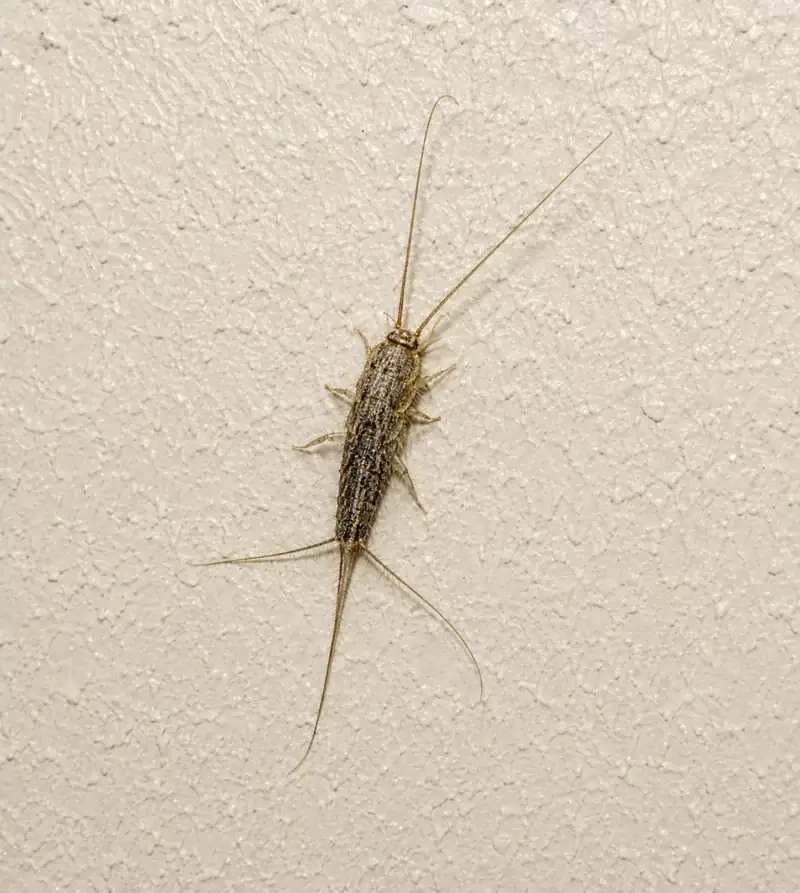
Pest Expert Overview: Silverfish in Bryan & College Station
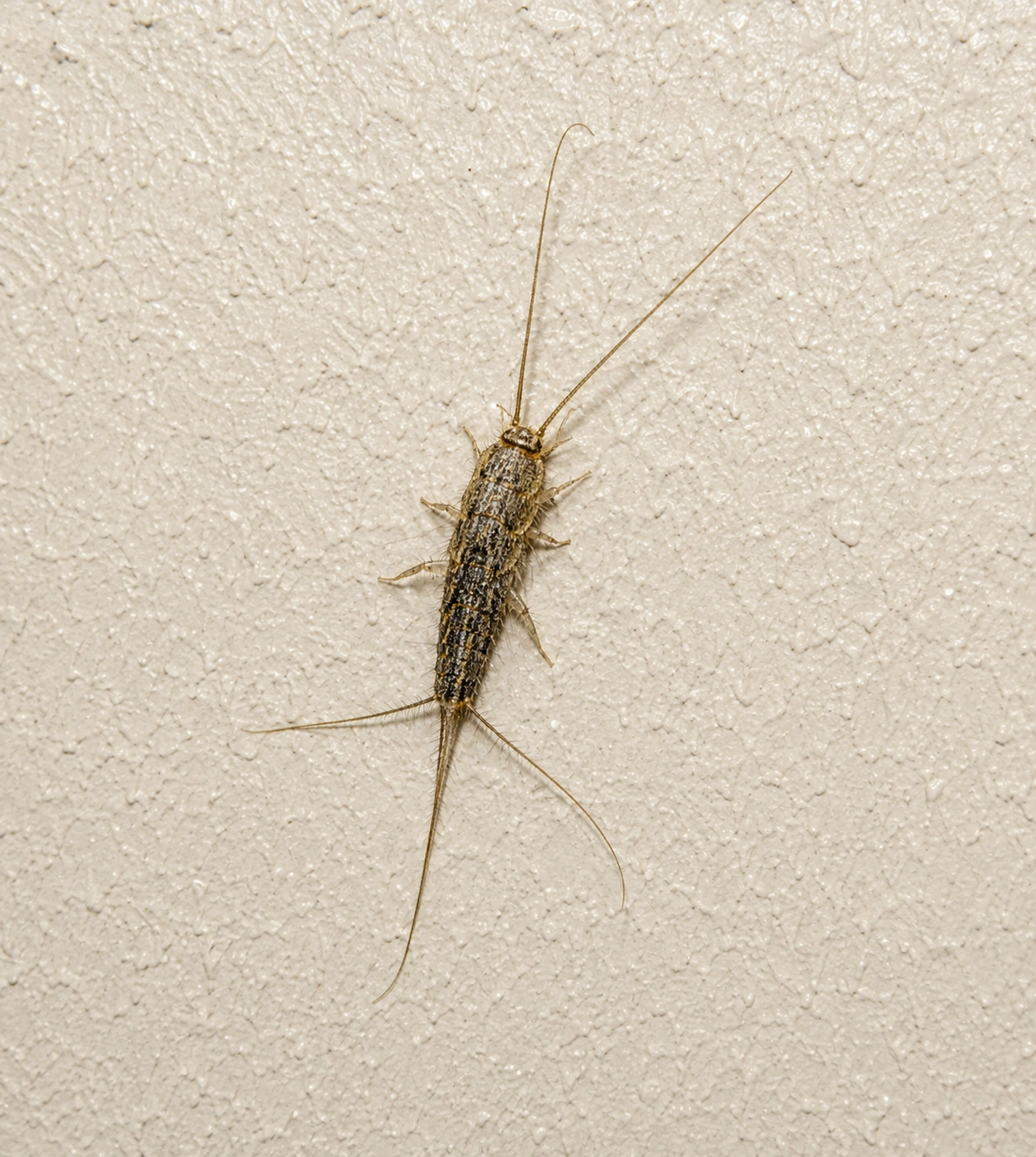
The name fits them unusually well. I think silverfish are genuinely weird insects, and handling one feels more like trying to hold a miniature trout than a bug. They flex from side to side, slip away quickly, and may leave some of their tiny scales behind. Once you’ve felt one move, “silverfish” no longer sounds like a name someone invented from a photograph.
Homeowners in Bryan, College Station, and the rest of Brazos County usually find silverfish in bathrooms, closets, attics, garages, or storage areas. A single silverfish doesn’t mean the house has suffered serious damage. Regular sightings, especially in several rooms, deserve more attention because they can point to a hidden population and favorable moisture conditions.
What Is a Silverfish?
The common silverfish, Lepisma saccharinum, belongs to the insect order Zygentoma. This ancient group existed long before winged insects became dominant. Silverfish never develop wings, even as adults, and their young look like smaller, paler versions of the mature insects.
An adult commonly measures about one half inch long before you count the antennae and rear filaments. Its body widens near the front and narrows toward the rear, which creates the fishlike outline. Two rear filaments are cerci. The central filament has a different anatomical name, so calling all three “cerci” isn’t quite accurate.
Silverfish have six legs, as true insects do, but their low, flowing movement can hide those legs at a glance. They run quickly and often seem to wiggle around obstacles rather than simply walk. Their thin bodies let them disappear beneath baseboards, inside wall gaps, between stored papers, and through cracks that barely seem wide enough.
University of Minnesota Extension describes silverfish as insects of cool, damp, dark locations and notes that they may damage paper. That short description captures the two conditions that matter most indoors: dependable hiding places and enough humidity to survive.
Why They Feel Like Tiny Fish
Most insects feel dry and rigid when handled. Silverfish feel different. The scales covering their bodies reduce friction, and the abdomen bends easily from side to side. Combine that flexibility with their tapered shape and sudden bursts of movement, and the comparison to a miniature trout becomes surprisingly accurate.
Those scales also explain the dusty silver appearance. A young silverfish starts out pale and gains more scales as it molts. The scales can rub off, but that doesn’t mean the insect has turned into a different species or that a powder has been applied to it.
The three tail filaments add to the strange appearance. Many people assume they found an insect with several stingers. Silverfish don’t sting, and those filaments don’t inject venom. They function as sensory structures that help the insect detect its surroundings.
How to Tell Them From Firebrats
Silverfish and firebrats are close relatives, and both belong to the group commonly called bristletails. They share the same flattened body, long antennae, three rear filaments, and quick nighttime behavior. Temperature and appearance provide the best practical clues.
| Feature | Silverfish | Firebrat |
|---|---|---|
| Typical color | Silvery gray or metallic | Mottled gray and brown |
| Preferred conditions | Cool to moderate, humid areas | Warm to hot, humid areas |
| Common locations | Bathrooms, closets, storage, attics, wall voids | Near furnaces, boilers, hot pipes, commercial kitchens, warm mechanical spaces |
| Household concern | Nuisance and possible damage to paper or stored materials | Similar damage, often concentrated near heat |
A photograph may not settle the identification if the insect moved too quickly or lost scales. Where it appears can help. A bristletail repeatedly found near a hot water heater or another consistently warm area may be a firebrat rather than a silverfish. Penn State Extension’s bristletail guide discusses the humidity needs of both insects and the stronger preference firebrats show for heat.
Where They Hide Inside Homes
Silverfish avoid light and spend most of the day in tight, protected spaces. Bathrooms and laundry rooms offer humidity, plumbing gaps, cabinets, and wall voids. Kitchens provide similar shelter along with paper packaging and food residues. Closets supply darkness, cardboard, paper, and fabric finishes.
Attics can support silverfish when roof leaks, condensation, inadequate ventilation, or stored cardboard creates humid pockets. Garages also provide long undisturbed edges, boxes, old books, and gaps around doors or wall penetrations. A house doesn’t need to feel damp everywhere. A small leak or humid void can support activity while the occupied room feels perfectly normal.
Silverfish may also live inside libraries, offices, schools, archives, and storage facilities. Books, paper records, labels, photographs, and cardboard give them both shelter and potential food. The insects often remain hidden until someone moves a box or opens a cabinet that hasn’t been disturbed in months.
Finding one in a sink or bathtub doesn’t necessarily mean it came through the drain. The smooth surface traps silverfish after they fall in, so the fixture acts more like a pitfall trap. The insect may have emerged from a cabinet, pipe opening, baseboard gap, or another nearby hiding place.
What They Eat and Damage
Silverfish can digest carbohydrates found in starches and sugars. Indoors, they may feed on paper coatings, bookbinding glue, wallpaper paste, cardboard, labels, and starchy finishes on fabric. They also may eat crumbs, cereals, flour, dried foods, and dead insects.
Their feeding usually develops slowly. A homeowner may find irregular scraping, small holes, notched paper edges, or yellowish staining rather than dramatic destruction. Damage often affects the surface because the insect grazes across material instead of chewing a clean tunnel through it.
People sometimes blame silverfish for any damage found in a box of papers. That isn’t always fair. Cockroaches, booklice, carpet beetles, rodents, moisture, mold, and ordinary deterioration can produce different forms of damage in the same storage area. We look for live insects, shed skins, feeding patterns, and the surrounding conditions before assigning blame.
Silverfish don’t eat sound structural wood like termites. They also don’t feed on people, pets, or blood. Their ability to damage books gives them a frightening reputation, but most residential encounters amount to nuisance activity rather than the loss of a valuable collection.
A Life Cycle Unlike Most Insects
Silverfish develop without a pupal stage. A female places small eggs inside cracks, crevices, or protected material. The young hatch looking like tiny adults and gain their scales over successive molts.
One of the strangest features of silverfish biology appears after maturity. Most adult insects stop molting. Silverfish continue to molt throughout their adult lives. Under favorable conditions, they may live for several years, which gives an established population plenty of time to remain hidden and spread through connected voids.
Temperature, humidity, food, and species all affect development. That makes rigid promises about how quickly an infestation grew or how long it will take every remaining insect to disappear unreliable. Silverfish also tolerate long gaps between meals. Removing one box of paper helps only if it contained the main harborage or food source.
Why Moisture Matters So Much
Silverfish lose water easily and survive best where humidity remains high. That doesn’t mean every sighting proves a serious plumbing leak. Bathrooms naturally become humid, and a silverfish may wander into a dry room from a nearby void. Repeated sightings in the same location make moisture investigation more important.
We pay attention to leaking supply lines, slow drain leaks, condensation, roof leaks, damp insulation, poorly ventilated spaces, and air conditioning problems. In a slab home, plumbing penetrations and wall voids can connect distant parts of the structure. The room where someone sees the insect may not contain the moisture source.
Reducing excess moisture makes the environment less favorable and improves any control program. Repairing a leak also protects the building from mold and wood damage, which matters far more than the silverfish themselves. Pest activity sometimes provides the first visible clue that a hidden area stays wetter than it should.
Making the House Less Favorable
Start with moisture and storage. Repair leaks, improve ventilation where needed, and avoid leaving cardboard directly on damp garage or closet floors. Plastic storage containers can protect important papers better than aging cardboard, especially in areas where humidity fluctuates.
Reducing clutter helps expose hiding places, but a spotless home can still have silverfish. They can live inside wall voids, beneath insulation, or around plumbing where routine cleaning can’t reach. Seal obvious gaps around pipes, baseboards, cabinets, doors, and stored areas when practical, but don’t expect one tube of caulk to solve activity coming from several connected spaces.
Vacuuming visible insects and shed skins provides immediate cleanup. It also gives you a better sense of whether new activity continues. These steps support control without turning the page into a do it yourself pesticide guide.
Professional Silverfish Control
Venus Pest Company begins with identification and inspection. We consider where silverfish appear, how often customers see them, nearby moisture, storage conditions, attic or garage access, and whether the insects could actually be firebrats or another small household pest.
Professional treatment may target cracks, voids, exterior entry areas, and other protected locations connected to the infestation. The plan changes with the structure. Treating an open bathroom floor while ignoring a damp plumbing void rarely addresses the source.
Silverfish fall within the common household pest coverage of our basic pest control service. If you’re finding silverfish in Bryan, College Station, or elsewhere in Brazos County, call or text 979-774-0486, or email service@venuspest.com.
Silverfish Questions
Do silverfish bite or sting?
No. Silverfish don’t bite people, feed on blood, or sting. The three rear filaments may look threatening, but they serve sensory functions rather than delivering venom.
Do they come through drains?
They may travel through gaps around plumbing, but a silverfish trapped in a sink or bathtub probably fell from a nearby surface. Smooth porcelain prevents it from climbing back out.
Does finding them mean my house has a leak?
Not necessarily. Silverfish prefer humid areas, so repeated sightings can justify checking for leaks, condensation, or inadequate ventilation. One wandering insect doesn’t diagnose a moisture problem by itself.
Will they destroy my books?
Large or long established populations can damage paper, bindings, labels, and starch based adhesives. Most homes experience minor nuisance activity, but valuable books, records, and collections deserve protective storage and a closer inspection.
Why do they appear at night?
Silverfish avoid light and remain inside narrow hiding places during the day. Darkness gives them a safer time to search for food and moisture.
Can silverfish live in a clean house?
Yes. They need shelter, humidity, and small amounts of suitable food, all of which can exist inside a well maintained home. Silverfish don’t prove that a house is dirty.
Why do I still see silverfish after reducing moisture?
Drying an area makes it less favorable, but silverfish may remain inside protected voids or move from another part of the structure. Long lived insects don’t disappear the moment the humidity changes.