
Pest Expert Overview: Crickets in Bryan & College Station
Then a year like 2012 comes along.
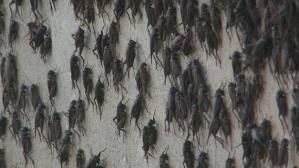
Crickets covered sidewalks, collected around doors, and piled up beneath commercial lights. The local Home Depot smelled like a public dump because so many had died around the building. They became so abundant that birds learned to follow pest and lawn professionals for the insects our equipment disturbed.
That outbreak followed the historic 2011 Texas drought. I had already learned that cricket numbers can surge after drought, but watching it happen across the Brazos Valley made the pattern impossible to forget.
The Year After a Drought Can Get Strange
Cricket outbreaks depend on more than one weather event. Field crickets lay eggs in soil, nymphs develop outdoors, and adults make nighttime mating flights. Soil conditions, temperature, rainfall, disease, predators, and the timing of adult development all affect how many survive and when they begin moving.
Texas A&M AgriLife Extension reports that the largest black field cricket outbreaks tend to occur during dry springs and summers. Researchers haven’t identified one complete explanation, but reduced fungal disease among eggs and nymphs may help more of them survive. Numbers often peak when rain and cooler weather break the dry spell and trigger adult movement.
My field observation has been slightly broader: the year after a major drought deserves attention. Dry conditions may favor survival during part of the life cycle, while the return of moisture helps synchronize activity and flight. Whatever combination of factors produces it, the result can look less like a normal seasonal increase and more like somebody opened a cricket warehouse.
The 2012 Outbreak I Still Remember
The 2011 drought wasn’t an ordinary dry summer. The Texas Water Development Board ranks 2011 as the worst single year of drought in the state’s recorded history. When warmth and rain returned in 2012, field cricket activity exploded across parts of Central and East Texas.
Texas A&M documented the invasion that August. Extension entomologist Dr. Michael Merchant described the timing as unusually early and connected the flights to warm temperatures and recent rain. He noted that the insects swarmed over walls and sidewalks, then died in large numbers and created foul odors around homes and businesses. That account matches what I saw in the Brazos Valley almost perfectly.
The Home Depot memory stands out because the smell hit before the insects did. A few dead crickets don’t create much of a problem. Thousands decaying together in Texas heat can make the front of a store smell like spoiled garbage.
How to Identify Field Crickets
The crickets involved in major Texas outbreaks generally belong to the Gryllus assimilis species complex. Scientists group them together because several species look extremely similar. Their songs sometimes separate species more reliably than body shape or color.
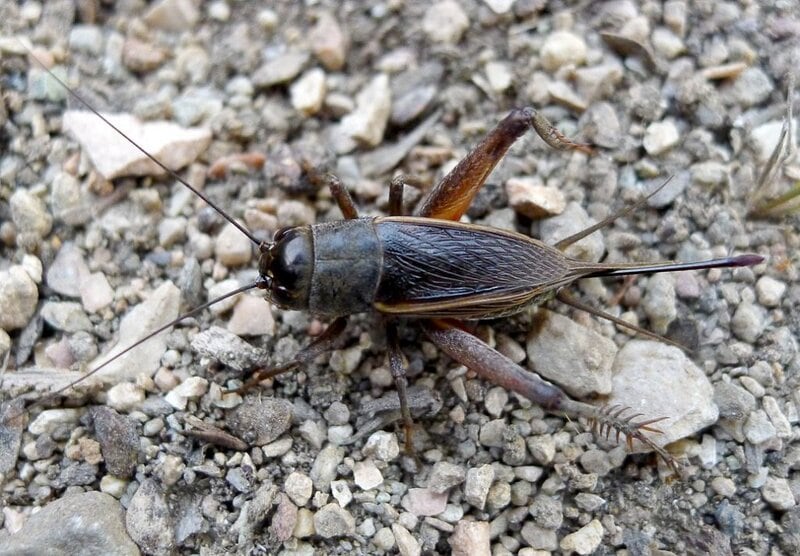
Adults usually appear dark brown to black and measure roughly one half to one inch long. Long, slender antennae may equal or exceed the body length. Large hind legs provide the jumping power everyone recognizes. Adults also have wings and can fly, although they often hop or run when disturbed.
Mature females have a long, straight ovipositor projecting from the end of the abdomen. It resembles a narrow stinger, but it places eggs in soil and poses no threat to people. Males lack that structure and produce the familiar chirp by rubbing specialized parts of their front wings together.
Field crickets differ from the lighter brown house crickets commonly sold as pet food and fishing bait. Camel crickets look hunched, have extremely long legs, lack wings, and prefer cool, damp, dark spaces. They also don’t chirp. Correct identification matters because these insects enter buildings for different reasons.
A Life Cycle Tied to Texas Weather
Female field crickets place their eggs in firm, relatively bare soil during fall. A female may produce 150 to 400 eggs. Those eggs remain underground through winter and hatch as conditions warm.
The nymphs resemble small adults but lack developed wings. They feed, grow, and molt repeatedly for about three months. Once they mature, the adults can fly, mate, and begin the next generation. Large outbreaks occur when many nymphs survive and reach adulthood at roughly the same time.
Field crickets eat a remarkably broad diet. They consume fresh and decaying plants, seeds, fungi, dead insects, and sometimes weakened or smaller living insects. They may even eat other crickets. That flexibility helps them live in lawns, pastures, landscaped beds, roadside vegetation, and the rough edges between developed property and open land.
Night Flights, Lights, and Buildings
Most severe problems around structures begin with light. Adult field crickets fly at night during the mating season, and bright exterior lighting can pull them toward a building from the surrounding area.
A brightly illuminated commercial property can collect astonishing numbers even when it didn’t produce a single one. Parking lot lights, wall packs, illuminated signs, and bright doorways concentrate insects against walls and near entrances. Every opening near that light becomes a possible route indoors.
Homes experience the same effect on a smaller scale. Porch lights attract adults to doors, windows, garages, soffits, and weep holes. Opening a door gives them an easy route inside. Poor door seals let them crawl through after everyone goes to bed.
This explains why one building can look overrun while a darker property nearby has only a few. The building didn’t necessarily create the population. It gathered the population.
Grackles Learned to Follow the Equipment
By 2012, crickets had become so numerous that birds began treating pest and lawn professionals like moving lunch counters. I had grackles following me everywhere.
One of our main pesticide applicators is a modified leaf blower. During that outbreak, I could turn off the pesticide flow and use only the air to flush crickets from their daytime hiding places. They poured out from groundcover, cracks, and sheltered edges. The grackles waited nearby and happily gobbled them up as they evacuated.
The birds learned the pattern quickly. Engine noise and moving air meant exposed prey. After a while, they didn’t need much convincing to trail along behind me.
That experience showed how quickly wildlife can exploit a temporary food bonanza. It also gave me a way to reduce some of the insects without applying anything. The air moved them into the open, and the birds handled the rest with considerable enthusiasm.
When the Smell Becomes the Real Problem
One cricket that dies under a refrigerator may produce a faint odor. A layer of dead crickets beneath commercial lights creates something else entirely.
Warm, humid conditions accelerate decomposition. Bodies collect along walls, in entryways, beneath shelving, around equipment, and inside drainage areas. New insects arrive faster than employees can remove the old ones. The resulting odor may become more objectionable than the live insects.
Large accumulations can also stain surfaces and attract scavengers. Prompt cleanup matters during an outbreak, especially around restaurants, retail entrances, schools, offices, and other places where appearance and odor affect customers.
Crushing them creates another mess. Vacuuming or sweeping indoor crickets usually works better than stepping on them one at a time, though a severe outdoor flight can replace every insect removed with several new arrivals that night.
The Cricket Bucket I Learned About at LSU
One of the more useful pieces of insect collecting equipment I learned about at LSU was the cricket bucket. Fishermen have used versions of this container for generations to hold live bait.
The design looks almost too simple to work. A cylindrical cage has an opening in the top with a smooth plastic collar or funnel around it. You can drop crickets through the opening, but they struggle to climb the slick surface or find the route back out. The container remains ventilated and accessible without requiring someone to open and close a lid for every insect.
We weren’t using ours for crickets. We used cricket buckets to collect southern green stink bugs, Nezara viridula, for my soybean economic injury level and Integrated Pest Management research. We could collect bugs from plants and drop them directly into the bucket as we moved through the field.
Stink bugs can fly, but they aren’t skilled at orienting through that smooth central opening once they land inside the cage. They may crawl and make short flight attempts, yet the design keeps redirecting them away from the exit. It works as a small lesson in insect behavior disguised as fishing equipment.
What the Bucket Reveals About Escape Behavior
People often assume that any winged insect can simply fly out of an open container. Flight ability doesn’t guarantee good navigation. An insect may respond to light, gravity, edges, air movement, or the nearest surface rather than developing anything resembling a human escape plan.
Crickets usually run and jump along surfaces. When they reach the smooth insert, they lose traction and fall back. Stink bugs tend to climb upward along the cage wall, but the collar interrupts that route. Even when they fly, they may not aim through a relatively small opening above them.
The bucket works because its shape takes advantage of predictable behavior. That same principle appears throughout pest management. Understanding what an insect naturally tries to do often matters more than trying to overpower it.
Their Place in the Local Food Web
Crickets serve as important decomposers, scavengers, prey, and occasional predators. They help break down dead plant material and return nutrients to the soil. Birds, lizards, frogs, spiders, small mammals, and many other animals eat them.
That ecological value doesn’t make a mass around a business entrance acceptable. It does explain why eliminating every cricket from a property would make little sense. Most of them live outdoors without causing anyone a problem. Trouble begins when seasonal movement, lighting, and openings concentrate them where people live or work.
The grackles following me in 2012 made the food web unusually visible. A weather pattern helped produce an enormous insect population. Human equipment flushed the insects from cover. Birds adjusted their behavior and took advantage of the opportunity. Ecology rarely stays inside the tidy categories we assign to it.
When They Become a Household Pest
Black field crickets don’t normally reproduce or establish permanent populations indoors. Most enter accidentally during late summer or fall. A home with repeated activity usually has continuing entry from outside rather than a hidden indoor breeding colony.
Inside, they chirp at inconvenient hours and hide beneath appliances, furniture, stored items, or other protected spaces. They may feed on food debris, paper, or fabric, particularly material stained with perspiration or food. Serious fabric damage remains uncommon, but it can occur when many insects stay indoors.
Their presence doesn’t indicate a dirty house. A pristine home beside a bright light or a heavy outdoor flight may receive more visitors than a cluttered home in a darker location. Entry points and attraction usually explain the difference.
Crickets don’t sting and don’t seek people as hosts. Their main indoor effects involve noise, odor, staining, minor feeding damage, and the general irritation of finding a large jumping insect beside the bed at two in the morning.
Practical Ways to Reduce the Problem
Start with lighting because it often controls where the insects gather. Turn off unnecessary exterior lights during heavy flights. When security lighting must remain, choose fixtures and placement that reduce spill toward doors and windows. Moving a light away from an entrance can draw activity away from the place crickets most easily enter.
Check door sweeps, garage door seals, window screens, utility penetrations, and gaps around exterior doors. Pay special attention to openings near lights. A narrow gap beneath a door can admit a surprising number in one night.
Reduce dense vegetation, stacked materials, leaf litter, and clutter directly against the foundation where practical. These areas provide daytime shelter. This doesn’t mean stripping the landscape bare. The goal is to prevent a continuous band of protected hiding places against the structure.
Remove indoor crickets with a vacuum and empty it promptly. During a severe regional outbreak, expect some continuing activity until the main mating flights subside. Texas A&M reports that the heaviest flights often last only one or two weeks, though scattered adults may remain active until colder weather arrives.
Professional Cricket Control
Professional service should focus on why so many insects are gathering and where they enter. Treating a building while leaving intense nighttime lighting and open entry points unchanged can produce disappointing results because new adults continue flying in from the surrounding area.
Venus Pest Company includes crickets in its Basic Pest Control coverage and standard commercial pest control programs. Our technicians inspect likely entry areas, look for daytime shelter around the structure, and account for the seasonal flight pattern when planning service.
We don’t publish pesticide products, active ingredients, application rates, or do it yourself pesticide recommendations. The right professional approach depends on the property, lighting, entry points, level of activity, and whether the problem involves a brief outdoor flight or continuing indoor sightings.
Local Help Across Brazos County
Venus Pest Company has served Brazos County since 2001. Most cricket problems remain minor and seasonal. Others reach the point where the noise, odor, cleanup, and repeated indoor visitors become difficult to ignore.
If crickets are gathering around your home or business, call or text 979-774-0486, or email service@venuspest.com. We’ll help determine whether you’re seeing normal seasonal activity, a lighting and entry problem, or the beginning of one of those memorable Texas outbreak years.
Cricket Questions
Are crickets dangerous to people or pets?
Field crickets don’t sting and don’t seek out people or pets. They mainly create noise, odor, staining, and nuisance problems indoors. Pets may chase or eat an occasional cricket, but large accumulations around a building still deserve cleanup.
Why do drought years sometimes lead to so many?
The full relationship remains complicated. Texas A&M reports that major outbreaks tend to follow dry spring and summer conditions, possibly because fewer eggs and nymphs die from fungal disease. Rain and cooler weather after the dry period can then trigger large mating flights. My own field experience has taught me to watch especially closely during the year after a major drought.
Do field crickets reproduce inside houses?
Normally, no. Black field crickets live and reproduce outdoors. Indoor sightings usually represent individuals entering through doors, windows, garages, weep holes, or other gaps.
What makes the chirping sound?
Adult males rub specialized parts of their front wings together to attract females. Different species can produce different songs, which sometimes helps scientists distinguish crickets that look nearly identical.
Why do they gather around lights?
Adult field crickets make nighttime mating flights and orient toward bright lights. Exterior lighting can concentrate insects from a wide area onto one wall, doorway, or parking lot.
Can they damage clothing or furnishings?
They can chew or stain fabric, drapes, wall coverings, and paper, especially when food or perspiration soils the material. Major damage remains uncommon because field crickets don’t usually establish lasting indoor populations.
Why do dead crickets smell so bad?
Large piles decay quickly in warm weather. One dead cricket may go unnoticed, but thousands beneath commercial lights can produce a strong garbage-like odor and attract scavenging insects.
Does Venus include them in regular pest control?
Yes. Crickets appear in Venus Basic Pest Control coverage and standard commercial programs. Exact service terms depend on the customer’s plan and property, so current customers should check their agreement or contact our office when they need confirmation.