

Pest Expert Overview: Ground Beetles in Bryan & College Station
That sudden appearance can look like an infestation. Shiny black beetles collect on porches, cross garage floors, and slip beneath doors. The good news is that they don’t want food from the pantry, lumber from the house, or fabric from the closet. They rarely survive long indoors and don’t establish household populations.
Most of the time, the building interrupted a useful insect while it was flying, hunting, or searching for daytime shelter. The practical goal involves getting the beetles back outside and reducing the conditions that funnel them indoors.
When Ground Beetles Suddenly Cover the Porch
Ground beetle activity can change quickly because many species fly at night. Bright porch lights, wall fixtures, windows, signs, and commercial lighting pull adults toward structures from the surrounding landscape.
Texas A&M AgriLife Extension documented a surge of Harpalus ground beetles after receiving several calls about swarming black beetles. The adults had begun nighttime mating flights and gathered around lights. Texas A&M noted that these flights often last only one or two weeks.
That pattern explains why a house can go from no noticeable activity to dozens of beetles in a night. The population didn’t develop inside. Adults flew from lawns, fields, wooded edges, and other outdoor habitat, then concentrated around one bright structure.
During daylight, they search for dark cover. A gap beneath a door or along a garage seal can look like the edge of a log or stone. They crawl inside to escape light and discover an environment with little food or suitable shelter.
How to Identify a Ground Beetle
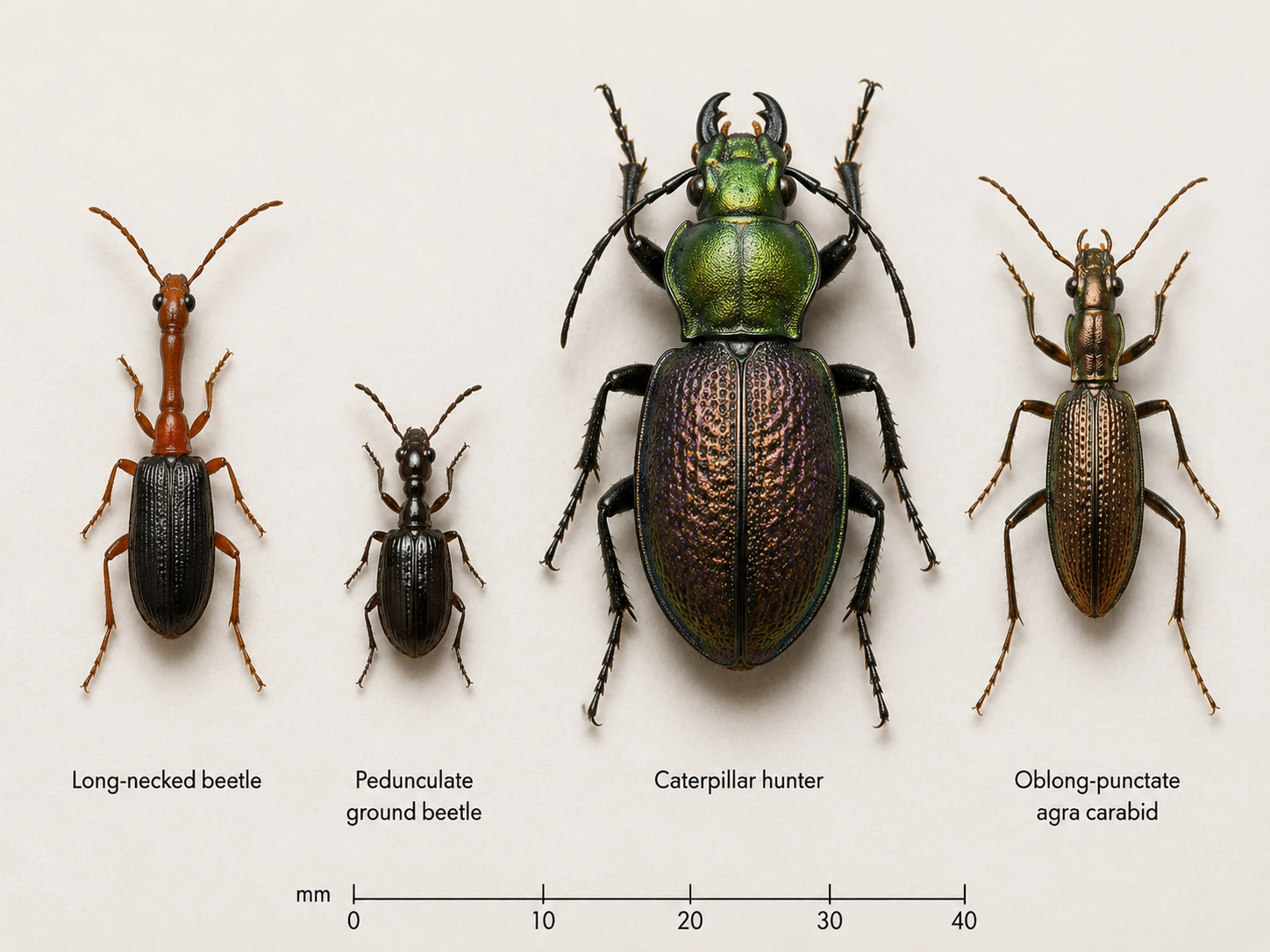
Ground beetles belong to the family Carabidae, one of the largest beetle families. Their appearance varies widely, but many common species share a recognizable build.
The body usually looks flattened and somewhat elongated. Most adults appear black, dark brown, bronze, or metallic, although some species show green, blue, red, or other colors. The hardened front wings form a smooth or grooved shell over the abdomen.
Long legs help them run rapidly across soil. Threadlike antennae extend from the head, and visible jaws give many species a slightly fierce expression. The head usually remains narrower than the section directly behind it.
Size ranges from tiny species that people barely notice to adults about an inch long. Color alone can’t confirm the family. A clear view of body shape, antennae, legs, and movement gives a much better identification than “a black beetle.”
Why Ground Beetles Run So Fast
Ground beetles hunt and escape on foot. Many species spend the day beneath leaves, logs, bark, stones, landscape material, or soil cracks, then emerge after dark. Speed helps them catch prey and reach shelter when exposed.
People sometimes interpret that fast movement as aggression. The beetle isn’t charging. It usually runs toward the nearest dark edge, crack, or object. On an open floor, that route may happen to point toward the person who disturbed it.
Some species fly well, especially during mating or dispersal. Others rely much more heavily on running. The combination of nighttime flight and daytime hiding explains why adults gather at lights, then appear beneath boxes or along garage walls the next morning.
Valuable Ground Beetle Predators in Local Landscapes
Both adult and larval ground beetles can act as predators. They consume insect eggs, caterpillars, fly larvae, small beetles, slugs, snails, spiders, and other invertebrates. Diet varies among species, and some also eat seeds or plant material.
Texas A&M AgriLife Extension lists ground beetles among generalist predators in soybean fields. Their usefulness extends beyond agriculture. The same hunting behavior helps regulate pests in gardens, lawns, and the rough edges around developed property.
This ecological value changes the control goal. Eliminating every ground beetle from a yard would remove useful predators and accomplish little. Most never approach the house. Problems occur when lights and openings concentrate a seasonal flight at the structure.
What They Don’t Damage
Ground beetles don’t eat structural wood, infest stored food, chew clothing, or reproduce in a normal home. They don’t sting and don’t seek people or pets.
Large jaws allow some species to pinch when someone handles or traps them against skin. A few release an unpleasant defensive odor or fluid. Those defenses may surprise someone who picks one up, but they don’t create the medical concern associated with stinging insects or venomous spiders.
Indoor beetles usually die from dry conditions and lack of food. Finding several dead along a window or garage wall supports the idea that they entered accidentally rather than established a hidden breeding site.
Common Look Alikes
Several dark household insects get called ground beetles. Correct identification matters because the source can differ completely.
Cockroaches have flatter, softer looking bodies, very long antennae, and a shield that partly covers the head. They can reproduce indoors and may create a sanitation concern. Ground beetles have obvious hard wing covers and a more exposed head.
Click beetles have a long, narrow shape and pointed rear corners on the segment behind the head. When placed on their backs, they can snap into the air. Ground beetles usually roll over and run.
Darkling beetles and other outdoor beetles may look similar from a distance. An intact specimen or clear photograph helps avoid turning every temporary visitor into the wrong pest problem.
Why One Building Gets More Than Its Neighbor
Lighting often creates the largest difference. A bright wall fixture can draw beetles from a wide area, while a darker house next door receives very little activity.
The surrounding habitat also matters. Properties beside fields, wooded edges, greenbelts, gardens, or undeveloped lots may support more ground beetles. That doesn’t make the landscape unhealthy. It gives beneficial predators more places to live.
Entry points decide how many reach the interior. Worn door sweeps, garage door corners, gaps around utility lines, low windows, and openings along the foundation can turn an outdoor flight into an indoor nuisance.
Weather affects timing. Rain may displace beetles from saturated soil, while heat or drought can change movement and shelter. Seasonal mating flights can overwhelm an otherwise adequate barrier for a short period.
Practical Ways to Reduce Indoor Activity
Turn off unnecessary exterior lights during a heavy flight. When lighting must remain for safety, reduce spill toward doors and windows or move the brightest fixture away from the entrance. The goal is to stop gathering beetles at the exact place they can enter.
Repair door sweeps, garage seals, screens, and visible gaps near ground level. Pay particular attention to the side of the building where beetles collect after dark.
Keep heavy leaf accumulations, boards, stones, and stored materials from creating continuous shelter against the foundation. This doesn’t require stripping the landscape bare. A modest inspection and drying zone beside the wall makes entry less convenient.
Vacuum or sweep indoor beetles and empty the container. Avoid crushing large numbers on light flooring because defensive fluids may create odor or staining. During a mating flight, expect some new arrivals until the brief outdoor event ends.
Professional Ground Beetle Control
Professional service should confirm the identification before treating anything. If the beetles came from a short mating flight, lighting and exclusion may matter more than an aggressive response. If the insect turns out to be a cockroach, pantry beetle, or another group, the plan changes completely.
Venus Pest Company can address ground beetle invasions through our Basic Pest Control, Commercial Pest Control and the HomeGard Plans service. We inspect entry areas, consider surrounding habitat and lights, and distinguish temporary outdoor pressure from an insect that actually reproduces indoors.
We don’t publish pesticide products, active ingredients, application rates, or homeowner pesticide recommendations. Ground beetles rarely justify broad attempts to eliminate them from the landscape.
Local Help Across Brazos County
Venus Pest Company has served local homes and businesses since 2001. Our founder, Dr. Scott Lingren, holds a PhD in entomology and designed our programs around identification, biology, and Integrated Pest Management.
If black beetles are gathering around your home or business, call or text 979-774-0486, or email service@venuspest.com. We’ll determine whether you have beneficial ground beetles caught in a short flight or a different beetle that needs a different response.
Common Questions
Why did dozens appear overnight?
Many species make nighttime mating flights and gather around bright lights. A seasonal flight can concentrate beetles from the surrounding landscape at one porch or building within hours.
Are they dangerous?
No. They don’t sting or seek people. A large species may pinch if handled, and some release a defensive odor, but they don’t pose a serious household health risk.
Will they reproduce inside my house?
Usually not. Ground beetles live and reproduce outdoors. Indoor conditions provide little food or suitable habitat, so accidental invaders tend to die or seek a way back outside.
Do they damage food, clothing, or wood?
No. They don’t infest stored food, eat fabric, or damage structural wood. Their indoor presence creates a temporary nuisance rather than property damage.
Why are they attracted to lights?
Many adults fly at night and orient toward bright artificial light. The exact response varies by species, but illuminated buildings can collect far more beetles than darker properties nearby.
Are they beneficial in the yard?
Yes. Many adults and larvae prey on insect eggs, caterpillars, fly larvae, slugs, and other small animals. Some species also consume seeds.
How long will a large flight last?
Texas A&M reports that some ground beetle mating flights last about one or two weeks. Activity around a particular building may rise and fall faster as weather and lighting change.
Can Venus help with repeated invasions?
Yes. We can identify the beetles, inspect entry points, evaluate lighting and habitat, and provide service when outdoor pressure continues to put them inside.