
Pest Expert Overview: Mosquitoes in Bryan & College Station
The word “mosquito” covers many species with different habits. Some bite during the day. Others become most active near dusk or after dark. Some stay close to the containers where they developed, while floodwater species can arrive from much farther away.
That variety explains why mosquito control around Bryan, College Station, and the rest of Brazos County requires more than one tactic. Water management addresses developing mosquitoes. Foliar treatment targets adults resting in shaded vegetation. Screens and personal protection reduce exposure. Each part solves a different piece of the problem.
Warm Weather, Rain, and Shade
Warm temperatures give mosquitoes a long season. Rain fills natural depressions and neglected containers, while irrigation can maintain smaller water sources through dry periods. Humid, shaded vegetation gives adult mosquitoes shelter from heat, wind, and direct sun.
Neighborhood conditions also overlap. One household may empty every container on its property and still receive mosquitoes from a nearby drainage area, wooded creek, storm system, neglected pool, or neighboring yard. Mosquitoes don’t respect fence lines.
Pressure often rises after rain, but the response isn’t immediate for every species. Eggs hatch, larvae develop in water, pupae transform, and adults emerge. Warm weather can move that cycle quickly, so a small water source may become important before anyone notices it.
Different Species Create Different Problems
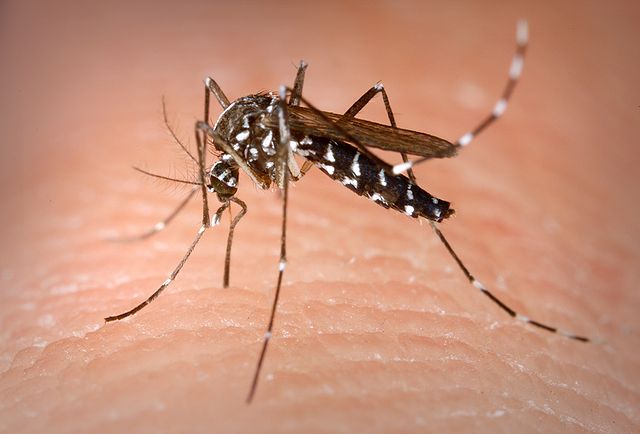
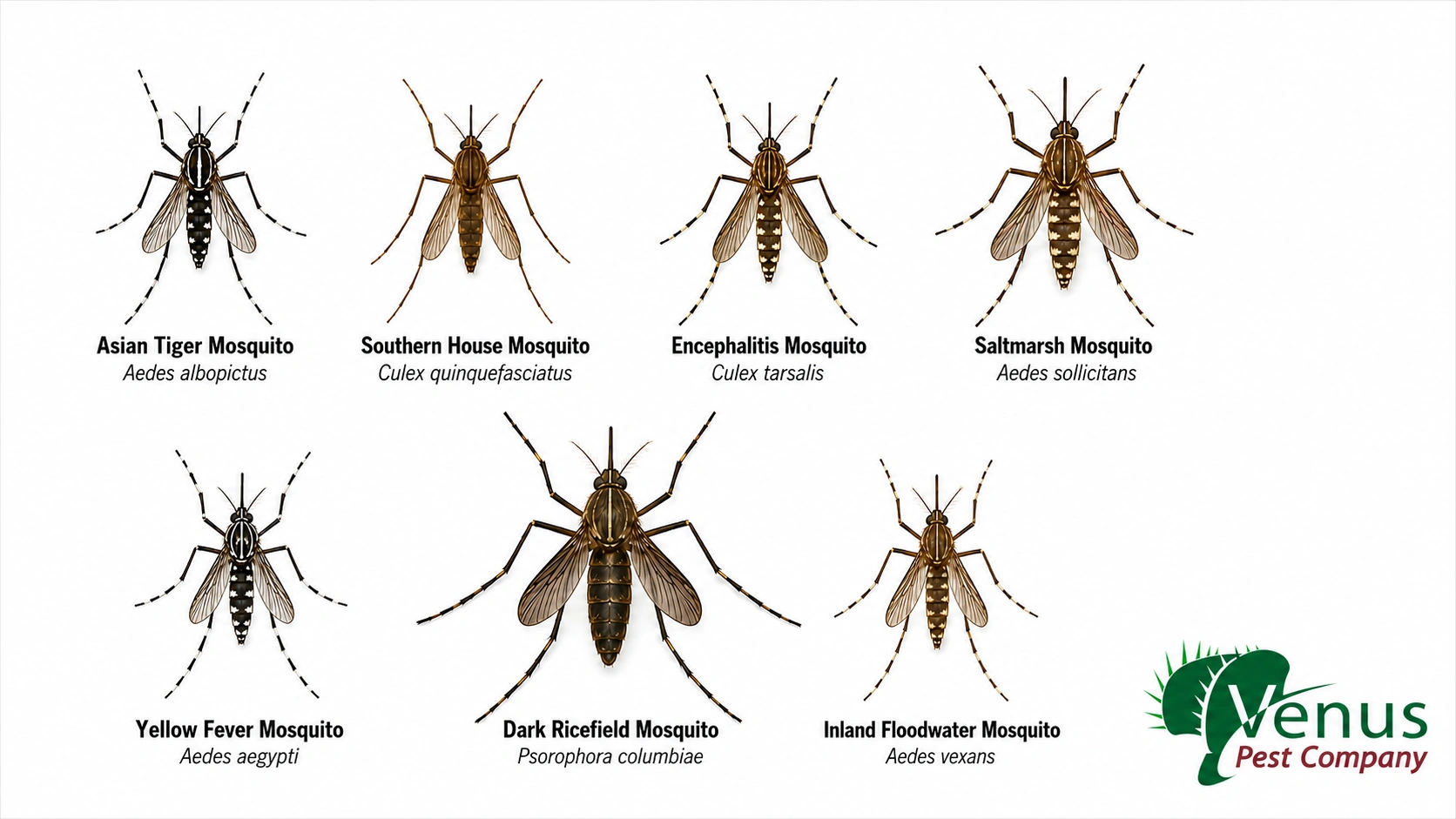
Container breeding Aedes mosquitoes often live close to people. The Asian tiger mosquito, Aedes albopictus, has bold white markings and commonly bites during the day. Small containers, plant saucers, buckets, toys, and other water holding objects can support its immature stages.
Many Culex mosquitoes become more active from dusk into the night. Members of this group play an important role in West Nile virus transmission. Texas Department of State Health Services tracks West Nile activity and reminds Texans that seasonal risk returns each year.
Floodwater mosquitoes lay eggs in areas that dry between rains. When water returns, large numbers may hatch together. Adults can travel beyond the wet area that produced them, which helps explain sudden neighborhood wide outbreaks after heavy rainfall.
Species identification doesn’t always happen during a residential visit, but behavior still guides the inspection. The time of day, places where biting occurs, recent weather, nearby water, and resting habitat all provide useful clues.
A Fast Life Cycle Built Around Water
Mosquitoes pass through four stages: egg, larva, pupa, and adult. Larvae and pupae require water. Adults leave the water after emerging and spend the rest of their lives on land or in flight.
Female mosquitoes take blood meals to develop eggs. Males don’t bite. Both sexes use plant sugars for energy.
CDC guidance for Aedes mosquitoes explains that development from egg to adult can take as little as 7 to 10 days under favorable conditions. That speed makes weekly attention to water more useful than a large cleanup performed once each summer.
Container Breeders Around Homes
A mosquito nursery doesn’t need to look like a pond. Water inside a bottle cap, corrugated drain extension, tarp fold, wheelbarrow, clogged gutter, flowerpot saucer, or children’s toy can remain hidden from ordinary view.
Some Aedes species place eggs on the wall of a container just above the water line. The eggs can remain after the container looks dry and hatch when water returns. Simply tipping out water once may not remove eggs attached to the surface.
Birdbaths and pet water bowls serve useful purposes and don’t need to disappear. They do need regular cleaning and fresh water. The goal is to interrupt development before adults emerge.
Floodwater and Permanent Water Sources
Low ground, drainage channels, tree holes, roadside areas, neglected pools, and other sites can support species that don’t depend on household containers. Some sources sit beyond the customer’s property or can’t be removed by one homeowner.
This is why source reduction can greatly lower pressure without guaranteeing a mosquito free yard. It removes local production, but it can’t stop every adult arriving from the surrounding area.
Where Adults Spend the Day
Adult mosquitoes need protection from heat and drying. Many rest on the undersides of leaves, within shrubs, under decks, beneath eaves, inside sheds, and in other cool, shaded places. Dense foliage near patios and doors can place resting habitat close to people.
Resting behavior matters because adults aren’t always flying. A mosquito that fed during the morning may spend hours sheltered within vegetation. Treatment directed into the foliage can reach those protected surfaces more effectively than an application that passes over the top.
Not every plant or shaded space contains equal activity. Inspection helps identify the areas where vegetation, humidity, human use, and mosquito behavior overlap.
How Foliar Mosquito Treatment Reached the Brazos Valley
Venus Pest Company introduced foliar residential mosquito treatment to the Brazos Valley in 2008. At that time, this approach wasn’t part of the normal local residential pest service menu.
Adam Collette of Adam’s Bugs in The Woodlands showed me how his company used power sprayers for mosquito work. That demonstration connected immediately with experience from my earlier research career.
While working for Zeneca Ag Products, I used mist blowers in tree and vine pest research. Those machines used moving air to carry treatment into a plant canopy and reach leaf surfaces that a coarse spray could miss. I realized the same application principle could improve mosquito work because adult mosquitoes rest deep within shaded foliage.
We began with power sprayers and continued refining the process. Backpack mist blowers gave our technicians a practical way to move through residential landscapes and direct treatment into likely resting sites. Other local companies later adopted similar foliar programs.
The equipment matters, but it doesn’t replace judgment. The technician still has to understand where mosquitoes rest, which areas people use, how weather affects the property, and where treatment doesn’t belong. This history also explains why our program grew from entomology and application research rather than from a generic service package.
What Foliar Treatment Can Accomplish
Foliar mosquito treatment targets adult mosquitoes where they rest in vegetation and other protected exterior sites. Research on residential barrier treatments has found meaningful reductions in mosquito activity, although results vary with species, weather, application quality, surrounding habitat, and the material used.
A treatment doesn’t create an invisible wall around the property. New mosquitoes can fly in, rainfall can change conditions, and untreated breeding sites can continue producing adults. We design service to suppress biting pressure so customers can use their outdoor spaces more comfortably, not to promise that no mosquito will ever enter the yard.
Monthly service fits the biology and the realities of an open landscape. Results may remain strong throughout the interval on one property and decline sooner on another after heavy rain or intense immigration. Consistent observations help us adjust where we focus.
Water Management Still Matters
Professional foliar service and source reduction address different life stages. The treatment targets resting adults. Water management interrupts eggs, larvae, and pupae before they become flying mosquitoes.
Texas health officials note that mosquitoes can develop in very small amounts of water. Walk the property after rain and look into anything that can hold water. Clean gutters, correct drainage problems where practical, refresh animal water, and inspect items hidden behind sheds or beneath vegetation.
Avoid overwatering lawns and landscape beds. Irrigation that repeatedly fills low spots or containers can replace the habitat eliminated during the last inspection.
Screens, doors, and clothing provide another layer of protection. When exposure remains likely, follow current public health guidance for an EPA registered personal repellent. We don’t publish structural pesticide products, active ingredients, mixing rates, or homeowner application instructions.
Professional Mosquito Control
Our standalone Mosquito Control Program provides seasonal service for customers who want focused backyard mosquito management. YardGard and TotalGard also include our mosquito program with broader exterior pest coverage.
The regular season runs from April through October with at least seven scheduled treatments. During visits, technicians focus on foliage and other likely resting habitat while remaining aware of people, pets, pollinators, water, edible plants, and site specific conditions.
We also point out accessible water sources that may contribute to the problem. The strongest program combines professional adult suppression with practical attention to standing water.
Local Help Across Brazos County
Venus Pest Company has served the Brazos Valley since 2001. Founder Dr. Scott Lingren holds a PhD in entomology and drew on commercial research experience to introduce foliar mosquito treatment locally.
If mosquitoes keep you from enjoying the yard, call or text 979-774-0486, or email service@venuspest.com. We’ll look at the property, explain realistic expectations, and recommend the service structure that fits the way you use the space.
Common Questions
Do they breed in grass or shrubs?
Larvae and pupae develop in water, not on dry leaves or grass. Adult mosquitoes often rest in shaded foliage during the day, so the same shrub can provide adult shelter without serving as the breeding site.
How much water is enough?
Some species can develop in a surprisingly small amount. A shallow pocket of water inside a toy, saucer, gutter, or tarp fold may provide enough habitat.
Why do bites continue after removing standing water?
Adults may arrive from drainage areas, neighboring properties, floodwater sites, or other sources beyond your yard. Removing water lowers local production but doesn’t stop movement across property lines.
Are all species most active at dusk?
No. Many Culex mosquitoes become active near dusk or at night, while Asian tiger mosquitoes commonly bite during daylight. Species and local conditions influence the pattern.
What does foliar treatment mean?
It means directing professional treatment into vegetation and other sites where adult mosquitoes rest. The goal is to reach shaded surfaces within the foliage rather than pass only over the top.
Will service eliminate every one?
No responsible company can promise that on an open property. Service should produce a meaningful reduction in biting pressure, but weather, neighboring habitat, and new arrivals continue to influence results.
How often does Venus visit?
Our regular program schedules at least seven monthly treatments from April through October. Seasonal conditions and the selected service agreement determine exact visit timing.
Which Venus plans include mosquito control?
Mosquito service is available as a standalone program. YardGard and TotalGard also include backyard mosquito management. Basic Pest Control, HomeGard, and HomeGard Plus don’t include the seasonal mosquito program.