
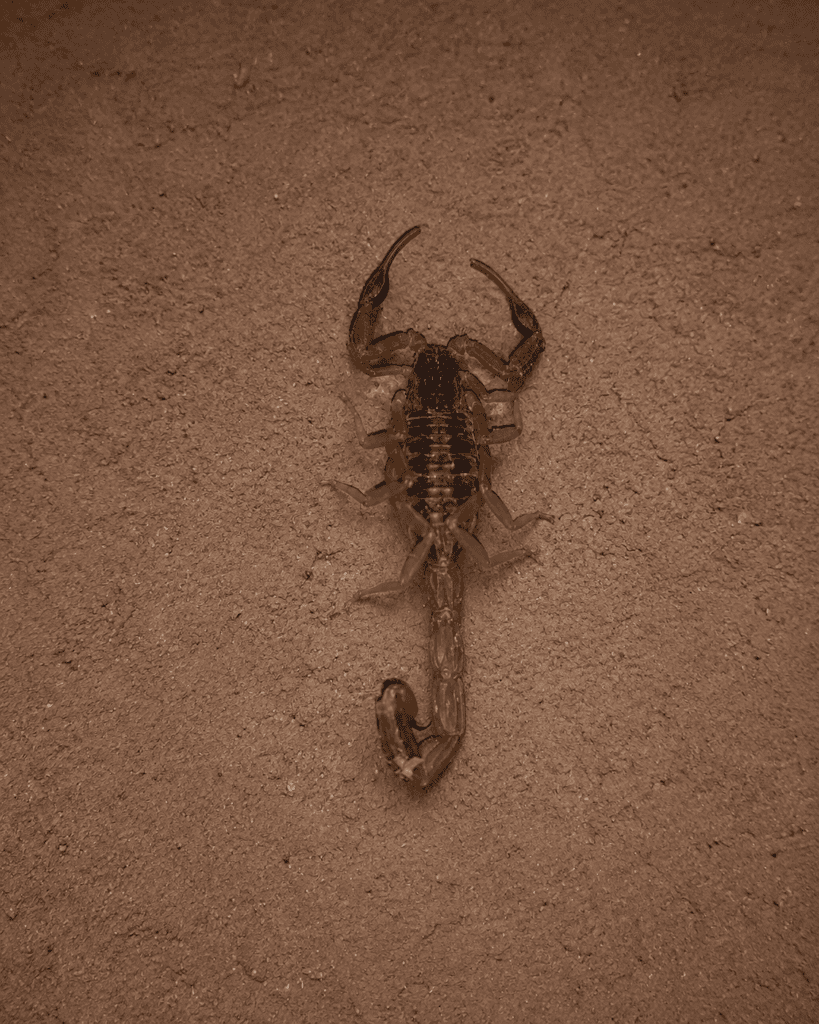
Pest Expert Overview: Scorpions in Bryan & College Station

The scorpion most likely to enter a building around Bryan, College Station, and the rest of Brazos County is the striped bark scorpion. Its sting hurts, but serious reactions remain uncommon. The animal would rather hide or hunt small prey than interact with a person.
Scorpions still deserve sensible caution. They shelter in shoes, gloves, boxes, firewood, attics, wall gaps, and objects left on the ground. Reducing those encounters requires attention to entry points, outdoor shelter, and the insects that provide their food.
The Local Species People Usually Find
Texas has about 18 scorpion species, with the greatest diversity in the western part of the state. Texas A&M AgriLife Extension identifies the striped bark scorpion, Centruroides vittatus, as the only species reported throughout Texas and the only one found across the eastern half of the state.
Adults reach about 2.5 inches including the tail. The body usually appears yellowish tan with two dark stripes running along the back and a darker triangular mark near the front. Young individuals may show darker areas on the pincers and tail.
Color can fade or vary, and poor lighting changes how markings appear. The long slender tail, narrow pincers, body shape, location, and a clear photograph provide better identification than color alone.
Built for Hunting, Not Chasing People
Scorpions are arachnids related to spiders, ticks, and mites. They have four pairs of walking legs plus two pincer bearing appendages called pedipalps. Sensory structures called pectines sit beneath the body and help them detect surfaces and movement.
The segmented tail ends in a venom gland and stinger. A scorpion uses its pincers and sting to capture prey and defend itself. It doesn’t waste energy pursuing people.
Common prey includes insects, spiders, centipedes, and other small animals. Outdoors, that makes scorpions useful predators. Problems begin when their hunting and shelter bring them into living areas where someone may step on one or press it against skin.
A Nightlife Hidden in Cracks
Striped bark scorpions hide during the day beneath bark, logs, stones, boards, landscape materials, and debris. Their flattened bodies fit into narrow spaces. After dark, they leave shelter to hunt.
Unlike many burrowing species, striped bark scorpions actively forage and climb. They move up walls, trees, rough masonry, and stored objects. Attic sightings make sense for an animal that can reach rooflines and exploit small construction gaps.
Scorpions fluoresce under ultraviolet light, which can make them visible during a careful nighttime inspection. A blacklight helps locate them, but it doesn’t make handling safe. Wear closed shoes, watch where you place your hands, and never reach beneath an object you can’t see under.
Why They Enter Homes
Entry may happen through worn door seals, utility openings, roof gaps, vents, weep holes, and cracks where building materials meet. Overhanging limbs or climbing vegetation can provide a route toward the roof.
Heat can also change where scorpions move. Texas A&M notes that striped bark scorpions sometimes leave hot attics and enter living spaces during periods of high temperature. Heavy rain, dry weather, prey movement, and disturbance of outdoor shelter can alter activity as well.
A scorpion in a bathtub didn’t necessarily come through the drain. Smooth surfaces often trap an animal that entered elsewhere. The fixture simply makes it easier to find.
What Makes a Property Attractive
Scorpions need shelter and prey. Firewood, loose boards, stones, landscape timbers, dense groundcover, stacked materials, and debris create protected spaces near the building. Exterior lighting can concentrate moths, crickets, and other insects that scorpions hunt.
Moisture influences the prey community even though scorpions tolerate dry conditions well. Irrigation, leaks, and damp hiding sites can support insects and other arthropods near entry points.
Repeated indoor sightings often reflect a combination of access and outdoor pressure. Treating the animal on the floor doesn’t explain how it arrived or what may replace it.
How Much Risk Does a Sting Create?
A striped bark scorpion sting usually causes sharp pain with possible swelling, redness, itching, or numbness around the site. Most Texas scorpion stings produce moderate local reactions, but individual responses vary.
Wash the area and follow current medical guidance. Contact a medical professional or poison control for advice when needed. Seek urgent care for breathing difficulty, widespread symptoms, severe pain, unusual muscle activity, or another concerning reaction. Treat stings involving young children with particular caution.
Pets often investigate moving arthropods with a paw or nose. Contact a veterinarian if a suspected sting causes marked pain, swelling, drooling, weakness, or unusual behavior.
Strange but Remarkable Parents
Scorpions give birth to live young rather than laying eggs in a nest. The pale newborns climb onto their mother’s back and remain there until after their first molt.
A female covered with young can look like one rough textured animal from a distance. Disturbing her may scatter small scorpions into surrounding cracks. The young can sting, so don’t handle the group.
Striped bark scorpions mature through several molts and may live for years. Their slow development differs from the rapid population cycles of many household insects.
Reducing Encounters Around the Building
Move firewood, loose lumber, rocks, and stored materials away from the structure. Raise items off the ground when practical and wear gloves when moving anything that has remained undisturbed outdoors.
Trim branches and vegetation that touch the roof or walls. Repair door seals, window screens, and obvious openings around utilities or roof transitions. Use appropriate screening or construction repairs on vents and weep holes without blocking necessary drainage or airflow.
Reduce unnecessary night lighting near doors when it draws insect prey. Correct leaks and remove heavy debris that shelters both scorpions and the animals they eat.
Shake out shoes, gloves, towels, and clothing left in garages or outdoor areas. That small habit prevents many of the close contacts that lead to stings.
Professional Scorpion Control
Venus Pest Company includes scorpions in Basic Pest Control. Our HomeGard, HomeGard Plus, and TotalGard plans build on that core coverage, and standard commercial pest control can include scorpions for businesses.
We inspect likely entry areas, exterior shelter, climbing routes, and prey activity. Service focuses on the places where scorpions travel and hide while accounting for the building and surrounding landscape.
We don’t publish pesticide products, active ingredients, rates, mixing instructions, or homeowner application recommendations. Texas A&M accurately notes that scorpions can be difficult to control with insecticides alone. Exclusion and habitat changes remain important parts of the program.
Local Help Across Brazos County
Venus Pest Company has served local homes and businesses since 2001. Founder Dr. Scott Lingren holds a PhD in entomology, and our approach treats the striped bark scorpion as a nocturnal predator with specific habits rather than a generic crawling pest.
If scorpions keep appearing indoors or activity creates a sting risk, call or text 979-774-0486, or email service@venuspest.com. A clear photo and the location where you found it can help guide the inspection.
Common Questions
Are local scorpions deadly?
The striped bark scorpion can deliver a painful sting, but most reactions remain local and moderate. Severe or allergic reactions can occur, so seek medical advice for concerning symptoms.
Why did I find one in the bathtub?
The smooth sides probably trapped a wandering animal. It may have entered through a door, wall gap, attic, or utility opening rather than through the drain.
Do they climb walls and ceilings?
Yes. Striped bark scorpions climb rough walls, trees, stored objects, and other textured surfaces. Their climbing ability helps explain attic and upper floor sightings.
Why do they glow under a blacklight?
Compounds in the outer covering fluoresce under ultraviolet light. That glow makes nighttime detection easier, but you should still avoid handling them.
Do they build nests indoors?
They don’t build organized nests like ants or wasps. Several may use the same favorable building because it offers shelter, prey, and access.
Are they beneficial outside?
Yes. Scorpions prey on insects and other arthropods. An animal living away from occupied areas provides natural pest control, although close contact around a home still creates a reasonable concern.
Can they sting more than once?
Yes. The stinger remains attached to the animal, so a scorpion can sting repeatedly when restrained or threatened.
Does Venus service cover them?
Yes. Basic Pest Control, every HomeGard family plan, and standard commercial coverage include scorpions. Results improve when customers also reduce shelter and repair practical entry points.