
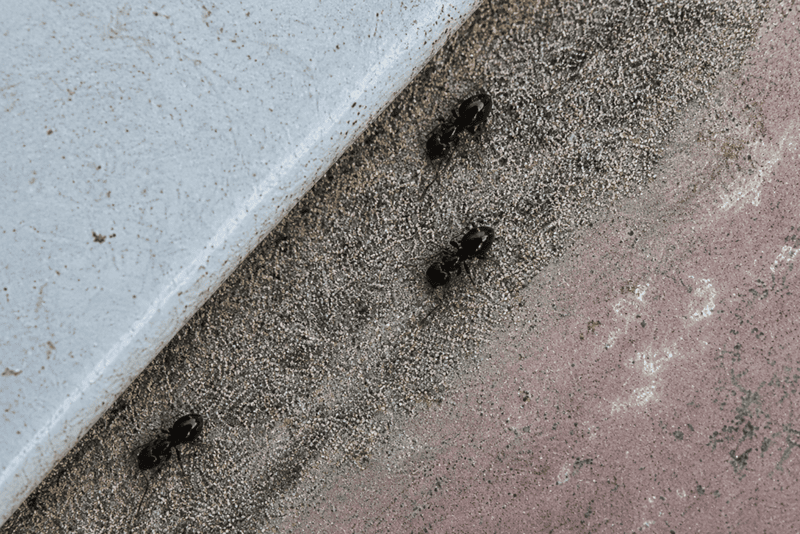
Pest Expert Overview: Rover Ants in Bryan & College Station
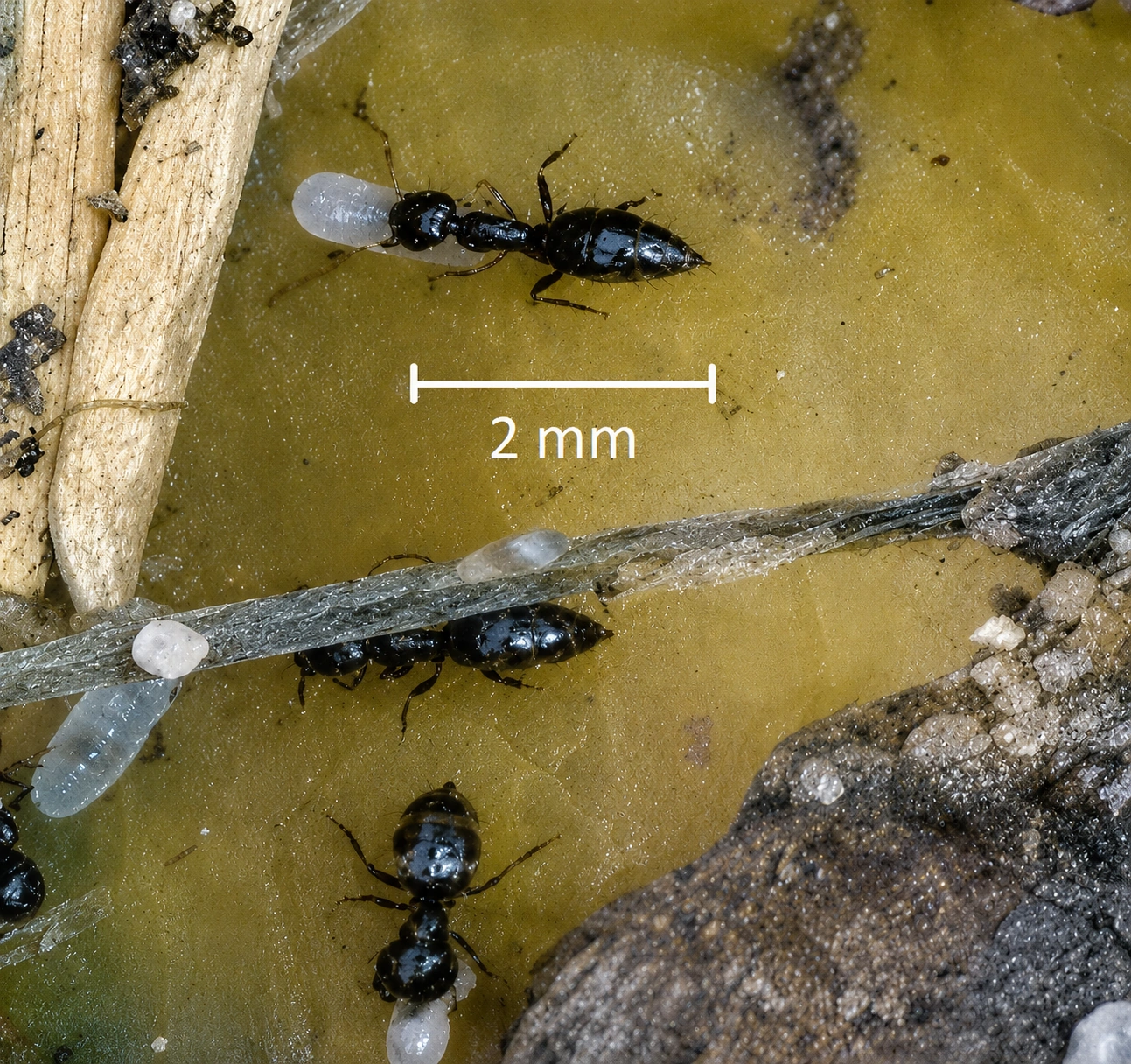
The dark rover ant, Brachymyrmex patagonicus, has become one of the most common ants around Bryan, College Station, and the rest of Brazos County. It nests in soil, mulch, leaf litter, decaying wood, and structures. Irrigated landscapes provide much of what it needs.
These ants don’t sting, bite, damage the building, or transmit disease. Their importance comes from numbers. A species this small can use openings that barely exist from a homeowner’s point of view.
A Tiny Ant That Arrived Relatively Recently
Dark rover ants are native to South America. Researchers first recognized them in the United States in Louisiana during the 1970s, although the original specimens carried a different identification. The species then spread rapidly across the Gulf Coast and other warm urban areas.
Workers measure only about 1 to 2 millimeters long. Their color ranges from medium brown to very dark brown, so “dark rover ant” describes them better than calling every specimen black.
University of Florida entomologists describe relatively large eyes, nine segmented antennae, long hairs on the middle body, and a single waist node hidden beneath the abdomen. Most of those features require magnification. Size, movement, habitat, and good specimens matter more during an ordinary inspection.
What Dr. Scott Has Watched Change Locally
Rover ants weren’t always this common in the Brazos Valley. Over the years, Scott watched them become established around an extraordinary share of local homes. Workers now run along grass blades, fence posts, patio furniture, foundations, and other surfaces even at properties without an indoor problem.
His field impression is that their rise displaced some of the tiny sweet feeding ants that were more common here before. He has also noticed that ghost ants become more conspicuous in some years when other small ant species seem less competitive.
That remains a local observation rather than a proved ecological relationship. Published research shows that dark rover ants can coexist near fire ants and several other species. Ant communities also shift with rainfall, irrigation, temperature, food, and treatment history. The honest conclusion is that the local community changed dramatically as rover ants became common, while the exact cause and competitive effects remain unsettled.
Why Moisture Matters to Rover Ants
Dark rover ants show a strong preference for humid environments. Outdoors, they concentrate in irrigated turf, mulch, leaf litter, shaded soil, decaying wood, and the bases of trees.
Kitchens and bathrooms provide the same attraction indoors. A small plumbing leak, damp wall void, condensation, or water around a sink can support activity. Workers may also enter from a large exterior population without nesting inside.
The ants use plumbing lines, window gaps, door seals, foundation cracks, and other tiny routes. When irrigation repeatedly wets the foundation or foliage holds shade against the wall, the outdoor habitat sits directly beside those openings.
Honeydew Connects Them to Plants
Rover ants collect sugary honeydew produced by aphids, scale insects, leafhoppers, and other sap feeding insects. They also visit plant nectaries and forage for additional foods.
A steady trail climbing a tree or shrub may lead to a honeydew source rather than an indoor nest. The ants gain sugar while their presence can protect plant feeding insects from predators and parasitoids.
This connection makes the landscape part of the inspection. Heavy activity on one plant, sticky leaves, sooty mold, or abundant aphids may explain why thousands of ants occupy one side of a building.
Rover Ant Trails Don’t Always Reveal the Nest
Tiny workers can travel through cracks behind cabinets and plumbing fixtures, then emerge only where food or water becomes available. Following the visible trail may lead into a wall without identifying whether the colony sits inside, beneath the slab, or in nearby mulch.
Cleaning the trail removes ants and food residue, but workers may return if the colony and moisture remain. Sealing one opening can shift activity to another gap because the ants need very little space.
Bathrooms create especially puzzling sightings. Water attracts the foragers, and light colored tubs or counters make tiny workers visible. Finding them near a drain doesn’t prove they live in the plumbing.
Winged Rover Ants and Termite Panic
Mature colonies produce winged males and females. Swarms occur during warm parts of the year, and outdoor lights or pools can collect large numbers.
Rover ant reproductives are tiny and dark. Like other ants, they have elbowed antennae, a narrowed waist, and front wings longer than the rear pair. Termite swarmers have straighter antennae, a broad connection between body sections, and four wings of similar length.
Those differences can be difficult to see on a wet insect from a pool. Save several specimens or take a close photograph rather than relying on a quick glance. Our subterranean termite guide explains the local termite swarm season and identification clues.
Why This Harmless Ant Still Becomes a Pest
Dark rover ants don’t sting or bite, and they aren’t known to spread disease. They don’t eat structural wood or damage healthy plants.
They become pests when workers invade kitchens, bathrooms, bedrooms, hospitals, offices, and other occupied spaces. Swarmers may emerge indoors or collect around windows. Outdoor colonies can produce continual pressure even after visible trails disappear.
Their tiny size and moisture needs make control frustrating. The species became an important structural pest faster than research answered every practical question about its biology and management.
Reducing Activity Around the Structure
Correct leaks, condensation, and drainage problems where practical. Adjust irrigation that sprays the foundation or keeps mulch constantly wet. Allowing appropriate drying between watering cycles makes the area less favorable without harming the landscape.
Pull dense foliage away from walls and avoid excessive mulch depth beside the foundation. Inspect trees and shrubs with heavy ant traffic for aphids, scale insects, leafhoppers, sticky honeydew, and sooty mold.
Clean food and drink spills, protect sweet foods, and rinse recycling. Repair door seals and obvious openings around plumbing, windows, and utility lines. These steps reduce resources and access, although they may not eliminate a large outdoor population.
Professional Rover Ant Control
Venus Pest Company includes rover ants in Basic Pest Control. Our HomeGard, HomeGard Plus, and TotalGard plans build on that coverage, and standard commercial pest control can include rover ants for businesses.
We inspect indoor moisture, entry routes, irrigation, mulch, landscape plants, and honeydew producing insects. The best response depends on whether workers forage inside from an exterior colony or have established activity within the structure.
We don’t publish pesticide products, active ingredients, rates, mixing instructions, or homeowner application recommendations. Rover ants punish treatments that focus only on the visible trail while ignoring moisture and the colony’s relationship with the landscape.
Local Help Across Brazos County
Venus Pest Company has served local homes and businesses since 2001. Founder Dr. Scott Lingren holds a PhD in entomology and has watched dark rover ants change from an unfamiliar species into one of the area’s most common tiny ants.
If small brown ants keep appearing around a sink, bathroom, window, or pool, call or text 979-774-0486, or email service@venuspest.com. A close photograph and notes about moisture or recent weather can help us distinguish rover ants from ghost ants and other tiny species.
Common Questions
Do rover ants bite or sting?
No. Dark rover ants don’t bite or sting people and aren’t known to transmit disease. They create a nuisance through their numbers and indoor activity.
How small are the workers?
Most measure only 1 to 2 millimeters long. They often look like moving specks until viewed under magnification.
Why are they appearing in my bathroom?
Moisture attracts them, and tiny gaps around plumbing provide access. They may nest in a damp void or forage inside from soil and mulch outdoors.
Are they damaging my house?
No. Rover ants don’t eat structural wood or damage the building. An indoor population may still point toward moisture that deserves investigation.
Why are they climbing my plants?
They often collect honeydew from aphids, scale insects, leafhoppers, and other sap feeding insects. The plant may provide both sugar and humid shelter.
Are the winged ants termites?
No, but the tiny swarmers can create understandable confusion. Ants have elbowed antennae, a narrow waist, and unequal wing pairs. Save specimens when the identification remains uncertain.
Can eliminating moisture solve the problem?
Moisture correction can greatly reduce favorable habitat, but it may not remove every colony around an irrigated neighborhood. It works best as part of a broader inspection and control program.
Does Venus service cover them?
Yes. Basic Pest Control, every HomeGard family plan, and standard commercial ant coverage include rover ants. The service approach depends on whether activity comes from indoors, outdoors, or both.